
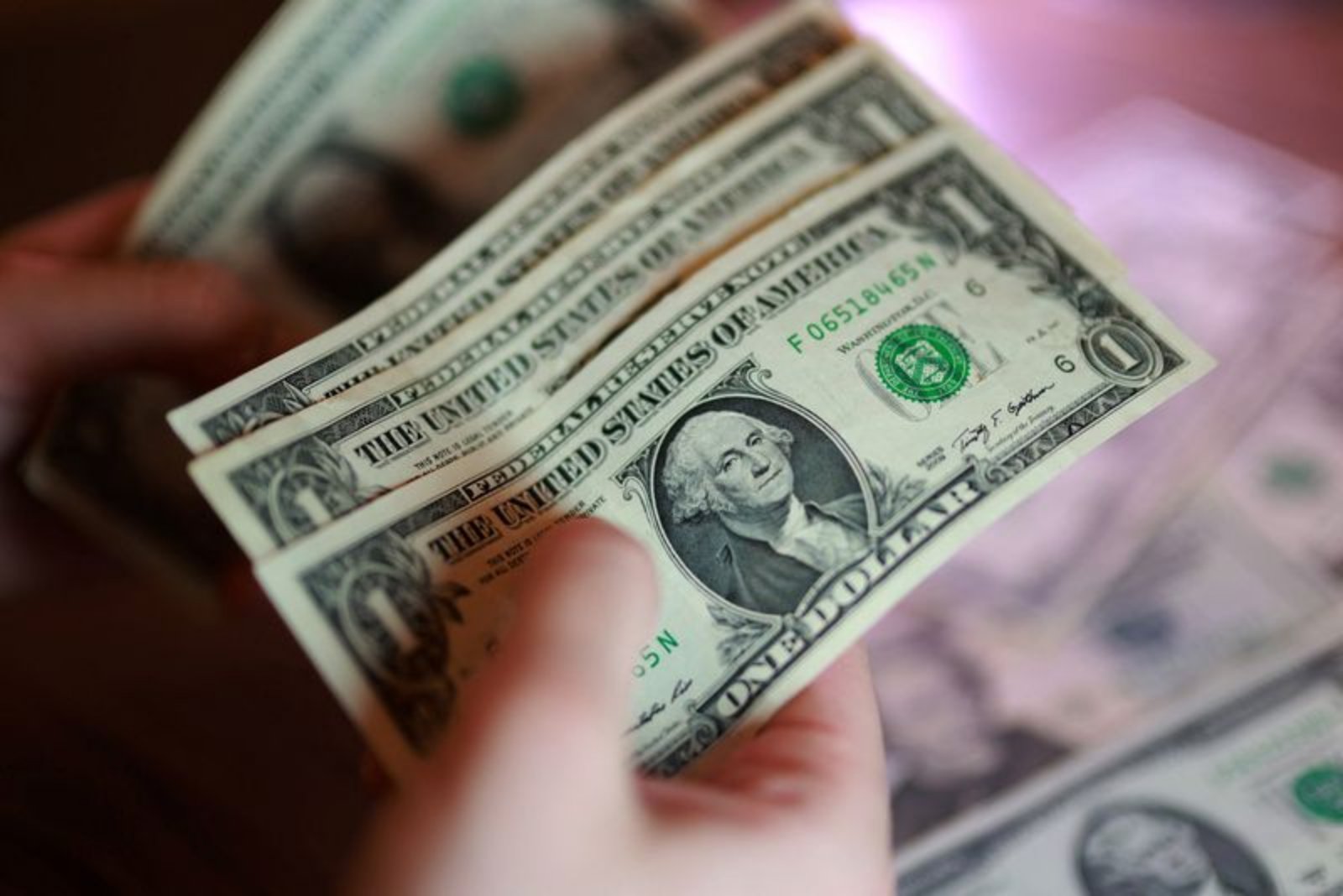
The U.S. dollar began Monday's trading with upward momentum as fading expectations for an imminent agreement to end the Middle East conflict weighed on risk appetite. The setback in negotiations has kept the Japanese yen close to the psychologically sensitive 160-per-dollar threshold, while market participants await the Bank of Japan's policy statement later in the week.
Over the weekend, U.S. President Donald Trump cancelled a planned trip by his envoys to Islamabad, saying Iran could initiate contact if it wished to negotiate an end to the two-month war. That diplomatic pause coincided with an effective closure of the Strait of Hormuz, a key route that ordinarily handles about one-fifth of global oil and gas shipments, tightening supply concerns and lifting crude prices at the start of the week.
On Monday morning Brent crude futures were trading around $107.49 a barrel, up about 2% from recent levels. U.S. West Texas Intermediate was quoted at $96.17 a barrel, up $1.77 in early trade. The rise in oil prices has been a direct channel through which the conflict is feeding into inflationary pressures.
Currency markets reflected the shift in sentiment. The euro eased 0.14% to $1.1706 while sterling was at $1.35155, down 0.12%. The dollar index, which tracks the U.S. currency against six major peers, stood at 98.623.
Safe-haven flows had bolstered the dollar in March when the war erupted, but those gains were largely pared back as markets priced in the possibility of a peace deal this month. With U.S.-Iran talks now stalled, the greenback has steadied, recapturing some of the earlier strength tied to heightened geopolitical risk.
"I have been surprised that the markets are so confident, perhaps even blase, about progress in talks and the prospect of a peace deal," said Kyle Rodda, senior financial analyst at Capital.com, noting the markets are priced for peace. "The peace might not hold and if it doesn’t the markets will have to re-price quite violently."
Though a ceasefire has paused full-scale fighting in the conflict that began with U.S.-Israeli strikes on Iran on February 28, negotiators have yet to reach an accord on the terms to formally end the war. That absence of a definitive settlement continues to unsettle investors and complicates forecasts for inflation and growth.
Analysts warn the disruption to oil flows, if prolonged, poses broader economic risks. "The war has sent oil prices surging, fuelled inflation and cast a shadow over the outlook for global growth," market observers note. The Strait of Hormuz remains central to that dynamic; the longer it stays closed, the larger the potential hit to the global economy.
"While a bout of mild stagflation is baked in, the clock is now ticking on whether this turns into a more severe bout like that seen in the 1970s," said Shane Oliver, chief economist and head of investment strategy at AMP in Sydney.
A series of central bank decisions due this week is in the spotlight as investors seek clarity on how policymakers will respond to the shifting inflation and growth outlook. The Bank of Japan is expected to keep policy rates unchanged on Tuesday but is likely to signal that it stands ready to raise rates as early as June, according to sources familiar with its thinking.
Unlike a year ago, when higher U.S. tariffs forced a pause in its tightening path, the BOJ is anticipated to emphasize its willingness to continue raising rates if the energy shock broadens inflationary pressures. The Japanese yen traded at 159.51 per U.S. dollar on Monday, hovering just below the 160 level that could prompt intervention from Tokyo should moves accelerate.
The yen has been confined in the 159 area since early March as traders balance the implications of higher energy costs for energy-import-dependent Japan against the BOJ's prospective tightening schedule.
Gregor Hirt, global chief investment officer for multi-asset at Allianz Global Investors, said the resumption of the BOJ's hiking cycle depends on a calming of geopolitical tensions. He noted that if the Strait of Hormuz reopens and shipping resumes, rate increases could be back on the table by summer. "However, investors should not expect aggressive signalling at the April meeting. Instead, the BOJ will likely favour a strategy of incremental guidance to preserve optionality under uncertainty," he said.
Beyond Japan, markets expect the Federal Reserve, the European Central Bank and the Bank of England to hold rates steady this week. Traders will be parsing central bank commentary for fresh assessments of how the conflict is affecting both inflation and the trajectory for interest rates.
For now, the combination of stalled diplomacy, elevated oil prices and a cluster of major policy meetings has left markets in a state of cautious watchfulness. Investors are monitoring whether the current ceasefire and talks can produce a durable settlement, or whether renewed hostilities will force a rapid re-pricing of risk and policy expectations.
Summary: The dollar strengthened as hopes for a swift peace deal faded, lifting oil prices and keeping the yen close to 160 ahead of the BOJ meeting. Central banks are on watch for the economic fallout from the conflict and surging energy costs.