
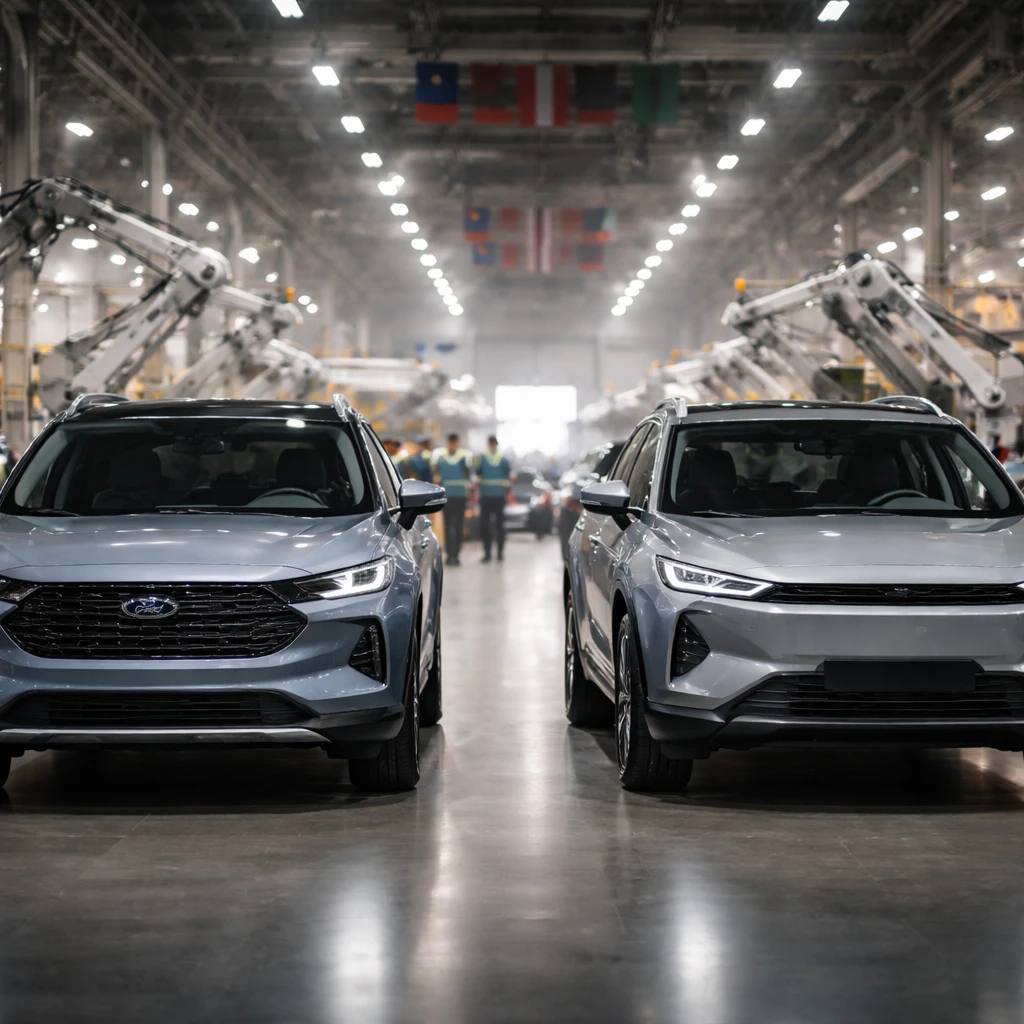
Ford Motor Co. and Chinese automaker Geely engaged in talks earlier this year about whether their negotiations in Europe could be broadened to include the United States, according to reporting published Friday. The discussions reportedly considered a scenario in which Ford would license technology from Geely for use in the U.S.
Those discussions have paused in recent months. Both companies are now focusing attention on finalizing a deal to share technology and manufacturing capacity in Europe, rather than moving forward immediately with any U.S.-focused arrangement.
Geely's U.S. ambitions and regulatory barriers
Geely has been seeking entry into the U.S. market, which is widely viewed as attractive and potentially lucrative. But the company faces substantial obstacles to that expansion. U.S. policy places steep tariffs on vehicles imported from China, and there are prohibitions on certain Chinese connected-vehicle software from operating in U.S. vehicles.
Those policy constraints have been reinforced by pressure from domestic automakers. U.S. carmakers have urged both the presidential administration and Congress to maintain restrictions on Chinese brands, arguing the presence of those brands could pose a threat to the domestic industry.
Industry and political signals
Ford's chief executive, Jim Farley, said last week that Chinese-made cars should not be allowed into the United States until there is a concrete plan to protect American jobs. Political leaders have also signaled varying views. In a recent television interview, former President Trump praised the 100% tariffs on Chinese-made cars that the Biden administration has maintained. At the same time, Trump told an audience in Detroit in January that he would be open to Chinese cars being built in the United States - a departure from his earlier posture.
If Ford and Geely were to incorporate Geely technology into vehicles sold or built in the U.S., it would mark the first partnership of its kind between a major Detroit automaker and a Chinese carmaker in the U.S. market. For now, however, such a step remains hypothetical, as the companies concentrate on completing their European technology and capacity-sharing agreement.
Key points
- Ford and Geely explored extending European partnership talks to the U.S., including possible licensing of Geely technology.
- Those U.S.-focused discussions have stalled; both companies are prioritizing a Europe-focused deal to share technology and manufacturing capacity.
- Sectors affected include automotive manufacturing, international trade, and software for connected vehicles, given tariffs, software prohibitions, and industry opposition.
Risks and uncertainties
- Tariff and regulatory barriers - High U.S. tariffs on Chinese-made vehicles and bans on certain Chinese connected-vehicle software could prevent or limit any U.S. partnership.
- Political and industry opposition - Domestic automakers' requests that the administration and Congress keep restrictions in place, and political leaders' mixed signals, create uncertainty about whether a U.S. tie-up could clear policy and public hurdles.