
Summary: A Reuters/Ipsos poll taken April 15-20 shows a broad majority of American registered voters attribute responsibility for rising gasoline prices to President Donald Trump. The findings indicate the surge in fuel costs, which the poll links to U.S. and Israeli military action against Iran, is a salient voter concern and is eroding Republican advantages on economic issues as the November midterm elections approach.
Poll findings and partisan breakdown
The survey, which collected responses from 4,557 U.S. adults nationwide including 3,577 registered voters, found that 77% of registered voters said President Trump bears at least a fair amount of responsibility for the recent spike in gasoline prices. That assessment crosses party lines: 55% of Republican voters, 82% of independents and 95% of Democrats place at least partial blame on the president for higher fuel costs. The poll’s margin of error is 2 percentage points.
Beyond assigning blame, voters signaled electoral consequences. Some 58% of respondents said they would be less likely to support candidates in the November 3 midterm elections who endorse Trump’s approach to the conflict with Iran. That group includes roughly one in five Republicans and about two-thirds of independents, according to the poll results.
Context of the conflict and energy market effects
The survey ties the jump in U.S. gasoline prices to a conflict that began when the U.S. and Israel launched surprise attacks on Iran in February. Those strikes killed the country’s leader and thousands of Iranians. Tehran subsequently struck back at U.S. allies in the region, damaging oil export facilities and disrupting roughly a fifth of global oil trade, the poll report noted.
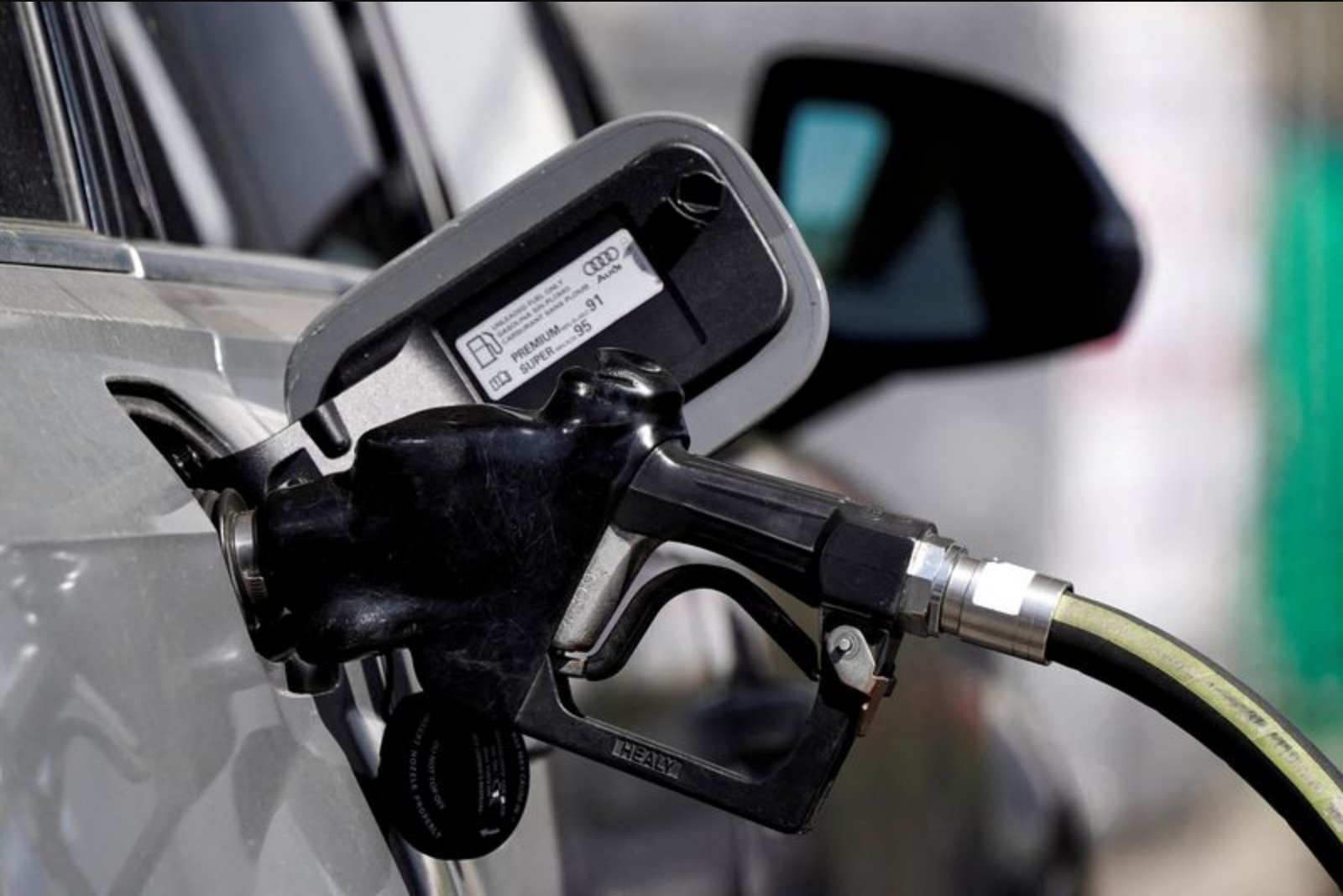
As a result, U.S. gasoline prices have climbed to about $4 a gallon, roughly $1 higher than before the war began. The poll found that concerns about fuel costs are widespread, with 77% of Americans saying fuel prices are a very big concern. Respondents were also more than twice as likely to expect an increase in fuel prices over the next year than to expect a decrease.
Political implications for Republicans
The rise in fuel prices and the broader cost pressures are exerting political strain on the Republican Party as it heads into the midterm elections. Many see the party facing an uphill battle to maintain its majority in the U.S. House of Representatives, and risks are rising that Republicans could also lose control of the Senate.
“Right now, it’s bad. People are upset,” said Sarah Chamberlain, strategist and president of the Republican Main Street Partnership, which advocates for conservative lawmakers. “Republicans are obviously very concerned about maintaining the House, but if we can get through the Iran situation by summertime and gas prices drop back down, or at least go down maybe not to quite the level they were prior to the war, then I think we have a really good shot.”
In addition to immediate electoral risks, the poll revealed broader doubts about the economy under the current administration. Although President Trump campaigned on lowering inflation and has characterized the U.S. economy as “booming,” 70% of poll respondents disagreed with a statement that the economy was booming. Eighty-two percent said inflation was a big concern.
“Trump has made affordability and bringing down prices a cornerstone of the Make America Great Again movement, and with costs going up in the country, that is a hard circle to square, messaging wise,” said Republican strategist Erin Maguire. Maguire added that Republican candidates must be cautious in how they discuss the Iran conflict while also highlighting tax cuts advanced by the administration.
Shifts in perceived economic competence
The poll also showed a substantial narrowing of the Republican advantage on economic stewardship. When asked which party’s approach they prefer on the economy, 38% of U.S. voters chose the Republican approach versus 37% for Democrats. That one-point GOP advantage marks a notable decline from the 14-point edge the party held immediately after President Trump began his second term in January 2025.
Implications for households and markets
The survey highlights how the war’s impact on energy supply has translated rapidly into household financial pressure. With gasoline around $4 a gallon and expectations for further price increases, consumers are signaling heightened sensitivity to affordability, which could influence both consumer behavior and political preferences as the midterms near.
Methodology
The Reuters/Ipsos poll was conducted April 15-20 and gathered responses from 4,557 U.S. adults nationwide, including 3,577 registered voters. The reported margin of sampling error is 2 percentage points.
Note: The article focuses on the poll’s findings and the direct connections cited in the poll between the conflict in Iran, fuel-price movements and political consequences. It does not extend beyond the information provided by the survey results and accompanying statements.