
Overview
The shock to supplies stemming from the Iran war has sent demand for U.S. crude sharply higher, lifting outbound shipments to near-record levels and bringing the United States close to being a net crude exporter for the first time since 1943. Government data released on Wednesday showed net imports of crude - the gap between imports and exports - narrowed to 66,000 barrels per day last week, the lowest reading in the weekly series that begins in 2001.
Why U.S. barrels are moving
Refiners in Asia and Europe that normally rely on Middle East flows have scrambled to source alternative cargoes after threats to shipping around the Strait of Hormuz interrupted roughly a fifth of the world’s oil and gas volumes that typically transit that waterway. Those buyers have increasingly looked to U.S. supply, making American crude more attractive despite higher freight distances.
Rystad Energy’s vice president of oil markets, Janiv Shah, said rising U.S. exports show Atlantic Basin and Asian buyers are reaching further for available supply, and that regional oil price differentials have offset the additional shipping costs.
Export and import flows
Exports climbed to 5.2 million barrels per day last week, a seven-month high, while imports fell by more than 1 million bpd to 5.3 million bpd, according to the government figures. On an annual basis, the U.S. was last a net exporter of crude in 1943, the data show.
Ship tracking service Kpler reported that about 2.4 million bpd - roughly 47% of U.S. exports last week - headed toward Europe. About 1.49 million bpd, or around 37% of exports, were bound for Asia, up from 30% a year earlier. Leading destinations included the Netherlands, Japan, France, Germany and South Korea. Kpler also flagged a vessel signaling it was carrying 500,000 barrels en route to Turkey, which would represent the first U.S. export to that country in at least a year.
Price signals and competitiveness
The disruption to Middle East supplies widened the premium of Brent crude futures over U.S. West Texas Intermediate futures to as much as $20.69 a barrel last month, reducing incentives for U.S. buyers to import and making U.S. crude more competitive for refiners in Europe and Asia. Physical cargo prices for prompt delivery to Europe approached a record near $150 a barrel on Monday, with African deliveries also hitting new peaks, according to LSEG data and traders.
Capacity constraints and logistics
Analysts and traders warn that U.S. exports are pushing against physical limits. Kpler analyst Matt Smith said exports are likely to average around 5.2 million bpd for April, and that monthly flows are bumping up against capacity. Market participants estimate U.S. export capability at roughly 6 million bpd, constrained by pipeline throughput and vessel availability. Government data show U.S. exports reached a record of 5.6 million bpd in 2023.
Dubai-based oil trader Bekzod Zukhritdinov said: "The market is already testing the export ceiling with 5.2 million bpd exported last week. Every incremental barrel from here costs more in freight and logistics than the last one." Higher freight and logistics costs increase the marginal cost of each additional export barrel, potentially limiting how much more the market can shift to U.S. supply.
Rystad’s Shah noted that a release of medium sour crude from the Strategic Petroleum Reserve could free up light, low-sulfur U.S. grades for export. He added, however, that a shortage of tankers and rising freight rates could undercut export demand.
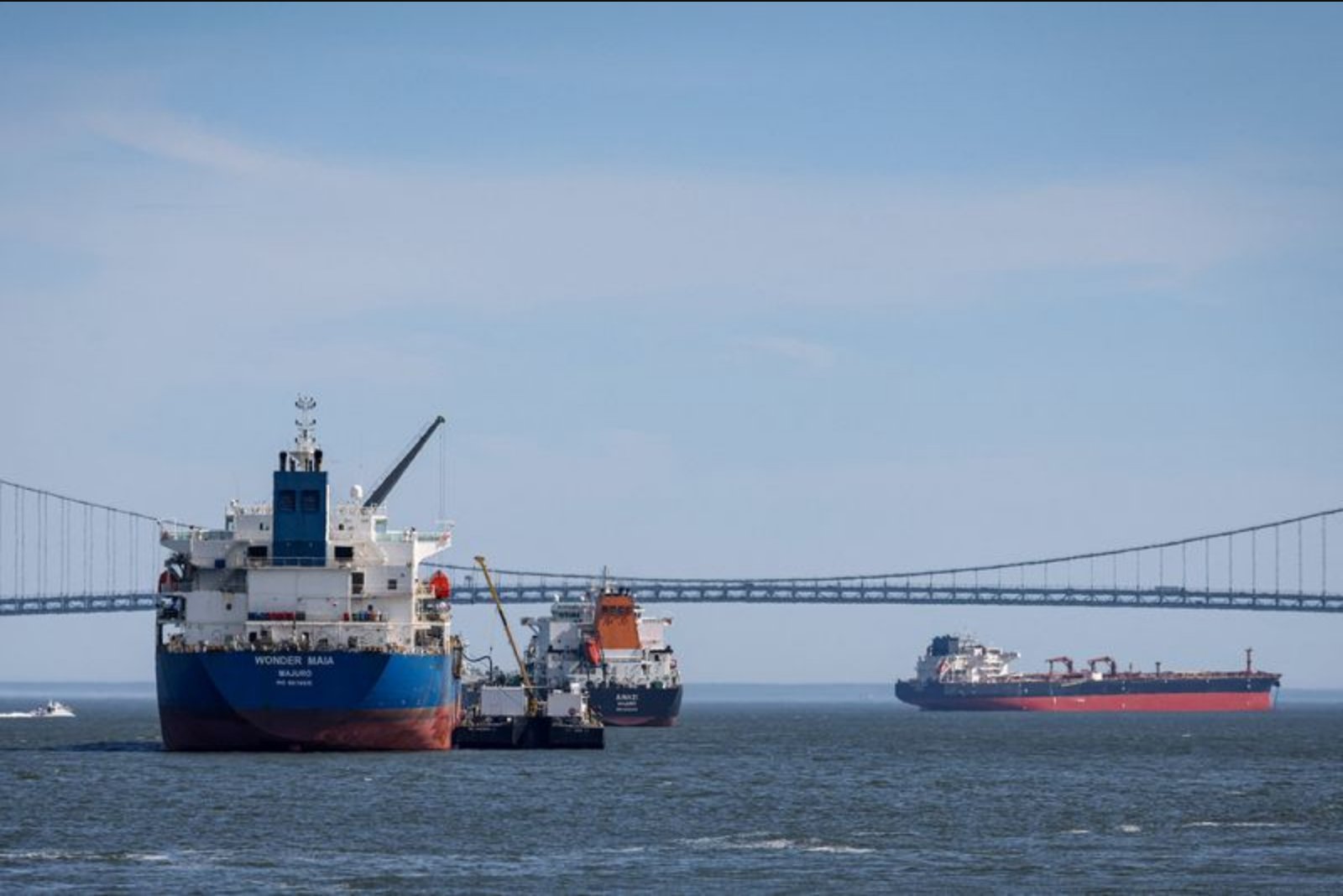
Vortexa senior analyst Rohit Rathod reported about 80 empty supertankers were headed to the Gulf of Mexico as of Wednesday, indicating tanker movements likely aimed at picking up crude in April and May.
Implications for refiners and shipping
U.S. refineries remain configured to process heavier, more sour crudes, so the country continues to import substantial volumes even as exports rise. Nonetheless, the shift of U.S. barrels toward Europe and Asia signals that refiners in those regions are willing to absorb longer-haul cargoes, particularly where price spreads make the economics work.
Shipping and freight markets are a central limiting factor. As more cargoes are pushed onto longer routes, vessel availability tightens and freight rates climb, increasing the cost of sending additional U.S. barrels overseas. That dynamic is already evident in the market, with traders noting the marginal cost of exports is rising.
Looking ahead
While the immediate response to disruptions in the Middle East has unlocked significant flows of U.S. crude to distant markets, the combination of pipeline limits, tanker availability and rising freight bills suggests further expansion of exports may be costly and operationally challenging. Market participants are closely watching whether infrastructure and shipping can keep pace with demand shifts without materially raising the price of marginal supply.
Conclusion
Supply interruptions tied to the Iran conflict have accelerated global demand for U.S. crude, carrying shipments to near historic highs and shrinking net imports to their lowest weekly level on record. However, physical export ceilings and shipping constraints may cap further near-term growth in outbound U.S. crude flows.