
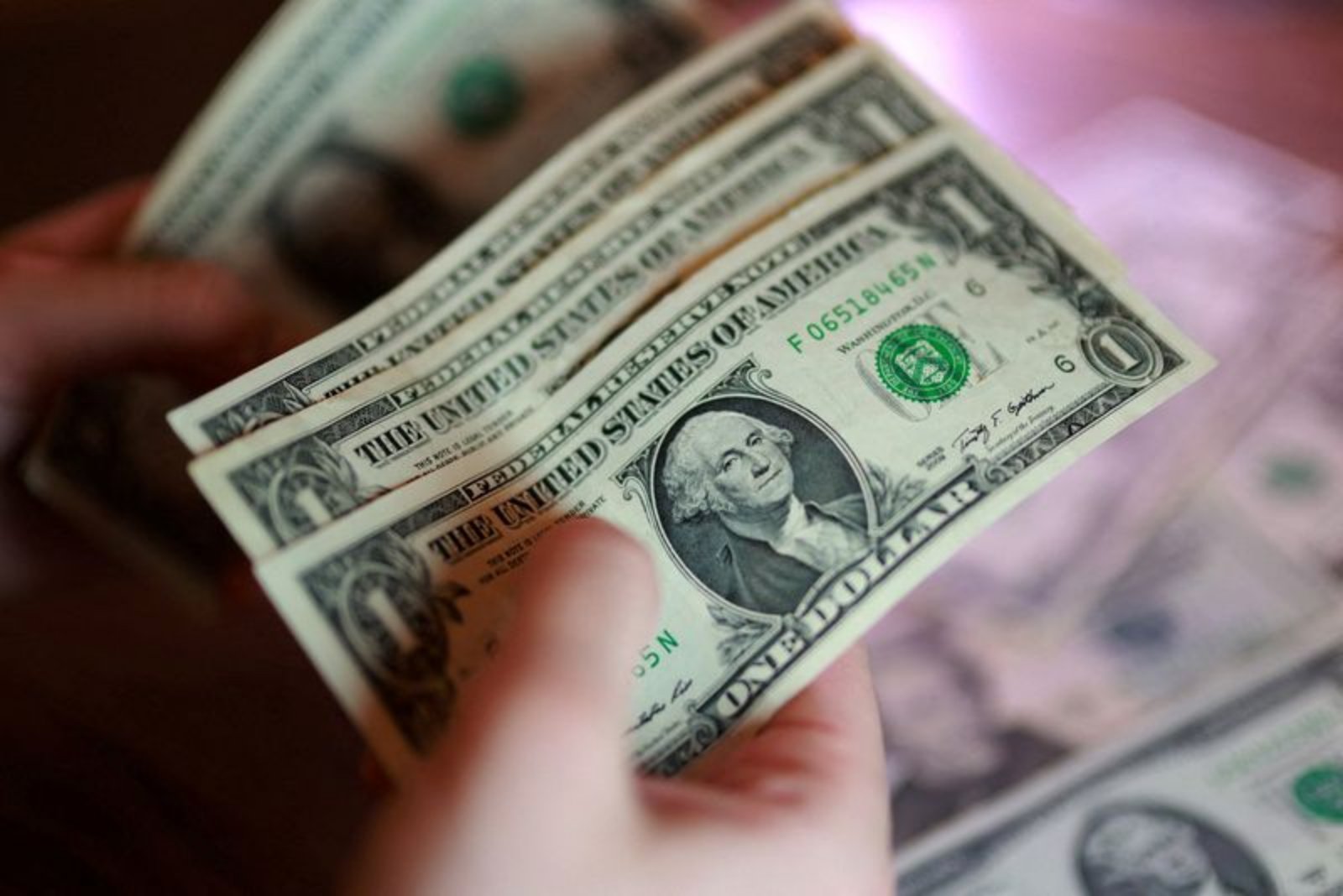
HONG KONG, April 16 - The U.S. dollar hovered near its weakest point since early March on Thursday as improving diplomatic signals over Iran lifted investor sentiment and prompted a shift away from traditional safe-haven assets.
President Donald Trump said the U.S.-Israeli war on Iran was "close to over," and the White House conveyed a degree of optimism about reaching an agreement, noting that further in-person discussions would likely be held in Pakistan again. Those comments helped encourage traders to reduce dollar exposures that had been supported by earlier conflict-driven risk aversion.
In a separate development, a person briefed by Tehran told Reuters that Iran might consider allowing ships to transit the Omani side of the Strait of Hormuz freely if a settlement were reached to prevent a resumption of hostilities. That possibility contributed to risk appetite by removing a potential chokepoint concern for maritime traffic.
In currency markets, the euro traded at $1.1808 and the British pound at $1.3569, each up roughly 0.1% on the day and lingering near their highest levels since February. The dollar index, which gauges the U.S. currency against six major peers, was steady at 98.027.
The index had fallen for eight consecutive sessions through Wednesday, relinquishing much of the gains it had accumulated amid earlier tensions related to the Iran conflict. The tentative cessation of active hostilities appears to have restored some demand for assets that typically outperform when geopolitical risk is perceived to be lower.
"Markets are now basically looking past the conflict and pricing that there’s going to be some kind of settlement," said Khoon Goh, head of Asia research at ANZ. He added that with the war premium being priced out, the dollar could face further downward pressure and potentially resume the downtrend that has been in place since roughly last year.
Goh noted the dollar index sits just above the 98 level, which he described as a key near-term support. He cautioned that a break below that threshold could open the door to additional declines. For the week the index was down 0.7%, poised to record a second straight weekly fall.
Risk-sensitive currencies benefitted from the shift in sentiment. The Australian dollar was quoted at $0.7173 and the New Zealand dollar at $0.59139, both trading close to one-month highs reached earlier in the week.
The Japanese yen showed modest strength, trading at 158.78, after Japan’s finance minister said Tokyo and Washington had agreed to step up communication on exchange rates following her meeting on Wednesday with U.S. Treasury Secretary Scott Bessent.
China’s offshore yuan was at 6.8146 per dollar in early Asian trade, up about 0.04% as markets positioned ahead of an upcoming first-quarter GDP reading.
Overall, currency markets moved to reflect diminishing immediate war risks and a renewed preference among investors for currencies tied to more cyclical, risk-sensitive exposures rather than the traditional safety of the U.S. dollar.