
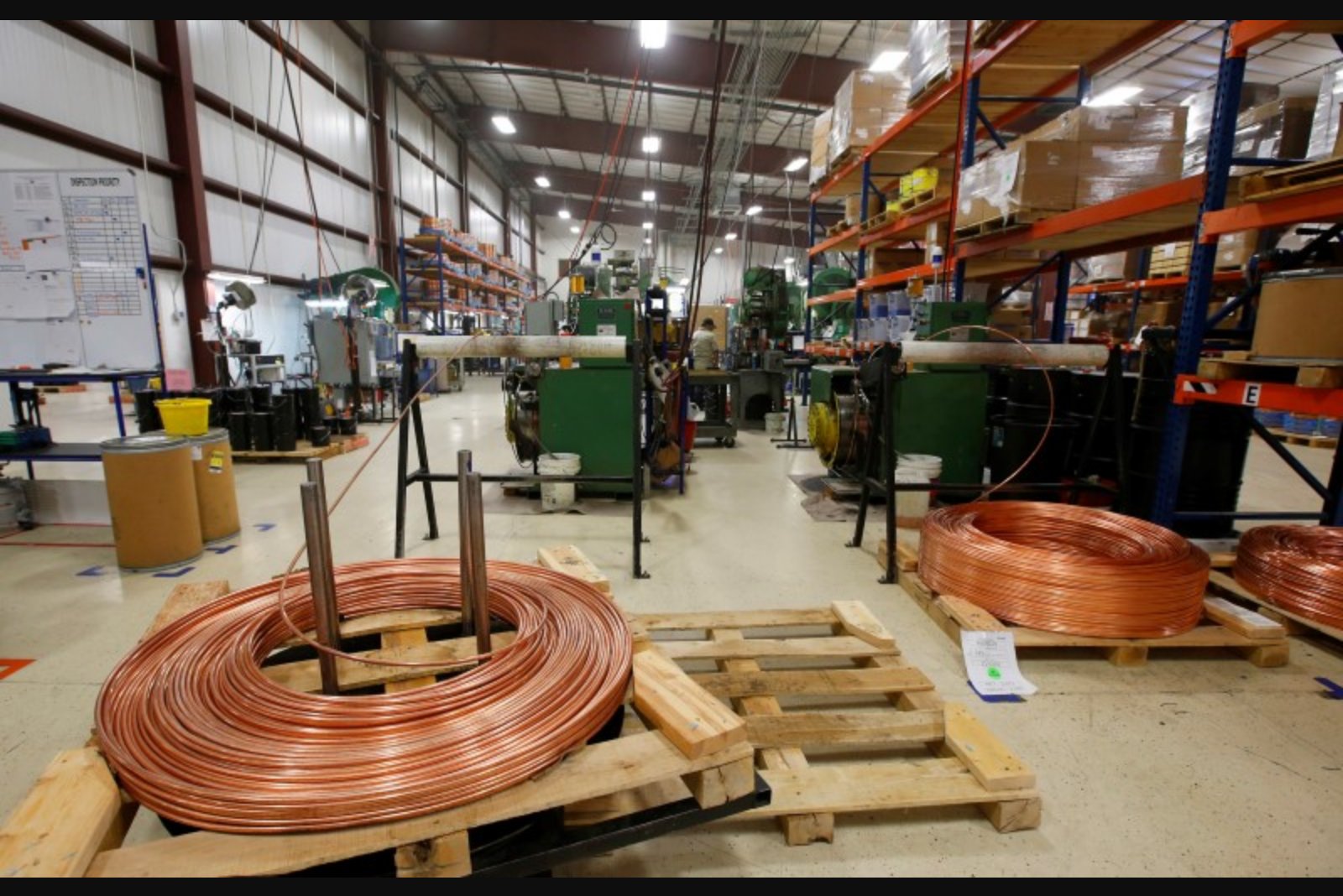
Copper futures rose to a more than one-month high on Wednesday as remarks from the U.S. president that the U.S.-Iran conflict could be nearing an end alleviated investor concern about supply disruptions and an extended hit to global growth.
At 12:25 PM E.T., May copper futures were trading up 0.20% at $6.09. The metal, essential to sectors ranging from power generation, transmission and distribution to electronic circuitry and telecommunications, has gained almost 6% over the past month.
Market participants said the price advance reflected a retreat in fears that a prolonged conflict in the Middle East would weigh on industrial metals by disrupting trade and denting economic activity. Comments from President Donald Trump that a permanent ceasefire with Iran could be possible relatively soon helped underpin that sentiment.
Speaking to Sky News in the U.K., President Trump said it was "very possible" that a permanent ceasefire agreement with Iran could be reached before King Charles’s visit later this month, and added that Iran has been "beaten up pretty bad." Earlier, speaking to Maria Bartiromo of Fox News, he said the conflict, which began with joint U.S. and Israeli strikes on Iran in late February, is "close to over." At the same time, the U.S. military has said an ongoing naval blockade has restricted shipping traffic into and out of Iran.
The two countries previously agreed to a fragile two-week ceasefire scheduled to end on April 21. Bloomberg News reported on Wednesday, citing a person familiar with the matter, that officials from the U.S. and Iran are seeking to extend that ceasefire by another two weeks.
Despite the price improvement, major financial institutions remain cautious about the medium-term outlook for copper. Firms including Goldman Sachs and Citi have modelled a surplus market and see potential downside for prices amid broader macroeconomic uncertainties.
Trade data add to the mixed picture. China's imports of refined copper have declined, while imports of concentrate have increased, signaling divergent flows through different parts of the copper chain and underlining the complexity of demand and supply dynamics.
Summary - Copper futures hit a more-than-monthly high after U.S. statements suggested the U.S.-Iran war may be nearing an end, reducing immediate supply and growth concerns. Prices remain supported in the short term but major banks and trade figures highlight ongoing downside risks from a potential surplus and softer demand.
Key points
- Copper for May rose 0.20% to $6.09 at 12:25 PM E.T., and is up nearly 6% over the past month.
- President Trump indicated a permanent ceasefire with Iran is "very possible," and said the conflict is "close to over," comments that eased market fears of prolonged disruption.
- Banks such as Goldman Sachs and Citi project a surplus market and potential price downside; China shows lower refined copper imports but higher concentrate imports.
Risks and uncertainties
- The ceasefire is fragile and currently scheduled to end on April 21 - any failure to extend it would renew supply and growth concerns that could weigh on copper and industrial metals.
- Macroeconomic uncertainties and forecasts of a surplus by major financial institutions represent downside risks for copper prices and could impact mining and industrial sectors.
- Trade flow variability, highlighted by declines in China's refined copper imports despite increases in concentrate imports, creates uncertainty for demand-supply balance across the copper value chain.
The market reaction shows how geopolitical signals can quickly shift sentiment in commodity markets even as structural and cyclical indicators from banks and trade data keep analysts cautious about the medium-term trajectory for metals prices.