
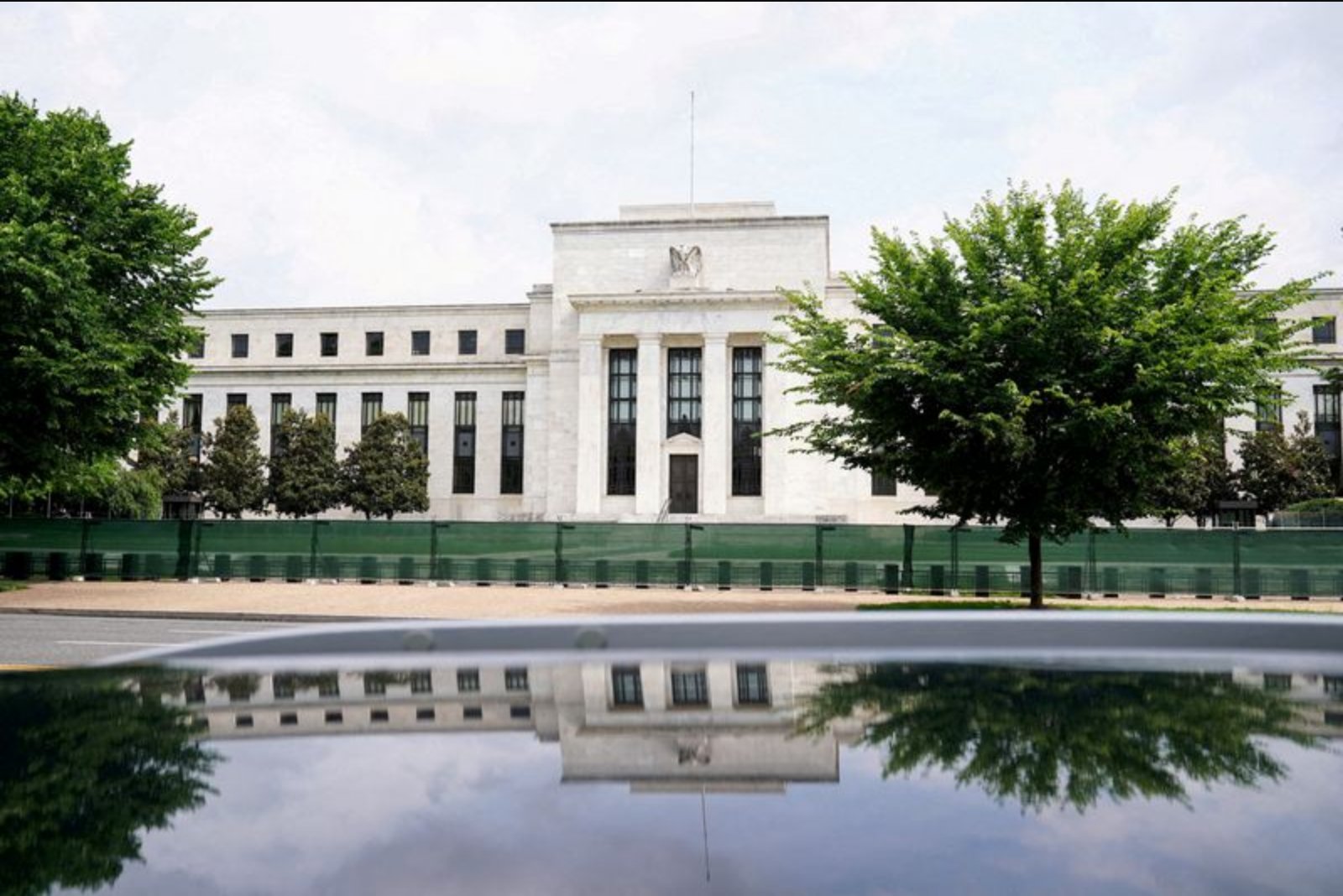
On April 15, the Federal Reserve released its latest Beige Book, finding that U.S. economic activity had increased in recent weeks while employment remained broadly steady. The report highlights the pronounced effect of soaring energy costs and the uncertainty stemming from the Iran war, which have complicated business planning and investment decisions.
The Beige Book, a compilation of qualitative reports from contacts across all 12 Federal Reserve districts that policymakers use to inform their interest rate deliberations, noted that the conflict in the Middle East was "cited as a major source of uncertainty that complicated decision-making around hiring, pricing, and capital investment, with many firms adopting a wait-and-see posture." The report added that business outlooks varied amid widespread uncertainty about future conditions.
Policymakers are widely expected to keep the federal funds rate unchanged at the current 3.50% - 3.75% range at the Fed's next policy meeting on April 28-29. The Beige Book described price growth as having "mostly remained moderate overall," drawing on interviews and surveys completed on or before April 6.
The report described how higher energy prices are filtering through supply chains and production costs. Rising energy costs have translated into more expensive shipping and higher costs for petrochemical-derived inputs such as plastics, along with increased fertilizer prices. The Beige Book said "input cost pressures beyond energy-related increases also were widespread." These developments are captured against a backdrop in which the Strait of Hormuz was closed by Iran, disrupting shipments that account for about a fifth of the world's oil shipments and about a third of its fertilizer shipments.
On retail fuel prices, the report noted that the average price of gasoline in the U.S. has jumped to more than $4 a gallon, while retail diesel prices have surged to more than $5.60 a gallon. Fertilizer prices also have risen sharply, the Beige Book reported.
The prior Beige Book had been completed before the latest escalation in hostilities began on Feb. 28 and showed generally optimistic growth expectations with an anticipation that the pace of price increases would slow. The current edition captures the unsettled economic mood that followed the new round of conflict.
On inflation outlook, the Beige Book reiterated a common view among Fed officials that they typically "look through" temporary commodity price spikes. Many policymakers continued to express the expectation that goods inflation stemming from last year’s tariff shocks would ease later this year, which they said could allow them to resume cutting interest rates at some point.
At the same time, the report underscored that inflation has been running above the Fed's 2% objective for more than five years. The latest data referenced in the Beige Book had economists estimating a jump in headline inflation and in "core" inflation - the measure that excludes energy and food - in the most recent month, a metric Fed officials watch for signs of sustained inflationary pressure.
Labor market commentary in the Beige Book described a stabilizing picture. Policymakers largely assessed that slowing job growth was balanced by a shrinking labor force, which the report linked to a sharp decline in immigration. Unemployment "ticked down last month to 4.3%." The report also noted that wage competition overall remained "muted," suggesting that wage pressures were not materially adding to inflation at this stage.
Implications for markets and sectors
- Energy and transportation sectors face immediate cost pressures from higher fuel prices and shipping costs.
- Fertilizer and agriculture-related industries are affected by higher input costs tied to disrupted shipments and commodity price moves.
- Broad manufacturing and plastics-dependent sectors are experiencing increased input-cost pressure that could affect margins and pricing decisions.