
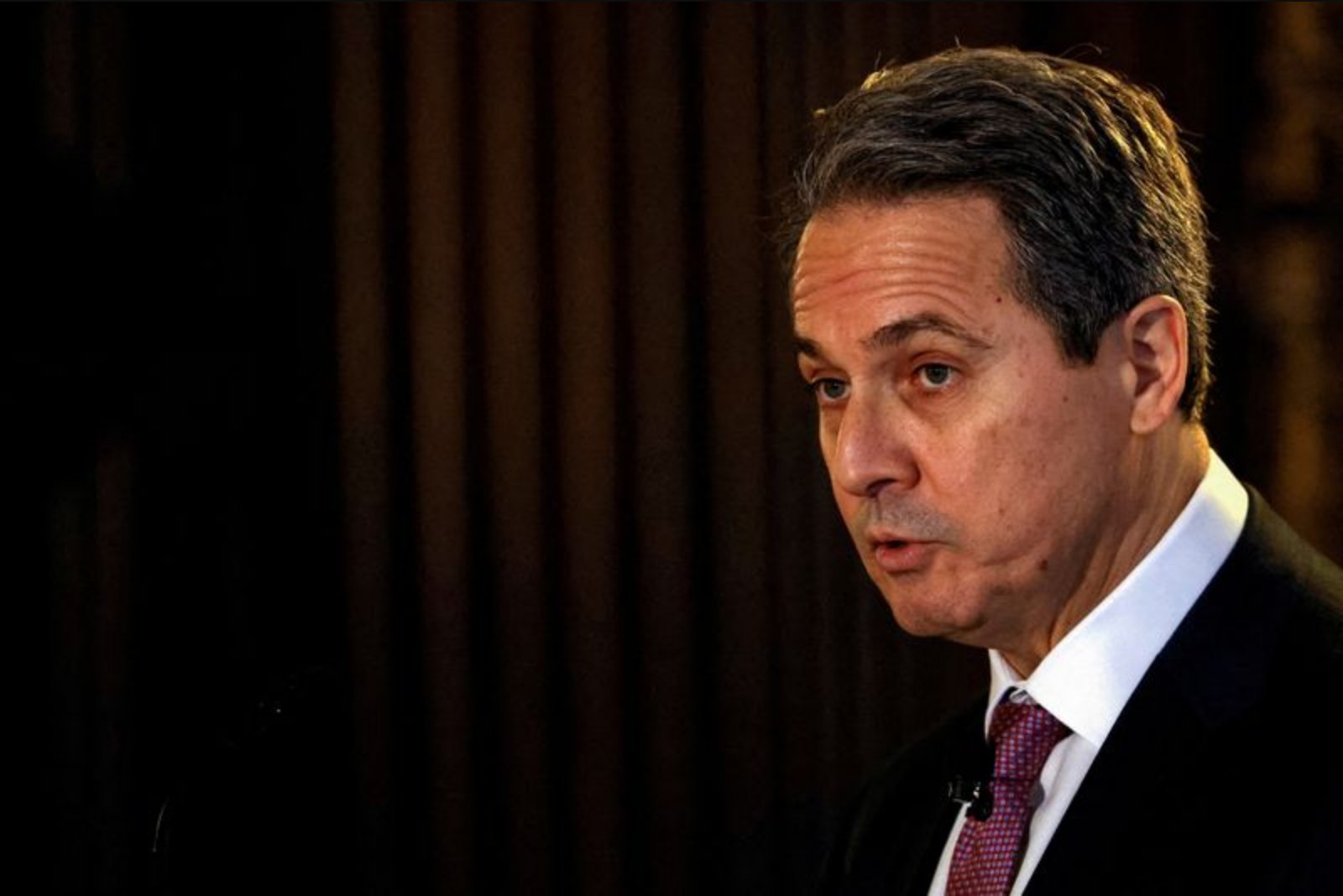
WASHINGTON, April 15 - St. Louis Federal Reserve President Alberto Musalem said high oil prices are likely to sustain underlying inflation substantially above the central bank's 2% target through the rest of the year, and that the Fed is likely to hold interest rates steady for an extended period.
In an interview with Reuters, Musalem said, "It’s likely we’re going to see some pass-through of oil prices onto core inflation," and forecast that the core gauge would finish the year "a shade below 3, maybe around 3" percent. He noted risks that core inflation could ultimately be even higher.
Musalem described a policy stance that, for now, is to leave the federal funds rate in its present 3.50%-3.75% target range "for some time," while the central bank monitors fresh data on inflation, employment and overall economic activity. That posture, he said, reflects a shared inclination among many Fed officials to wait and assess how recent developments play out.
Inflation readings and recent dynamics
The Fed measures its 2% target against the Personal Consumption Expenditures Price Index. That broader index was rising at a 2.8% annual rate as of February. The core PCE measure - which excludes energy and other volatile commodity-related costs and is often viewed as a better indicator of underlying inflation trends - increased at a 3% annual rate in February and was expected to tick up to 3.2% in March.
Musalem pointed to the spike in oil tied to the outbreak of war in the Middle East as a turning point that has shifted the policy outlook. Brent crude prices remained around $95 a barrel, compared with roughly $70 before the start of the U.S.-Israeli war with Iran. That rise has already fed quickly into gasoline prices and is expected to raise costs across other areas by increasing shipping and travel expenses and elevating food prices through higher fertilizer and input costs.
Offsetting forces and potential policy responses
Despite the oil-driven upside pressure on inflation, Musalem highlighted some moderating factors. He said the lingering effects of tariff increases implemented last year are likely to fade in the current quarter, and housing price inflation is also showing signs of easing. Still, he warned that oil is pushing in the opposite direction and that a range of services inflation remains elevated.
That mix of forces leaves the Fed in a delicate position. Musalem said he would be open to raising rates if inflation accelerates further and begins to tug at inflation expectations. "Monetary policy right now is in a good place, and I think it’s probably going to be appropriate to maintain policy at this level for some time," he said. He added that policymakers need to observe a balanced decline across all components of inflation rather than relying mainly on housing to bring the overall rate down.
He characterized the current inflation profile as one where housing is doing much of the easing work, goods prices are moving in the opposite direction, and core non-housing services remain sticky. "If it gets worse - at that point, the risk of de-anchoring inflation expectations would become relevant. Right now, inflation expectations medium to long term are very anchored, but they would become relevant, and at that point it might be appropriate to raise rates," Musalem said.
Labor market, growth and two-sided risks
Musalem said that developing downside risks to employment could bring rate cuts back into consideration, though since the start of the war markets have reduced the odds of easier policy. He expects growth to slow this year but still remain in a roughly 1.5% to 2% range, and he judges it too early to see a pronounced impact on overall consumer spending. Musalem does anticipate a modest uptick in the unemployment rate.
"There are two-sided risks to rates," he said, noting that risks have increased on both sides of the Fed's dual mandate - toward higher inflation and toward a weaker labor market. "If you add the two things together, policy is well positioned where it is currently."
Implications for Fed leadership and near-term meetings
Markets now largely expect the Fed to remain on pause well into next year, a development that complicates the prospects for President Donald Trump's nominee for Fed chair, Kevin Warsh. Warsh's confirmation hearing was set for April 21, and Musalem observed that delivering on expectations for lower rates would require Warsh to persuade other members of the Board of Governors and several regional reserve bank presidents that easing policy is appropriate.
Musalem is not among the five regional presidents who will vote on interest rate policy this year, but he noted that more Fed colleagues at the March 17-18 meeting signaled openness to language in the policy statement acknowledging the potential need for hikes if inflation dynamics worsened. The Fed was expected to keep its policy rate on hold at the April 28-29 meeting while debating whether to include stronger hawkish language in its statement.
Supply shocks and the broader outlook
Musalem described the current oil market shock as "the third negative supply shock in 12 months," alongside rising tariff rates and tighter immigration rules. He said these supply-side developments pose risks both to the inflation outlook and to the labor market through a likely hit to economic growth.
In sum, Musalem framed the situation as "tricky": policy appears appropriately positioned now, but evolving oil-driven price pressures and sticky service inflation leave open the possibility of further tightening if inflation expectations start to drift higher, while a deterioration in the labor market could tilt the calculus the other way.
Note: This article reports the views expressed by Alberto Musalem in a Reuters interview and reflects the specific data points and statements he provided.