
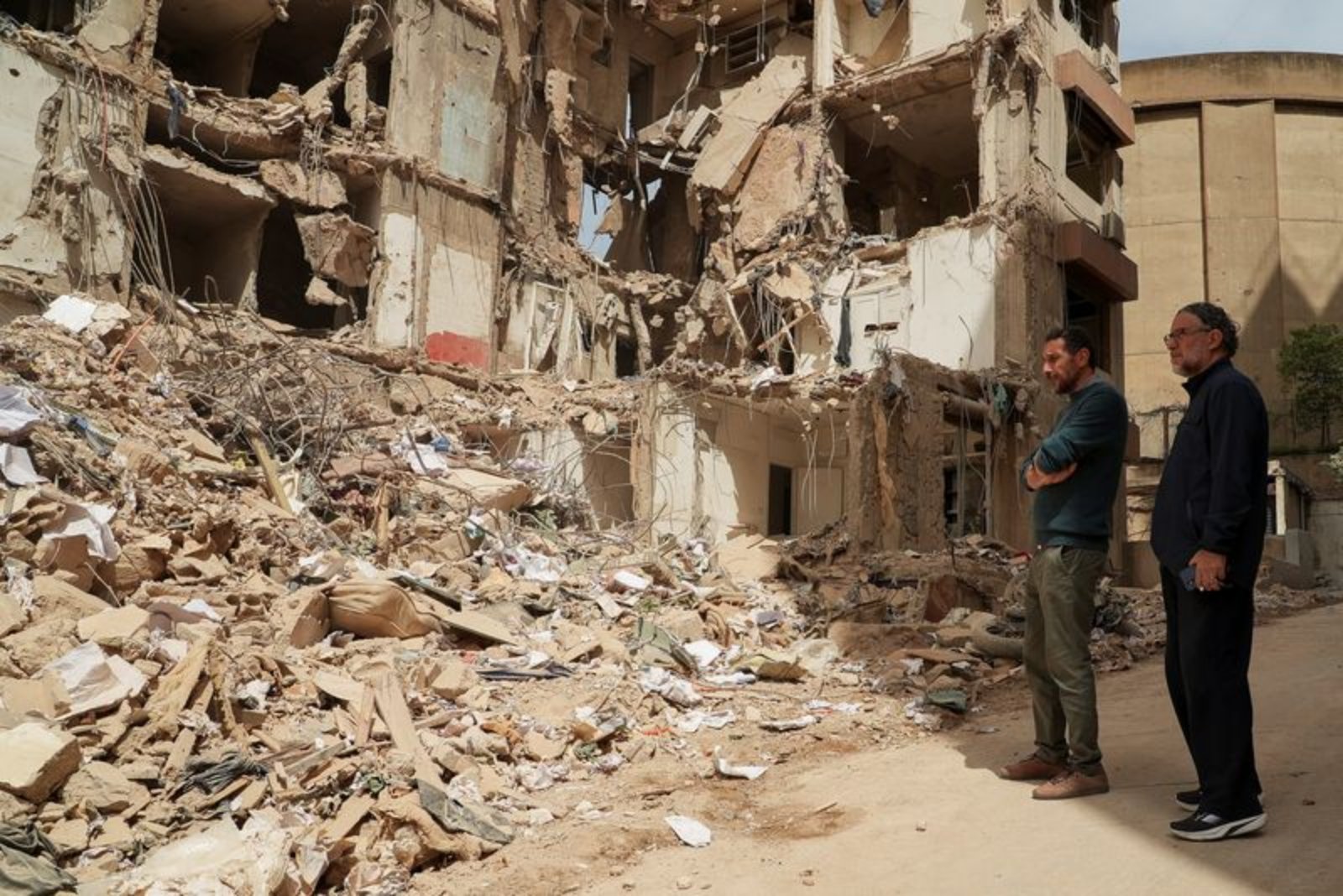
BEIRUT April 15 - Standing in front of the flattened shell that once sheltered their family for more than half a century, brothers Ali and Wael Sabbagh confronted a stark new reality: the house that kept generations of memories had been reduced to rubble by Israeli strikes last week, and three people from their household were killed in the attack.
The brothers said their mother, a brother and the family’s helper were among the dead. The inability to transport the bodies to the family cemetery in their home region has compounded their grief. With routes to the south under regular bombardment, the family has had to bury their dead temporarily in Beirut until conditions permit relocation to their ancestral plots.
"We come from the south of Lebanon, from Nabatieh, and that is being bombarded on a daily basis," Wael said. "We want them to be buried in the family cemetery, but unfortunately we’re unable to do that."
Israeli authorities have announced plans to create a buffer zone in southern Lebanon and to exert control over territory extending to about 30 km (20 miles) north of Israel's border. Residents and the Sabbagh brothers described Nabatieh, one of the main southern cities, as largely reduced to rubble amid repeated strikes.
Because of the danger posed by ongoing operations, the brothers said they cannot risk traveling south nor send representatives on their behalf for fear that they too would be killed in the strikes. The family located their mother’s body inside her home. It took two days to find their brother, whom they said they identified by an arm tattoo. The family arranged for the repatriation of the house helper's body to Ethiopia.
"Nobody should have to go through this. And unfortunately, my brother, sister, and I are not the only ones going through this," Wael said. "Hundreds, if not thousands, of families...are mourning in the same way I am, not understanding what happened."
The strikes on Beirut last week were described by Lebanese authorities as some of the most violent the capital has endured in decades. Across Lebanon, officials report more than 350 people killed in the most recent attacks. Since the outbreak of hostilities between Hezbollah and Israel last month, Lebanese authorities say more than 2,160 people have been killed and more than 1.2 million displaced.
Hezbollah fired rockets into Israel, which prompted Israeli retaliation and a wider campaign of strikes across Lebanon. The Israeli military has stated its operations in Lebanon are aimed at Hezbollah targets.
The brothers spoke to Reuters a day after a meeting in Washington between Lebanese and Israeli officials, a rare encounter between representatives of governments technically at war since Israel’s founding in 1948. Reflecting on the broader power dynamics, Wael said, "We’re always going to be under the foot of the Israelis."
Ali and Wael said they intend to pursue legal action against those responsible for the attack that killed their family members. Ali spoke of the relentless repetition of loss that has shaped life in Lebanon: a pattern of death, destruction and rebuilding.
Behind the Sabbaghs’ bombed-out home, construction workers were already at work on a new structure. "Come back in a few years, there’s a new building, new kids, new mothers, new brothers," Ali said. "I will come. I will remember. Nobody else will."
Context and immediate consequences
Families from south Lebanon face dual traumas: the loss of loved ones and the prevention of customary burial practices because of active military operations and declared territorial control. The temporary interment of bodies in Beirut reflects the constrained mobility and security concerns that prevent access to family cemeteries in the south.
The human cost reported by Lebanese authorities includes high casualty figures and extensive displacement, while the stated military objective by Israel remains targeting Hezbollah positions. The brothers’ case illustrates both the personal and communal disruptions caused by sustained hostilities.