
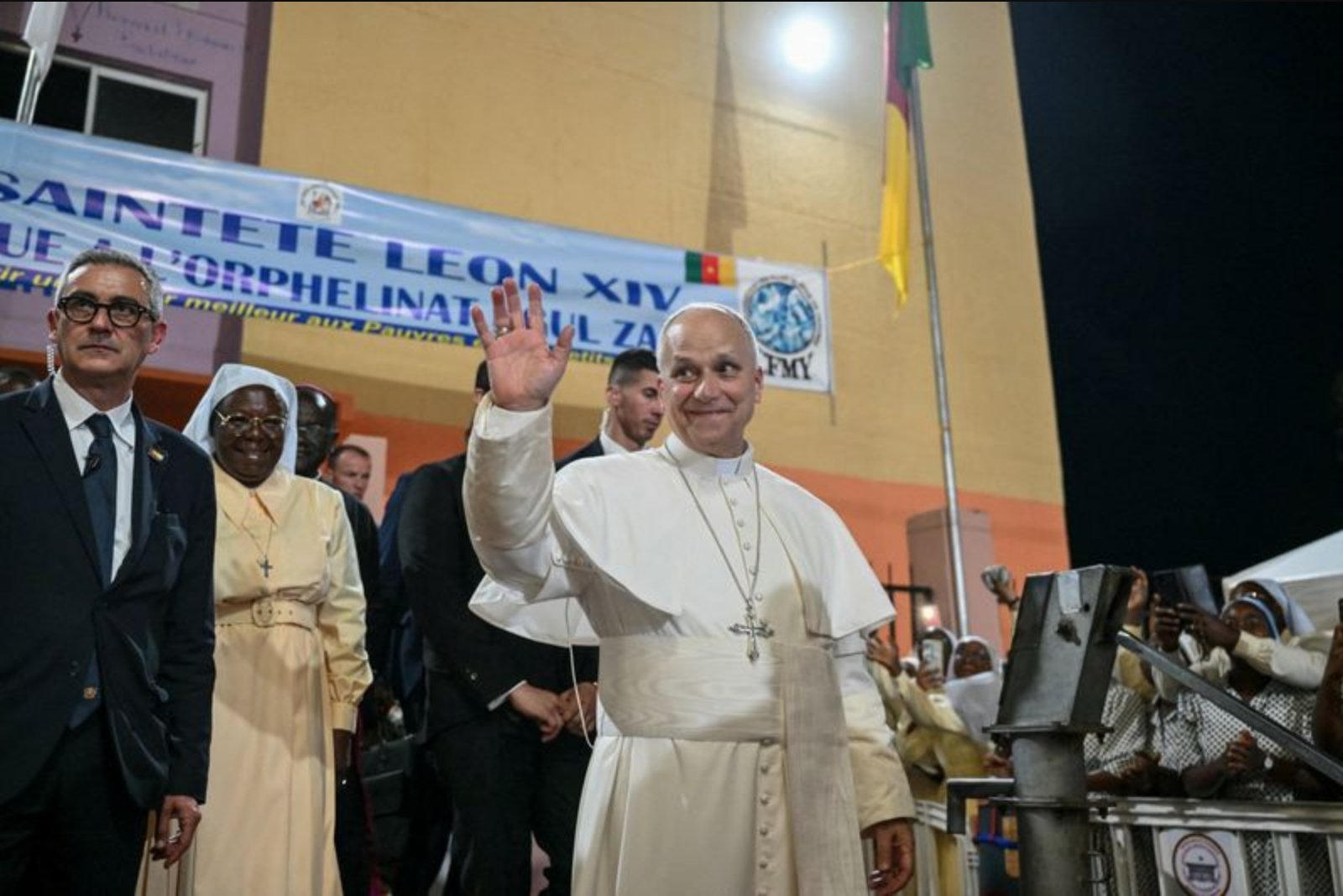
DAKAR, April 15 - The ongoing tour of Pope Leo in Africa has taken on an unexpected diplomatic tinge after public sparring between the pope and U.S. President Donald Trump elicited strong reactions from Catholics on the continent.
Several Catholics and church figures interviewed in the region said they were taken aback by Trump’s comments about the pope and by a series of social media posts that included AI-generated images.
Unprecedented remarks, local reaction
Blaise Bebey Abong, a 38-year-old Cameroonian diplomat based in Yaounde where Pope Leo arrived on Wednesday as the second stop of a four-country Africa tour, said he was "utterly shocked" by the president’s remarks.
"Nowhere in modern history have we witnessed such verbal recklessness against an institution as revered as the papacy," Abong said.
Abong argued the pope represented a form of "high moral authority" even for non-Christians, and he warned the exchange could harm perceptions of Trump in the region, including among those who had previously supported him.
Core disagreement over the Iran conflict
The public disagreement centers on Pope Leo’s outspoken criticism of the war that began with U.S.-Israeli strikes on Iran. Since late March, the pope - described in reports as the first U.S.-born leader of the Catholic Church - has been urging restraint and speaking against the conflict.
Trump responded on Sunday with a post on Truth Social, calling Pope Leo "WEAK on Crime, and terrible for Foreign Policy." He followed that with an AI-generated image that depicted himself in a Jesus-like pose, a post that drew criticism including from some religious conservatives who often support him. That post was removed on Monday morning.
Pope Leo told Reuters on Monday that he intended to continue speaking about the war, and Trump reiterated his criticism on Tuesday. While in transit from Algeria to Cameroon on Wednesday, the pope did not reply directly to the president; instead he issued a broader appeal for respect for all the peoples of the world.
Faithful commend restraint
Kwaku Amoah, a worshipper at St. Peter’s Cathedral Basilica in Kumasi, Ghana, said he understood why the pope chose not to engage directly.
"Public insults is not the way to go," Amoah said on Wednesday. "The Church often encourages responding to hostility with restraint rather than escalation, and I commend the pope for exercising restraint."
Despite the pope’s refusal to escalate, Trump posted another apparent AI-generated image on Wednesday showing a depiction of Jesus embracing him. The original caption read: "I was never a very religious man .. but doesn’t it seem, with all these satanic, demonic, child sacrificing monsters being exposed ... that God might be playing his Trump card!"
Wider implications for perception
Observers in Africa said the exchange is likely to have a lasting effect on views of the U.S. president. Cardinal Stephen Brislin, the Archbishop of Johannesburg, wrote in an op-ed in the Daily Maverick that while the church will endure the episode, endurance "is not the same as indifference."
For many African Catholics encountering the dispute during the pope’s tour, the incident has reinforced concerns about the tone and tactics of public political communication, and about how such exchanges play in communities where the papacy is held in high regard.
Key points
- Pope Leo’s Africa tour has coincided with a public exchange between him and U.S. President Donald Trump over the pope’s criticism of the war that began with U.S.-Israeli strikes on Iran.
- Trump posted critical comments on Truth Social and shared AI-generated images, one of which was removed; these actions have unsettled African Catholics, clergy, and diplomats.
- Local religious leaders and worshippers praised the pope’s restraint and warned the dispute could damage Trump’s perception in the region.
Risks and uncertainties
- Risk of long-term reputational damage to the U.S. president among African Catholic communities, which could influence diplomatic perceptions - relevant to political and diplomatic sectors.
- Potential for ongoing online escalation through social media posts and AI-generated imagery, creating further public relations challenges - relevant to media and communications sectors.
Tags: religion, politics, pope, trump