
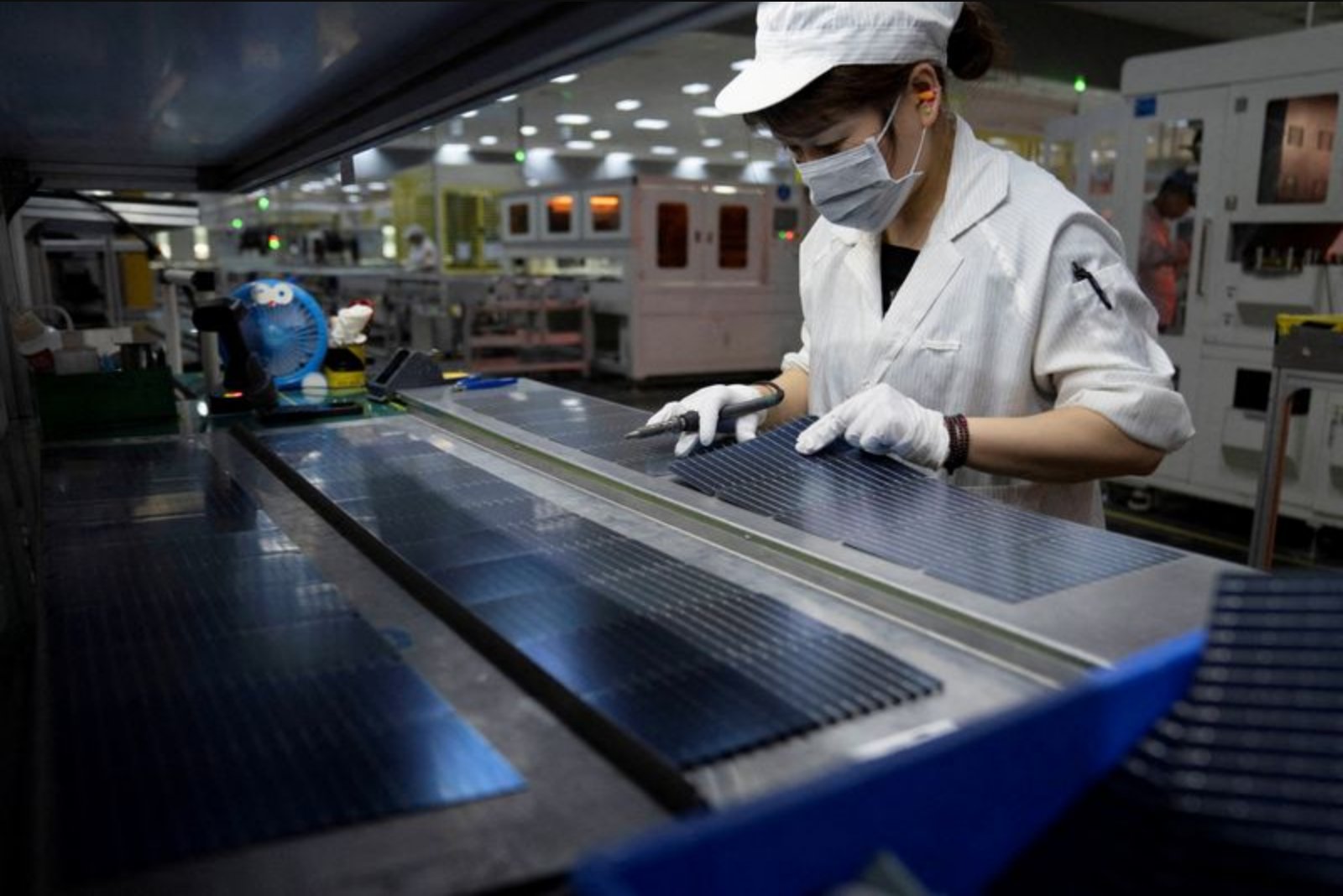
BEIJING/LOS ANGELES, April 15 - Chinese officials have held early-stage consultations with suppliers of machinery used to manufacture solar panels as part of deliberations over possible restrictions on shipments of the most advanced equipment to the United States, five people with direct knowledge of the talks said.
The conversations have involved firms that supply tools for producing solar cells. China is estimated to produce more than 80% of the world's solar panel components and is home to the top 10 global suppliers of equipment for solar cell fabrication, sources said. Despite those discussions, no export control rule has been finalized and regulators have not yet advanced the process to seek formal feedback from the industry, two sources added.
Scope and industry context
Officials have focused attention on high-end gear used to manufacture higher-efficiency solar cells, including technology commonly referred to as heterojunction, or HJT. HJT combines a crystalline silicon wafer with ultrathin silicon layers on either side of the wafer to capture more of the electrons generated by sunlight, boosting power output compared with conventional designs.
Companies such as Tesla have been pursuing expanded solar manufacturing in the United States, and some reports last month indicated Tesla was seeking to procure roughly $2.9 billion of solar-panel production equipment from Chinese suppliers, including firms such as Suzhou Maxwell Technologies, which was reported to be seeking export approval from the commerce ministry.
Executives and analysts who monitor China's solar sector have been preparing for potential export curbs, in part because of industry concern over moves by some U.S. companies to increase domestic solar manufacturing and reduce dependence on Chinese supply chains. The potential restraints would widen the range of technologies that Beijing can limit for national-security or industrial-policy reasons, following previous measures related to other high-tech supplies.
Possible market effects
If regulators decide to implement licensing requirements or other controls on shipments of high-end solar equipment to the United States, the change could jeopardize expansion plans by U.S. companies to build new factories or enlarge existing ones. That prospect has drawn attention because several major technology firms are investing in large-scale solar and energy storage systems to meet growing power needs tied to artificial intelligence and other computing services, while some are also exploring orbital or space-based solar solutions.
Industry participants are operating amid a period of severe overcapacity after several years of aggressive expansion in solar manufacturing. That downturn has created commercial incentives for some foreign buyers and executives based outside China to acquire machinery and talent, while prompting Chinese firms and policy watchers to warn against ceding technological leadership.
One industry executive commented in a trade publication this year that efforts by companies to secure equipment and skilled personnel abroad could prompt Chinese manufacturers to take stronger measures to defend their market position. The executive urged Chinese companies to intensify efforts to retain their technological lead.
Regulatory signals and uncertainty
Regulatory authorities have not issued formal guidance on any export licensing regime, and it is not clear how broad any restrictions would be in terms of countries or product categories affected, when a licensing requirement could take effect, or which specific machines and components would be covered. In 2025, Chinese regulators signaled possible licensing requirements for related technologies such as high-end batteries and materials for energy storage systems, but implementation of those measures was paused until November of the current year.
Suzhou Maxwell Technologies was reported to have received visits from officials after accounts emerged about Tesla's procurement talks with Chinese suppliers, according to three people who requested anonymity because the regulatory interactions are confidential. Sources said that discussions with regulators examined possible limits on shipments to the United States, including equipment needed for HJT production. Suzhou Maxwell and Tesla did not immediately respond to emailed requests for comment, according to the sources.
Strategic and commercial tensions
The deliberations occur as leaders from China and the United States prepare for a summit that both sides characterize as a chance to stabilize trade relations. Policymakers on both sides view the meeting as an opportunity to prevent further deterioration in economic ties, but consultations over high-tech exports underline persistent frictions where industrial policy and national-security considerations intersect with commercial supply chains.
Research and advisory firms tracking Chinese policy have cautioned that successful moves by U.S. companies to achieve self-sufficiency in solar manufacturing could pose a competitive threat to Chinese producers. In addition to the potential loss of a major customer, the emergence of new, better-capitalized competitors at a time when Chinese companies face price and capacity pressures could be materially disruptive.
Outlook
At present, the conversations between regulators and equipment suppliers remain in an exploratory phase, with no final decision announced. Some Chinese manufacturers continue to negotiate and ship solar manufacturing equipment to the United States, including firms that were reported to be among bidders for major U.S. orders. Observers say the ultimate shape of any controls will depend on policy deliberations in Beijing and the trade-offs regulators consider between preserving export revenues and protecting perceived strategic advantages in solar technology.