
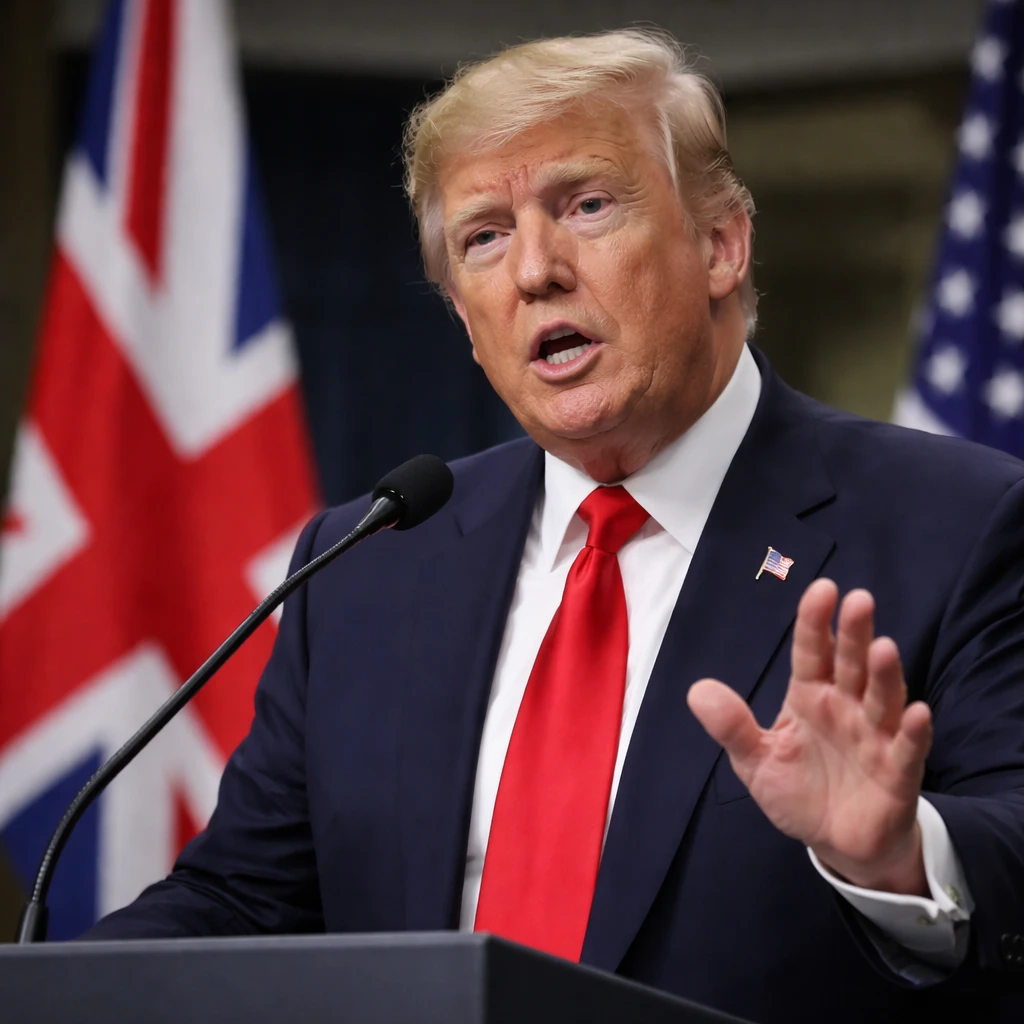
U.S. President Donald Trump said on Wednesday that he could revisit the terms of a trade accord negotiated with the United Kingdom, pointing to policy differences with British leadership as a factor that might prompt change.
In an interview aired on Sky News, Trump stated: "We gave them a good trade deal. Better than I had to. Which can always be changed." The remark underscores the president's willingness to alter a pact reached between the two countries in the prior year.
That agreement, implemented last year, cut tariffs on a number of British export items and expanded UK quotas for certain U.S. agricultural products. It has been described as comparatively more favorable to the United Kingdom than some deals the United States has concluded with other allies.
Trump's comments were delivered against the backdrop of a diplomatic dispute over Britain's reluctance to take part in the U.S. campaign against Iran. Asked about prospects for a negotiated settlement with Tehran, the president said a resolution was plausible in the near term, adding that a deal could emerge by the time the King of the United Kingdom visits the United States later this month. "They’re beaten up pretty bad. It’s very possible," he said.
Separately, U.S. Central Command said on Tuesday that the United States has fully implemented a blockade on Iran’s ports and shipping. The announcement came days after the president ordered the move as a means of pressuring Tehran toward a ceasefire.
When pressed on the state of bilateral ties, Trump characterized the relationship as diminished compared with past expectations. "How is the relationship? It’s the relationship where: when we asked them for help, they were not there. When we needed them, they were not there. When we didn’t need them, they were not there. And they still aren’t there," he said, framing the decision not to engage militarily as a central grievance.
The president's public remarks leave open the possibility of adjustments to trade policy despite the formal status of last year’s pact. Officials in both countries will face decisions about how to respond if Washington pursues modifications linked to diplomatic disagreements.
Summary
President Trump signaled willingness to change a recently implemented U.S.-UK trade agreement, citing objections to British domestic and foreign-policy choices, particularly London’s stance on involvement in the U.S. campaign against Iran. The move comes as the U.S. has announced a full blockade on Iranian ports and shipping and as diplomatic tensions between Washington and London have grown.
- Key points
- The U.S.-UK trade deal implemented last year reduced tariffs on key British exports and increased UK quotas on certain American agricultural goods; Trump said it "can always be changed." (Sectors impacted: agriculture, trade.)
- Tensions stem in part from Britain’s reluctance to participate in U.S. actions against Iran, a dispute cited by the president when discussing the bilateral relationship. (Sectors impacted: defense, international trade.)
- The U.S. has fully implemented a blockade on Iran’s ports and shipping, a step announced by Central Command following the president’s order. (Sectors impacted: shipping, energy, defense.)
- Risks and uncertainties
- Potential renegotiation of the trade pact could introduce uncertainty for exporters and importers on both sides, particularly in agriculture and sectors reliant on tariff schedules. (Impacted sectors: agriculture, consumer goods.)
- Escalating diplomatic strain linked to the U.S. campaign against Iran could affect global shipping and energy markets given the announced blockade. (Impacted sectors: shipping, energy, commodities.)
- Ambiguity over allied cooperation in military or security matters may complicate joint planning and procurement decisions in defense-related industries. (Impacted sectors: defense, aerospace.)