
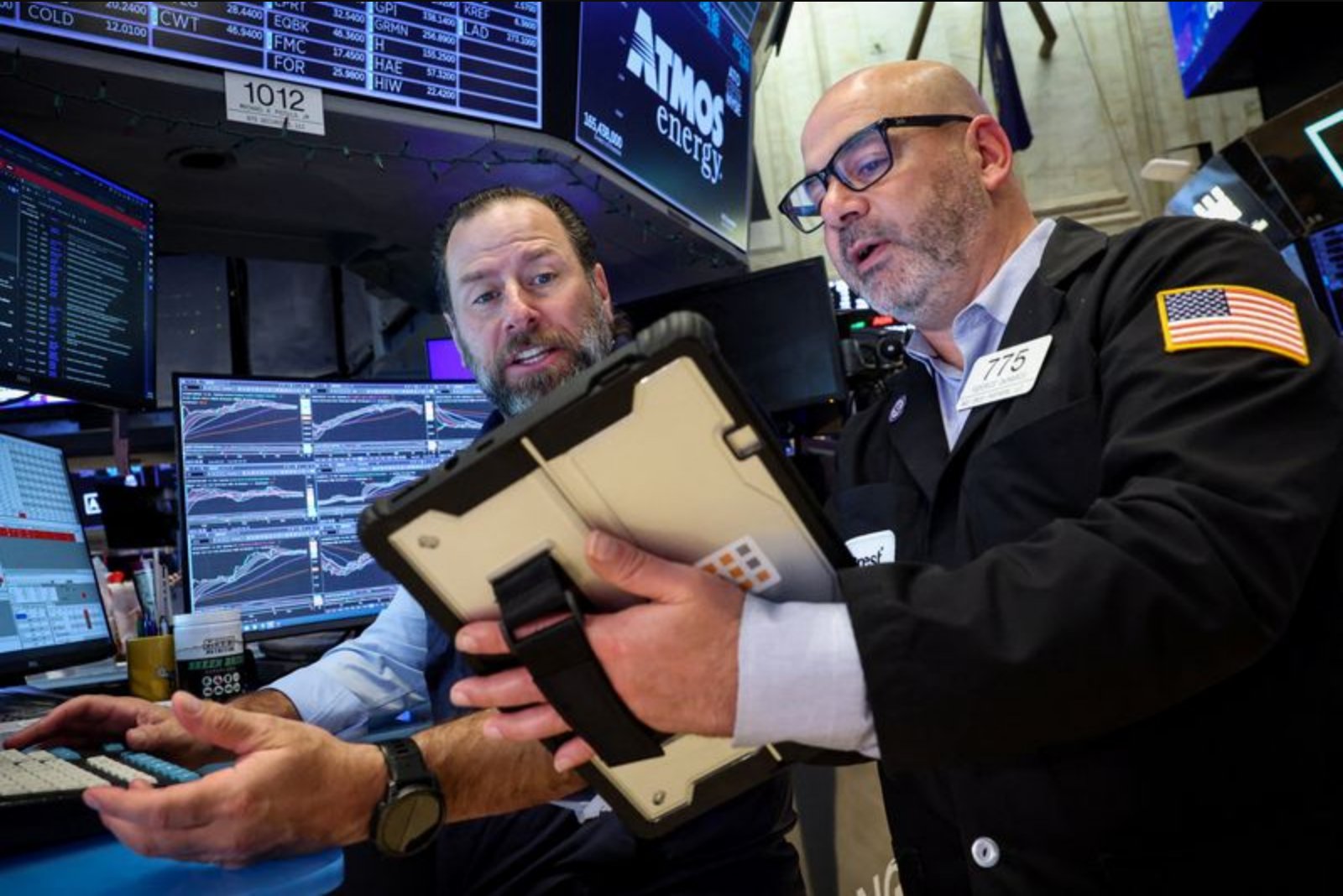
April 15 - U.S. stock futures showed little net movement on Wednesday as investors paused after a recent upswing and prepared for incoming corporate results and comments from Federal Reserve officials. Signs that talks between Washington and Tehran could resume have helped underpin equities this week, even as a U.S. military blockade of Iranian ports remains in place.
The market’s reaction indicates that investors, fatigued by the conflict, are ready to move back into risk assets at the first indications of easing tensions. At 05:00 a.m. ET, Dow e-minis and U.S. S&P 500 E-minis were flat, while Nasdaq 100 E-minis rose 35.5 points, or 0.14%. The benchmark S&P 500 index is nearing its first intraday record high since the conflict erupted.
Bank earnings and why they matter
Wednesday brings another full day of earnings that investors will examine for insight into how companies are handling the fallout from the war. Attention was focused on two major banking names scheduled to report - Bank of America and Morgan Stanley. In the premarket, Bank of America shares were up 0.4% and Morgan Stanley shares were up 0.1% ahead of their results.
So far this week, comments from banks have suggested U.S. consumers remain in good financial condition and that pipelines for initial public offerings and corporate deals should stay healthy, provided the conflict does not intensify and persist for an extended period.
Market caution and commodity stress
Despite the recent climb in equities, some market analysts have cautioned that gains could be vulnerable to abrupt pullbacks if developments in the Middle East fail to live up to the optimistic assumptions priced into stocks. BofA Global Research analysts wrote:
"U.S. equities appear to be looking through risks still being priced in commodity markets,"
"With the ceasefire appearing fragile and signs of stress in commodity markets still evident, the equity retracement appears to be looking through the risks of re-escalation."
Oil prices fell on Wednesday but remain 31% above pre-war levels. On Tuesday, the International Monetary Fund lowered its global growth forecast, attributing the downgrade to war-driven spikes in energy prices. The IMF warned that a prolonged conflict could push the world toward a recession.
Fed speakers and individual movers
Traders will also be listening to Federal Reserve Governor Michael Barr and Fed Vice Chair for Supervision Michelle Bowman, who are scheduled to speak on Wednesday. Their remarks are expected to add context on supervisory outlook and policy considerations.
On the individual stock front, Nike shares rose 2.7% after Chief Executive Elliott Hill purchased additional shares in the company. Broadcom advanced 3.2% after Meta extended its custom chips agreement with the firm.
Market participants will use the combination of corporate results, remarks from Fed officials, and any new geopolitical developments to reassess risk positioning and pricing across equities and commodities in the sessions ahead.