
Iran’s national soccer team arrived in Tijuana shortly after five a.m. local time on Sunday, touching down in the Mexican border city that sits across from San Diego as the squad prepares for three World Cup fixtures hosted in the United States. The delegation had flown overnight from Turkey, where the team had been training for the previous three weeks.
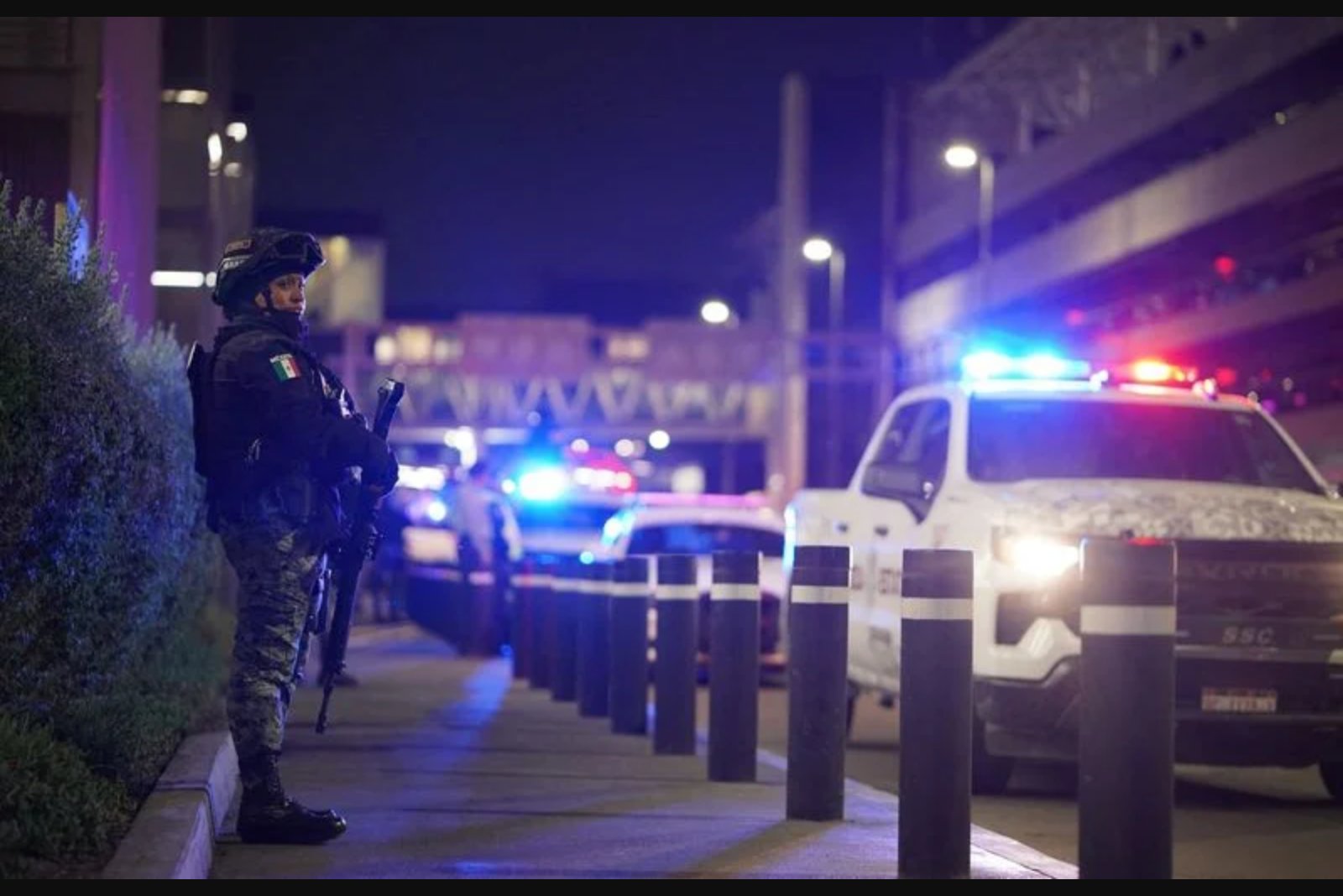
As the team’s bus departed the airport it made a brief stop so members of Iran’s football federation could acknowledge about 20 fans gathered with Iranian flags. A cordon of military and police personnel then accompanied the delegation along the route from the airport to the Marriott hotel that will serve as the squad’s local base.
Soccer holds deep popular significance in Iran and is widely followed across the political spectrum, but the national team’s presence at this World Cup has been overshadowed by a series of politically charged issues. The unrest at home, a protracted conflict involving the United States, and a protracted dispute over whether members of the delegation would be able to enter the United States have all added friction to what is usually a sporting mission.
The Iranian football federation negotiated a last-minute relocation of the team’s U.S.-area base from Arizona to Mexico. Iran’s ambassador in Mexico, Abolfazl Pasandideh, said the move was prompted by uncertainty about visas and a growing sentiment within Iran that the squad’s footprint in the United States should be minimized.
On the schedule, Iran is due to play two Group G matches near Los Angeles - facing New Zealand on June 15 and Belgium on June 21 - before travelling north to meet Egypt in Seattle on June 26. There remains a tournament contingency in which Iran and the United States could meet in the round of 32 if both sides finish second in their respective groups.
Pressure on players
The team’s participation comes against the backdrop of extensive domestic upheaval. Widespread protests that began late last year demanded an end to clerical rule and were met by a harsh crackdown that, according to reporting, resulted in the deaths of more than 2,000 people - the deadliest unrest since the 1979 Islamic Revolution. The geopolitical environment intensified after the United States and Israel carried out attacks on Iran on February 28, setting off a months-long conflict that continues.
Observers say players have been squeezed by competing expectations. Abbas Milani, director of Iranian studies at Stanford University, described the situation as a lose-lose for the athletes. "It has become a lose-lose for the players," he said. "There are pressures on players not to play with the team, pressure to show comity with the people, and the athletes are just there to play soccer." The episode at the 2022 World Cup, when Iran’s squad was alternately cheered and jeered after some players refrained from singing the national anthem, was cited as an instance of how on-field behavior has become tied to domestic politics. Milani said those pressures have only increased since that tournament.
Visa dispute and delegation composition
The question of visas produced last-minute uncertainty. After several weeks of doubt, the United States granted visas to the players on a Friday that came only 10 days before Iran’s first scheduled match. Iran’s football federation said, however, that several members of the delegation were denied visas, including what it called "key managerial and administrative members," and accused the U.S. of failing to meet host obligations and of violating FIFA regulations.
Pasandideh said 15 of the 70 people who arrived in Tijuana had not been granted permission to enter the United States. FIFA did not respond to requests for comment about the dispute.
An official with the U.S. State Department said the administration had issued "the visas necessary for Iran to compete in the World Cup, including for athletes and necessary support staff." That same official added: "We will not allow the Iranian team to abuse this system to sneak terrorists into the U.S. under false pretenses."
Mexico’s role and local reception
Mexico agreed to host the Iranian delegation in Tijuana, a move described by Tonatiuh Guillen, who led Mexico’s national immigration agency between 2018 and 2019, as a "gesture of cooperation." The limited public greeting at the airport - the small cluster of supporters and the security escort - underscored the politically sensitive nature of the team’s arrival and the efforts taken to manage both safety and optics.
For the players and staff who are present, the immediate task is to prepare for competition amid this unusual mix of security arrangements and political scrutiny. The relocation to a Mexican base, short-notice visa approvals for many members of the squad, and the absence of some administrative personnel mean the delegation is entering the tournament under conditions that are far from routine for World Cup participants.
As the tournament proceeds, the interplay of sport, domestic politics in Iran, and international tensions will remain a source of attention around the team’s matches on U.S. soil.