
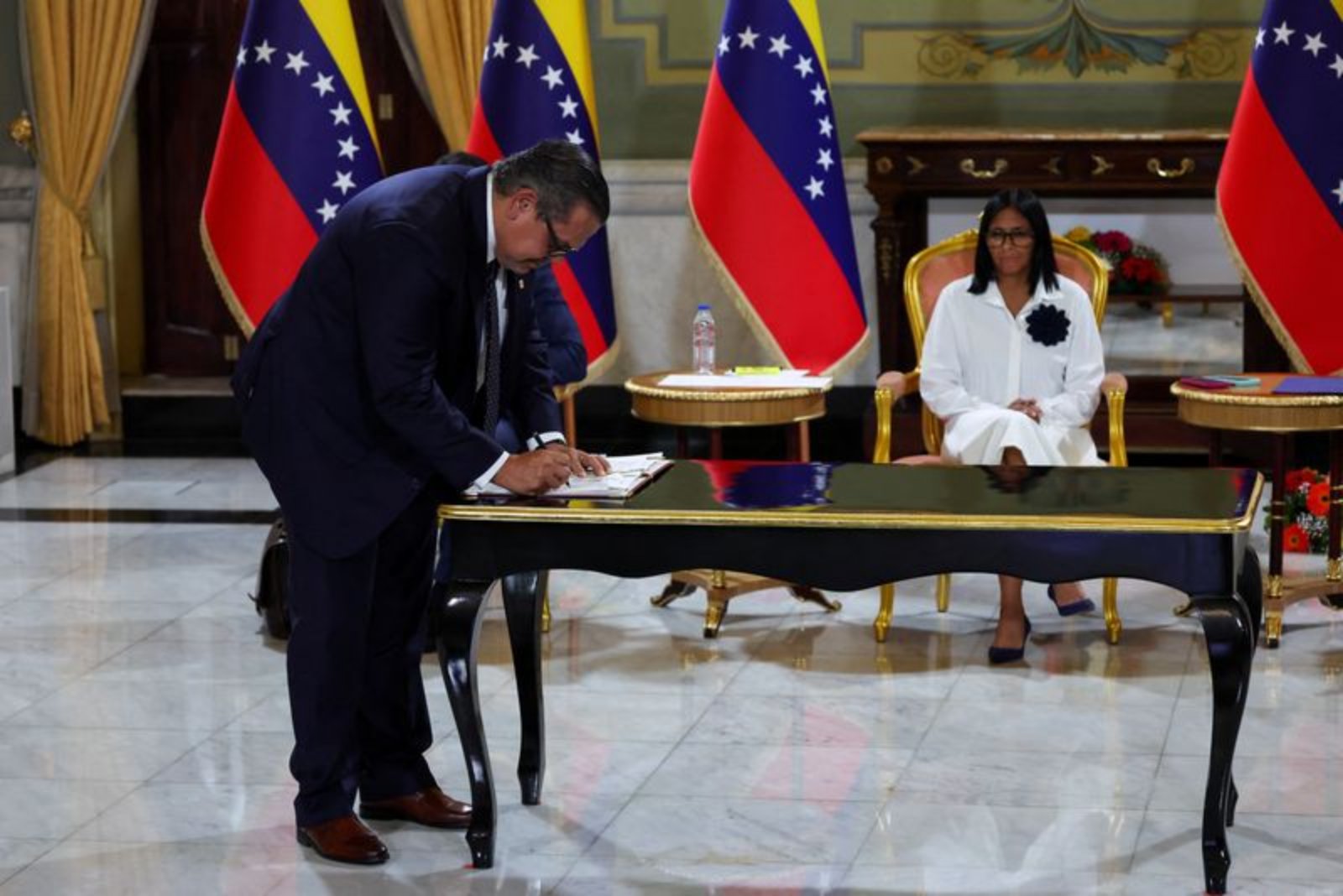
Chevron finalized two agreements on Monday to expand its presence in Venezuela’s Orinoco Belt, restructuring assets with state-owned PDVSA that will let the U.S. major concentrate on heavy crude projects in the region.
At a public event attended by company executives and Venezuelan officials, the agreements were announced as an asset swap that adds a new heavy crude area to Chevron’s principal Orinoco project while the company returns an offshore gas block and a smaller crude holding elsewhere in the country.
The pacts were described as among the first large expansion deals since the launch of a U.S. $100 billion reconstruction plan for Venezuela’s energy sector and the approval in January of sweeping reforms to the country’s principal oil law, measures cited as encouraging foreign investment.
Chevron will raise its stake in one of its Orinoco joint ventures, Petroindependencia, to 49% from the prior 35.8%. In exchange, the company agreed to relinquish the Loran offshore gas field and its interest in a small western Venezuela field. As part of the transaction, Chevron will acquire Ayacucho 8, a new oil area that will be folded into its existing Petropiar project in the Orinoco.
Company executives led by Javier La Rosa, head of Chevron’s Base Assets and Emerging Countries, signed the agreements alongside PDVSA officials in the presence of acting President Delcy Rodriguez.
Chevron characterized the swap as "a mutually beneficial agreement, which will consolidate all parties’ focus on strategic assets in the country," in a post-event release.
Chevron executives previously indicated in January that the firm could lift output in Venezuela by about 50% over the next two years within its existing footprint. Today, Chevron’s joint ventures with PDVSA are producing roughly 260,000 barrels per day of crude, a figure that represents about one quarter of Venezuela’s total oil output.
The transaction reallocates Chevron’s operational focus toward heavier crude operations in the Orinoco Belt while handing back assets outside that core area. The agreements signal a reorientation of the company’s Venezuelan portfolio toward blocks it regards as strategic within the country’s largest oil-producing region.
Details in the announcement emphasized consolidation of strategic assets and an intent to boost participation in regions considered coveted by foreign producers, consistent with the company’s stated production ambitions within its current Venezuelan footprint.
Context and implications
This set of agreements refines Chevron’s asset mix in Venezuela by increasing its stake in a major joint venture and by swapping peripheral holdings for an additional heavy oil area in the Orinoco. The move aligns with the company’s earlier public comments about potential production growth and follows regulatory and policy developments cited as supportive of foreign investment.