
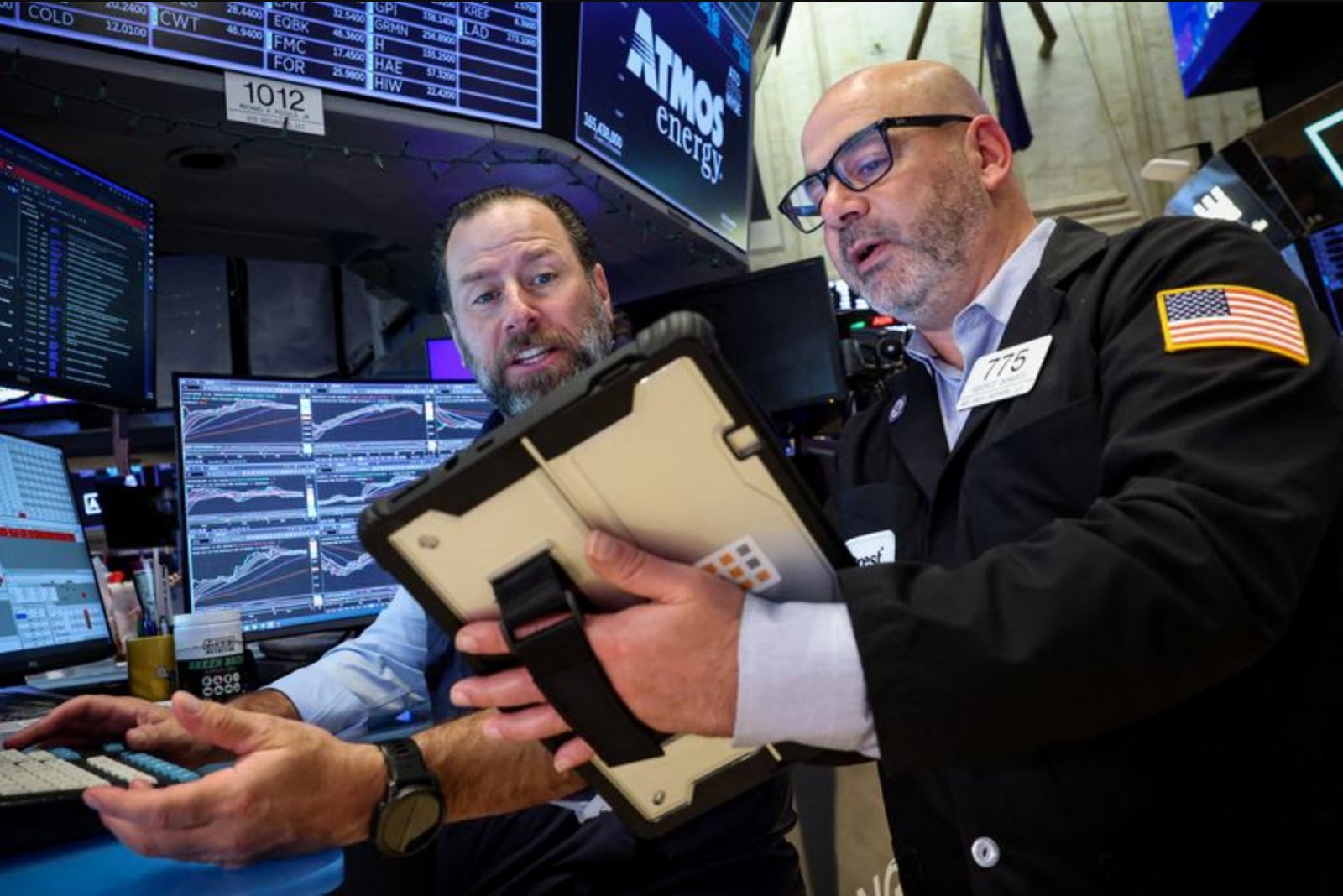
U.S. stock indexes ended the trading session with sizable gains Monday as hopes for a cooling of tensions in the Middle East helped investors set aside the collapse of initial U.S.-Iran negotiations and concentrate on the kickoff of first-quarter corporate results.
Equities staged a notable late-session recovery, with nine of the 11 major S&P 500 sectors finishing higher. Financials and technology led the advance, while the software and services subset, which has seen significant weakness year to date, was among the stronger performers on the day.
The dollar declined for a sixth consecutive session, reflecting reduced safe-haven flows as market participants registered signs of progress toward de-escalation in the region. U.S. Treasury benchmark yields moved slightly lower after a choppy day of trading, and commodities showed mixed action as oil trimmed gains to settle below the $100 per barrel threshold and gold slipped modestly.
Market detail - highlights
- Stocks: European markets closed lower, pressured by concerns over a potential Iran conflict, while U.S. equities rallied late after indications of progress in peace-related discussions.
- Sectors: Of the 11 S&P 500 sectors, nine finished in positive territory. Financial and technology names were top contributors to the advance.
- FX: The U.S. dollar lost ground for the sixth straight session as the Strait of Hormuz blockade took effect, reducing some demand for the dollar as a safe haven.
- Bonds: U.S. Treasury yields edged down in volatile trade.
- Commodities: Crude oil pared earlier gains to close below $100 per barrel and gold moved slightly lower.
Selected context and reads market participants noted
- The U.S. military has stated it would block all maritime traffic entering and exiting Iran's ports.
- Crude oil at one point climbed back above $100 per barrel before settling below that level.
- Hungary's election winner, Peter Magyar, has promised constitutional changes and a renewed orientation toward the European Union.
- Goldman Sachs reported quarterly profit above expectations, but its shares fell on weakness in fixed income trading.
- The leader of the Roman Catholic Church indicated an intention to continue speaking out against war following a U.S. attack.
Key themes traders are watching
AI concerns and sector rotation - The S&P 500 software and services index, which includes major names such as Oracle, Salesforce and Intuit, has been heavily pressured so far this year, down 23.5 percent year to date amid investor worries about artificial intelligence-related disruption. Still, that index was among the day's top performers, gaining 4.6 percent by the close.
Earnings season - First-quarter earnings reporting ramps up this week with major banks in the spotlight. Analysts currently expect aggregate year-on-year S&P 500 earnings growth of 13.9 percent, a revision down from a 14.4 percent forecast at the start of April according to market data providers.
Inflation and energy costs - Political developments have raised the prospect of sustained upward pressure on oil and gasoline prices. Political statements warned that prices could remain elevated through the midterm election period as a result of recent military action. In addition, consumer survey data highlighted spiking gasoline costs as a factor contributing to a record low in consumer sentiment.
What could move markets next
- Further developments in the Middle East and any new diplomatic or military actions.
- U.S. producer price data for March.
- Speeches from several Federal Reserve officials, including the presidents and governors scheduled to speak this week.
- Quarterly reports from major U.S. banks such as JPMorgan Chase, Citigroup and Wells Fargo.
- International data releases, including Japan's industrial output for February, India's wholesale inflation for March and March consumer price reports from several European countries, plus South Korea's March trade figures.
Closing observations
Monday's session underscored the market's sensitivity to geopolitical headlines and the pacing of corporate reporting. Investors rotated back into economically sensitive and growth-oriented areas of the market as the immediate perceived risk from the Middle East eased, at least temporarily. Attention now shifts to earnings and a fresh slate of economic releases and central bank commentary that are likely to influence near-term positioning.