
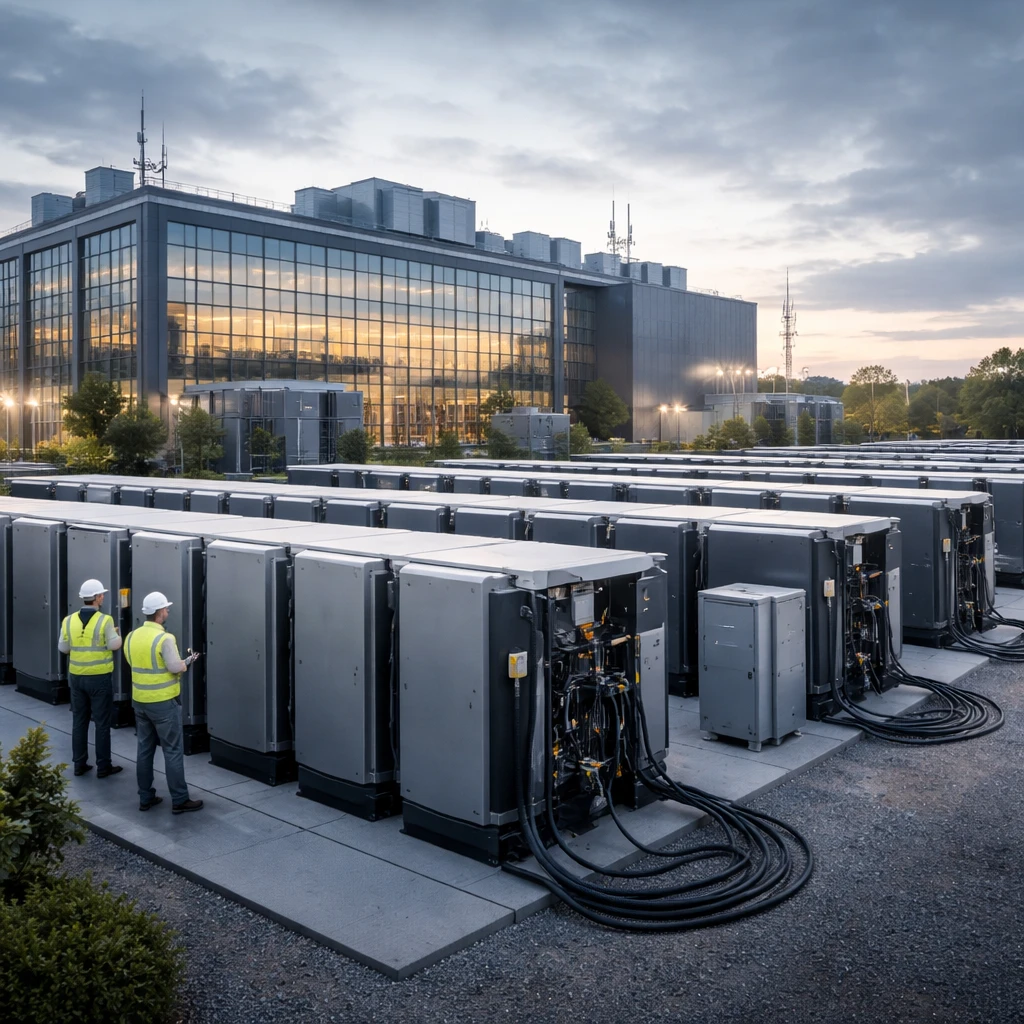
Shares of Bloom Energy (NYSE:BE) jumped over 6% in after-hours trading on Monday, adding to a 5.98% gain recorded during the regular session, after the company revealed an expanded collaboration with Oracle (NYSE:ORCL) to supply fuel cell systems for the latter’s AI and cloud infrastructure needs.
Under the terms of a master services agreement, Oracle has contracted an initial 1.2 gigawatts of capacity. Bloom Energy said deployment is already in progress across Oracle projects in the United States and will continue into next year. The agreement also contains an option allowing total capacity to increase up to 2.8 gigawatts.
Bloom described the fuel cell systems as purpose-built to meet Oracle’s cloud infrastructure requirements. The company emphasized the systems’ suitability for higher-density AI workloads and noted that the technology is aligned with emerging 800 V dc standards. Bloom also highlighted the modular design of the systems and their ability to be deployed more rapidly than traditional power solutions.
The expanded contract builds on a prior working relationship between the two companies. Bloom cited a previous deployment in which it delivered a fuel cell system to Oracle in 55 days, beating an anticipated 90-day schedule, according to a press release.
In a separate contractual note, Bloom issued a warrant to Oracle on April 9 on terms previously announced on October 30, 2025.
Clear summary
Bloom Energy’s stock reaction followed an announcement that Oracle has agreed to an initial 1.2 GW purchase of Bloom’s modular fuel cell systems for cloud and AI infrastructure, with deployments underway in the US and an option to expand to 2.8 GW. The systems are presented as faster-to-deploy, higher-density power solutions compatible with emerging 800 V dc standards.
Key points
- Bloom’s shares rose over 6% in after-hours trading, adding to a 5.98% daytime gain.
- Oracle contracted an initial 1.2 gigawatts under a master services agreement, with deployment ongoing in the United States and continuing into next year; the agreement includes an option to increase capacity to 2.8 gigawatts.
- Bloom’s fuel cell systems are aimed at higher-density AI workloads, incorporate technology aligned with emerging 800 V dc standards, and are modular for faster deployment compared with traditional power solutions.
Risks and uncertainties
- The timing of full deployment extends into next year, which introduces execution timing risk for the projects currently underway and for market expectations tied to near-term capacity additions.
- The broader scale of the engagement depends on the option to expand capacity to 2.8 gigawatts being exercised; the contract notes the option but does not guarantee its use.
- The reported issuance of a warrant to Oracle on April 9 references terms announced on October 30, 2025, a scheduling detail that stakeholders may seek clarification on as part of contractual monitoring.
Sectors affected
- Cloud infrastructure and data center operations, given the stated use case for AI and cloud workloads.
- Clean energy and power systems, reflecting demand for modular fuel cell technology and higher-voltage dc architectures.
- Public equity markets, as evidenced by the immediate share-price response to the announcement.