
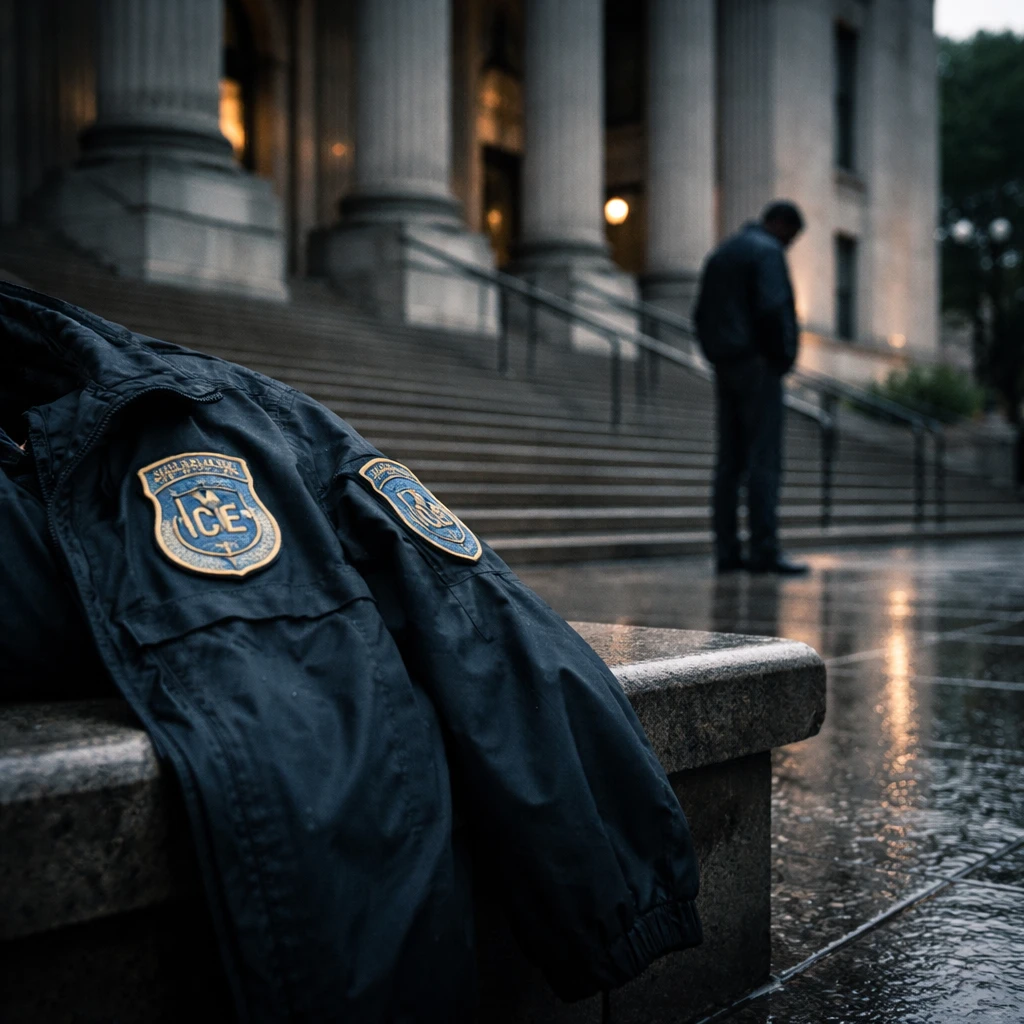
A federal grand jury has indicted an Immigration and Customs Enforcement agent on six counts of making false statements about a shooting that occurred in Minnesota during last winter's deportation surge, according to a person familiar with the matter who spoke on condition of anonymity because they were not authorized to discuss the probe publicly.
The agent, identified as Christian Castro, was charged with lying to investigators, the person said. The indictment will be unsealed once Castro is taken into federal custody, the same source added.
The decision to pursue federal charges represents an unusual step from the Justice Department, which has generally refrained from asserting criminal allegations against federal officers, the person said. This action is the first known Justice Department prosecution of a federal immigration officer tied to the Minneapolis operation that formed part of President Donald Trump’s immigration crackdown.
Castro also faces state-level criminal charges in Minnesota for an incident on January 14 in which he allegedly shot and wounded Julio Cesar Sosa-Celis in the leg. That event occurred at the height of the administration’s deportation campaign in Minnesota, which prompted weeks of public protest.
There is an active Minnesota arrest warrant for Castro. He spent 90 days in a Texas county jail and was released last week after Texas Governor Greg Abbott, a Republican, said he would not sign extradition papers forwarded by Minnesota Governor Tim Walz, a Democrat.
Minnesota's state charges include an allegation that Castro falsely reported a crime after telling his superiors at the Department of Homeland Security that Sosa-Celis and others had attacked him with a snow shovel and a broom. Video evidence later undermined that account, the person said.
The Department of Homeland Security has suspended Castro, and a civil rights investigation is underway. The person familiar with the case said no final determination has been reached in that civil rights inquiry.
Separately, a federal prosecutor who had been working on the matter, Matt Evans, was fired this week after a report said he had emailed Sosa-Celis’ lawyers asserting that Department of Justice attorneys had blocked his efforts to pursue federal charges. The firing followed reporting that Evans told defense attorneys DOJ had halted his work to bring federal charges, according to the person familiar with the probe. Evans is now under investigation for obstruction of a grand jury investigation, the person added.
Since his release from the Cameron County jail last week, Castro has not publicly addressed the state charges against him and could not be reached for comment at the time of this report, the person said.
The Trump administration has largely defended the actions of ICE agents and has made proclamations that they possess absolute immunity from state prosecutions, a claim the article says is incorrect.
Robin Wolpert, a lawyer representing Sosa-Celis, issued a statement calling for stronger civil rights charges and full accountability. "Mr. Castro has been indicted for making false statements," she said. "But he made them to cover up the fact that he shot my client through the door of an occupied house without a self-defense justification."
The American Civil Liberties Union of Minnesota announced on Thursday it will represent Julio Cesar Sosa-Celis as he files a lawsuit against the Trump administration.
Context and ongoing developments
The federal indictment adds a new layer to a case that already has active state proceedings and a suspended federal employment status. It also coincides with personnel and procedural questions within the Justice Department, as illustrated by the firing of a prosecutor connected to the matter and the subsequent inquiry into potential obstruction of a grand jury probe.
At present, officials have said the federal charges will be unsealed once Castro is in custody, the civil rights review remains open, and the state arrest warrant stands. Those conditions together mean the case will continue to evolve on multiple legal tracks.