
World September 3, 2026 12:23 PM

Canada Signals Readiness to Reopen U.S. Trade Talks if Deal Ensures Stability and Credibility

Prime Minister Carney says a mutually beneficial agreement is possible and welcomes signs of a softer U.S. negotiating posture

By Hana Yamamoto
Share
Twitter Reddit Facebook LinkedIn

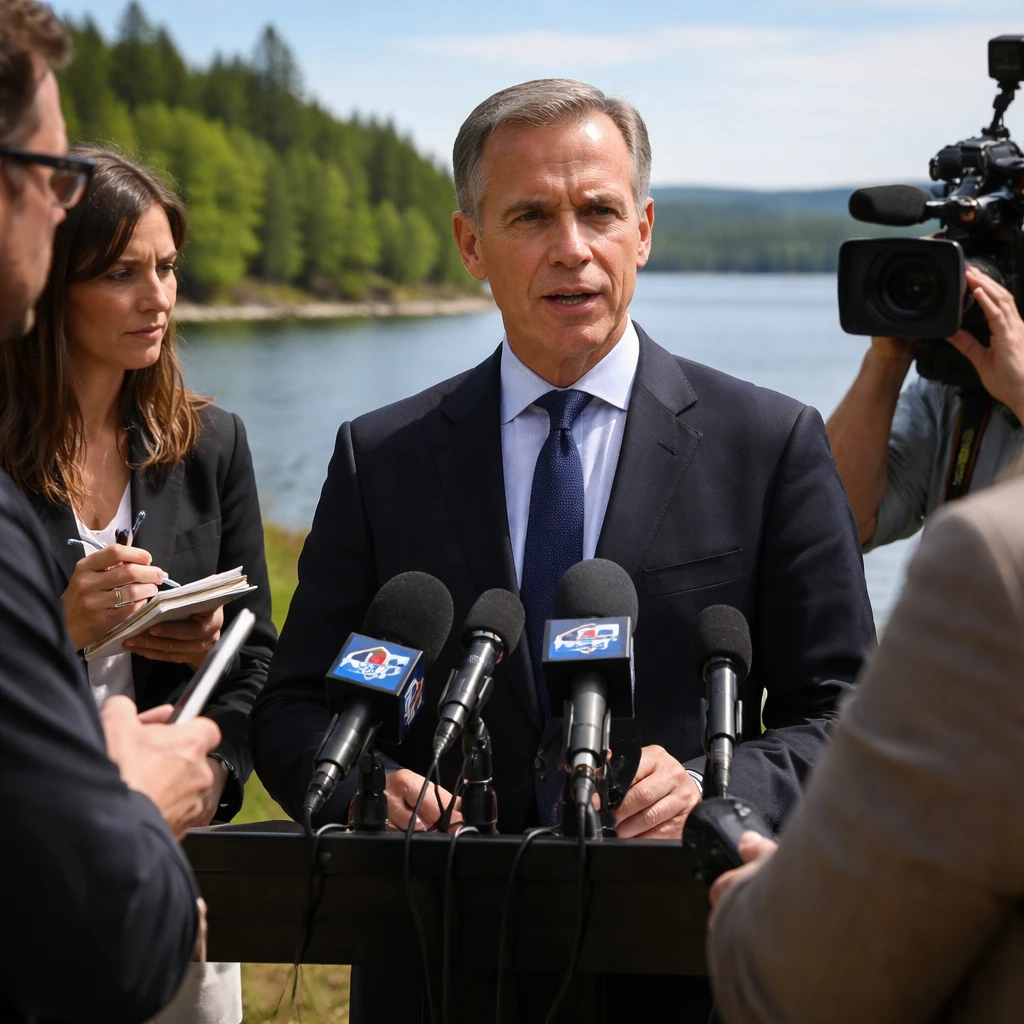
Canadian Prime Minister Mark Carney said his government is prepared to negotiate a U.S. trade agreement that serves the interests of workers, families and businesses on both sides, provided the pact offers stability and credibility. Speaking in Thunder Bay, Ontario, Carney dismissed U.S. cabinet members' assertions that Canada walked away over domestic politics and noted a recent softening in Washington's stance after what he described as hardline bargaining before talks stalled. U.S. President Donald Trump later posted a warning about political fallout on Truth Social.

Canada Signals Readiness to Reopen U.S. Trade Talks if Deal Ensures Stability and Credibility
Summarize with
ChatGPT Perplexity Claude Grok Gemini

Key Points

  • Canada says it is ready to sign a U.S. trade deal that benefits workers, families and businesses in both countries, if the agreement provides stability and credibility - impacts trade and business sectors.
  • Prime Minister Mark Carney noted a recent softening in the U.S. negotiating approach after what he described as an "our way or the highway" stance prior to talks breaking down - relevant to trade negotiations and cross-border commerce.
  • U.S. political commentary, including a Truth Social post from President Donald Trump, has added a layer of political rhetoric to the negotiations, which can affect market and political risk perceptions - relevant to markets tied to Canada-U.S. relations.

Canadian Prime Minister Mark Carney said on Thursday his administration stands ready to sign a trade agreement with the United States so long as any pact delivers stability and credibility for people and businesses in both countries.

Speaking to reporters in Thunder Bay, Ontario, Carney framed the prospective agreement as one that would serve "Canadian workers, families and businesses" while also being "in the interests of American families, American businesses, American consumers," adding, "... we’re ready to sit down and strike that deal when the Americans are ready."

Carney directly addressed recent comments from U.S. officials, rejecting suggestions that Canada walked away from negotiations because of domestic political considerations. In response to a question, he said, "I don’t think, with all respect, appointed, unelected cabinet members in the United States are experts on Canadian politics."

He also described a change in tone from the U.S. side compared with the approach seen during the run-up to the collapse of talks last month. Carney said there had been an "our way or the highway" posture from the United States on several matters right up to the final hours, and that those positions helped precipitate the breakdown. "There were a few issues that the United States was arguing right up to the last hour," he said.

Carney suggested that this inflexibility has moderated. "Now, they’re not," he said, referring to earlier U.S. negotiating stances. He pointed to the inconsistency of pressing for inclusion of particular elements related to Canadian language and culture and then behaving as if those elements did not matter. "So all of a sudden, they don’t care about Canadian language or culture and those elements. Well, if they didn’t care, they shouldn’t have kept them in the deal," he said. "It’s good. We welcome that."

Shortly after Carney’s remarks, U.S. President Donald Trump posted on Truth Social a comment that it was "very good for Canadian Politicians like Prime Minister Mark Carney to make President Donald J. Trump ’the enemy.’" In the post, Trump warned that the country’s economy would then collapse and be "Worse than anything that has ever happened to a Canadian politician."


The prime minister’s comments underline Ottawa’s stated objective of achieving a trade arrangement that provides predictability for markets and households while signalling a readiness to re-engage if Washington presents terms that Canada can accept as credible and stable. His remarks also reflect tensions between political rhetoric and negotiation strategy evident since talks broke down.

Risks

  • Domestic political rhetoric in the United States and Canada could complicate negotiations or public perception, affecting sectors dependent on cross-border trade and investment.
  • Prior hardline U.S. negotiating positions that Carney described as persisting "right up to the last hour" represent an uncertainty in negotiation dynamics, which could delay or derail an agreement and impact exporters and importers.
  • Public warnings and adversarial statements from political leaders may increase short-term volatility in market sentiment around Canada-U.S. economic ties, with potential effects on consumer-facing businesses and trade-reliant industries.

More from World

Strike on Kyiv High-Rise Kills One, Sparks Fire and Evacuations Sep 3, 2026 Iranian Military Deaths from Recent U.S. Strikes Reach at Least 13, Semi-Official Media Reports Sep 3, 2026 Denmark Says Russia Has Sought to Recruit Citizens to Assist Sabotage Planning Targeting Defence Firms Sep 3, 2026 Poland’s central bank likely to keep rates steady through 2026, council member says Sep 3, 2026 Influencer Presence at U.S. Open Raises Questions About Courtside Etiquette Sep 3, 2026