
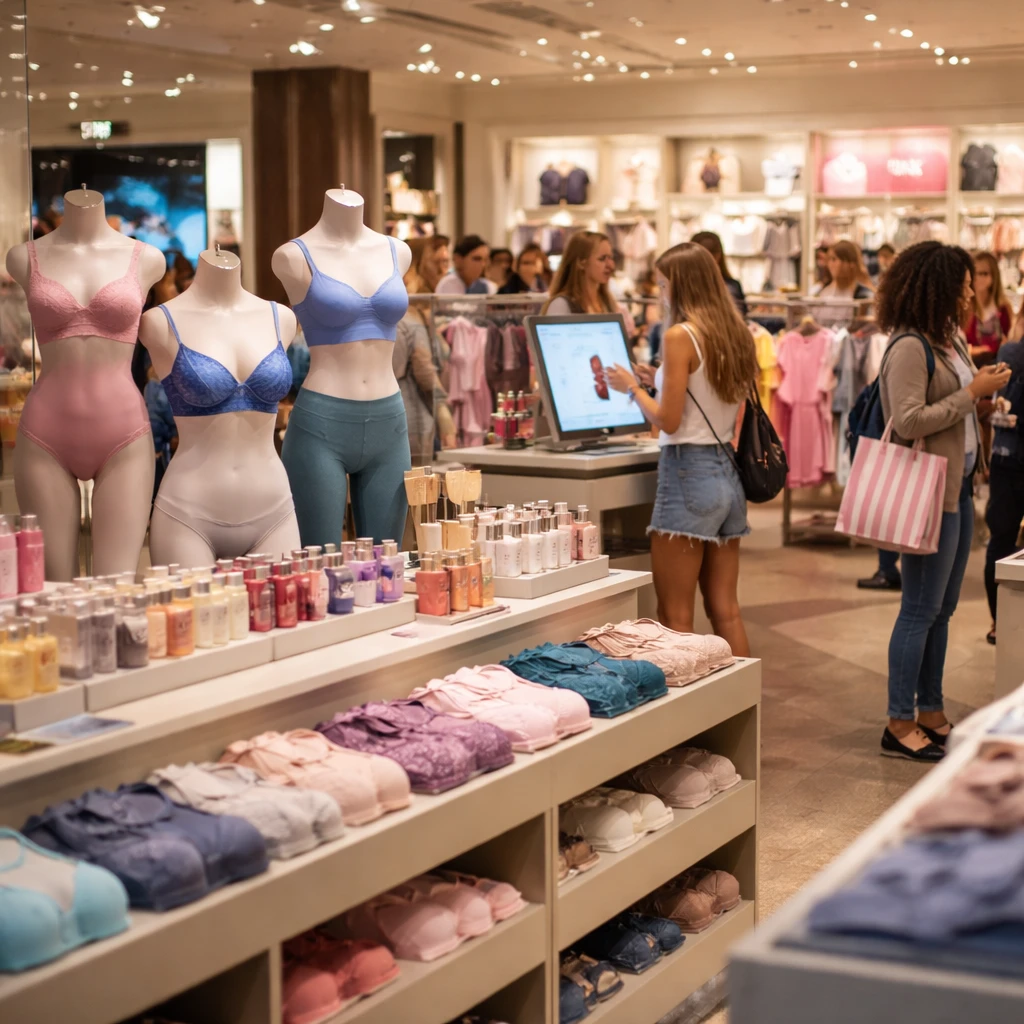
Victoria's Secret posted a sizable earnings-per-share surprise for the quarter but saw its shares decline sharply as the outlook for the next quarter signaled constrained near-term profit. The company reported an EPS of $0.95 versus analysts' expectations of $0.75, a 26.7% beat, yet the stock dropped 14.5% to $72.50 as of Sep 3, 1:49 PM EDT as markets reacted to guidance.
The quarter in brief
- EPS: $0.95 versus $0.75 expected, reported Sep 3, 2026.
- Revenue: $1.61 billion versus $1.62 billion expected, a slight miss.
- Comparable sales: up 9% year over year.
- Adjusted gross margin: 38.8%, an improvement of 320 basis points.
- Adjusted operating income: $124 million, up 125% year over year.
Management noted that more than $140 million in tariff refunds contributed to Q2 operating income, prompting investors to question how persistent the profit uplift will be once those refunds are excluded.
Questions answered by the quarter
The company addressed several core issues about the sustainability and breadth of its turnaround.
- Is the recovery broadening? Yes. Comparable sales increased for the fifth straight quarter. Bras grew in the mid-teens, PINK achieved high-single-digit growth, and Beauty recorded its 12th consecutive quarter of sales growth.
- Are customers returning without heavy discounting? Management attributed much of the margin improvement to higher regular-price selling and reduced promotional activity, suggesting demand strength rather than clearance-driven gains.
- Is the brand attracting younger shoppers? The customer file expanded by mid-single digits, with new-customer acquisition growing faster and led by the 18-24 age band. The company emphasized digital and social-first marketing as key drivers.
- Can the company expand internationally? International growth remains a clear strategic lever. Management projects 49 to 71 net new stores globally in 2026, while U.S. company-operated door counts are expected to remain broadly flat.
- Why is Q3 guidance weak? Revenue guidance for Q3 sits at $1.57 billion to $1.60 billion, while operating income guidance is only $10 million to $20 million. Management pointed to planned marketing investment and tariff uncertainty as factors compressing near-term profitability. The midpoint of the operating-income range is below the reported analyst estimate of $24.4 million.
Upcoming catalysts to monitor
Several near-term events and metrics will be important to assess whether the recovery is durable and profitable without exceptional items.
- Q3 earnings - The company is calendar-listed to report on Dec 2, 2026, at market open. Consensus stands at $0.0496 EPS and $1.57 billion in revenue.
- Holiday execution - Given seasonal importance, watch comparable sales trends, inventory quality, and whether promotional activity remains curtailed or increases.
- Margin normalization - The central test is whether merchandise-margin improvements hold when tariff refunds are excluded.
- Marketing returns - Management is deploying initiatives such as the "Angels Among Us" docuseries and the Fashion Show to boost engagement; investors will assess whether these programs drive traffic efficiently.
- Store productivity - The Store of the Future format now represents 45% of the global fleet; further productivity gains here could support sales without expanding U.S. store counts aggressively.
- Full-year targets - Management raised FY2026 guidance to $7.10 billion to $7.18 billion in revenue, $560 million to $590 million adjusted operating income, and $4.45 to $4.70 adjusted EPS.
Bull and bear cases
Investors can frame the outlook in two competing narratives:
- Bull case - Continued product innovation, success attracting younger shoppers, a shift toward regular-price selling, and international store openings could underpin a durable recovery.
- Bear case - Q2 profits were materially aided by tariff refunds, and the subdued Q3 operating-income forecast may indicate weaker underlying operating leverage. The stock's strong 215.5% one-year gain as of Sep 3, 1:49 PM EDT also raises the bar for future performance.
Takeaway
The quarter confirmed an improvement in demand metrics and delivered meaningful margin expansion, but near-term profitability remains clouded by tariff-related windfalls and increased marketing spend. The critical question for Q3 and beyond is whether the company can sustain profit gains without exceptional tariff assistance.