
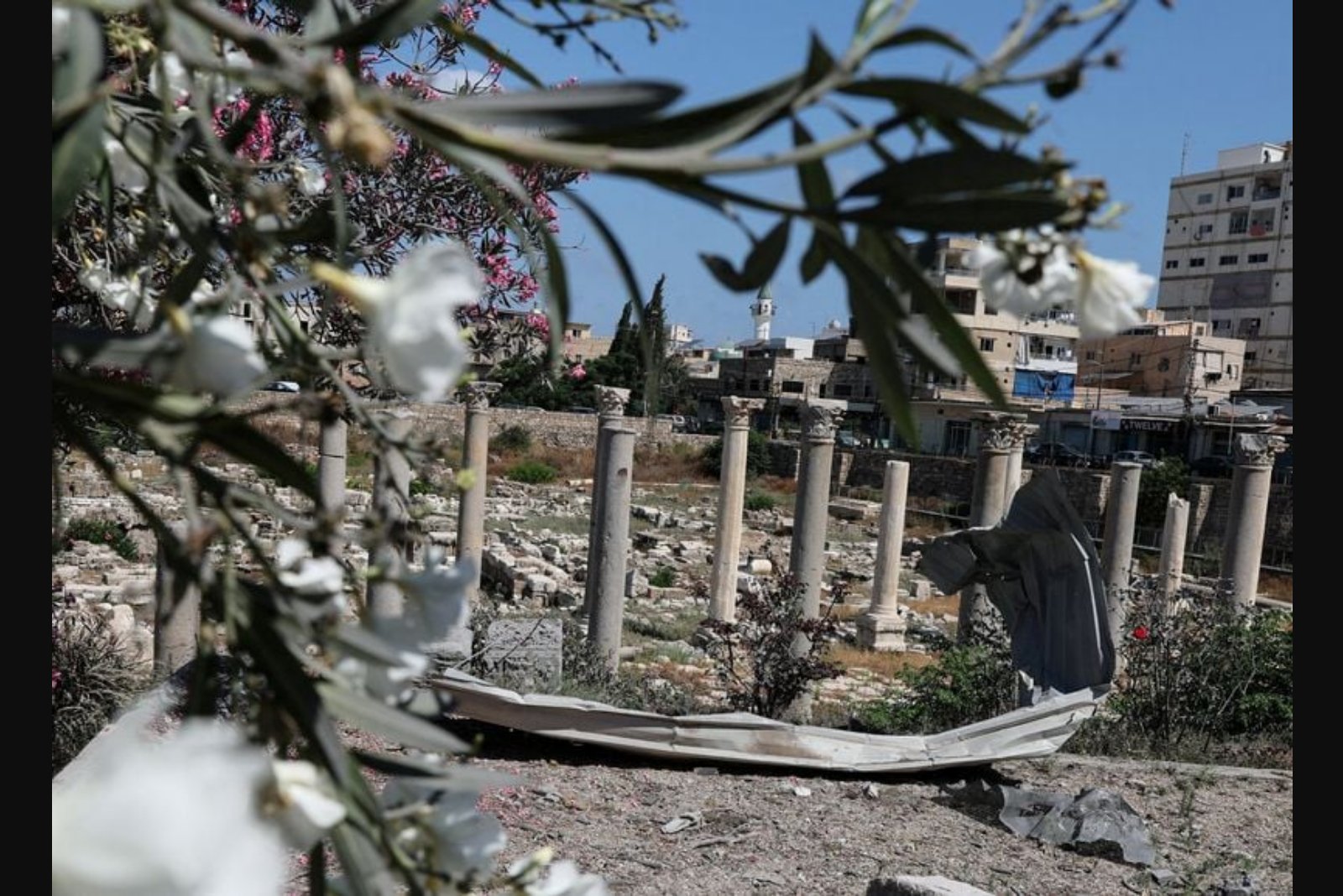
Lebanon’s Culture Minister has said that Israel’s nearly four-month military campaign, described by Israeli authorities as aimed at the Iran-backed armed group Hezbollah, has inflicted significant damage on revered historical, religious and archaeological sites across southern Lebanon.
The minister recounted instances of destruction that include a crown being blown off an ancient column in the UNESCO-listed site in the port city of Tyre, the destruction of a pilgrimage site serving both Muslims and Christians in another southern town, heavy strikes on a Mamluk-era market in Nabatieh and the razing of centuries-old border towns. He said Israeli troops have occupied a corridor of territory roughly 10 km (6.2 miles) deep into Lebanon, and that this occupation has blocked Lebanese authorities from fully surveying and documenting the damage.
"We cannot work under the shadow of occupation," the minister said, referring to the difficulty of assessing heritage loss while an area remains off-limits to Lebanese staff and officials. That occupied zone, he added, contains sites such as the medieval Beaufort Castle and villages that for centuries were home to Christian, Shi’ite Muslim and Sunni Muslim communities, along with their places of worship. "There are villages that have been completely bulldozed," he said.
Beyond the occupied strip, the minister said Israeli air strikes have struck ancient towns as well, naming Tyre and Nabatieh among those hit. He said heavy bombing in the town of Tebnin has raised fears that its Crusader fortress could have been damaged.
Tyre, which the minister noted has nearly 5,000 years of history and Roman ruins, remains one of Lebanon’s most significant concentrations of archaeological and cultural heritage. The site includes a collection of classical-era columns and mosaics. Officials from Lebanon’s antiquities department described scenes of widespread damage, with dust-covered vehicles bearing blown-out windows parked among toppled columns. Protective barriers that had been erected to shield parts of the ruins were themselves displaced and now lie amid the remains they were intended to protect.
"Look at the damage that happened to it, it’s as if it all exploded from underneath, as if an earthquake hit it," said an official from the antiquities department who stood beside a Roman mosaic and surveyed the destruction.
The deputy mayor of Tyre said the city should be internationally protected and not targeted in any conflict, underlining the local view that such heritage sites warrant special safeguarding.
International cultural authorities have expressed alarm. In a statement last month, the United Nations Educational, Scientific and Cultural Organization said it was concerned about Tyre's state of conservation. UNESCO noted that Tyre holds World Heritage status under enhanced protection and said it was "deeply alarmed" by reports of damage to a citadel in the southern town of Chama and fighting around Beaufort Castle. The agency condemned what it described as "unlawful attacks against cultural property."
Following strikes that affected Tyre’s ruins, the culture minister requested that UNESCO designate Tyre as a World Heritage Site in Danger, a classification that would trigger greater international protection responsibilities. As of the minister's statement, Tyre had not been moved to that status.
The Israeli military responded to questions by stating that its objective is not to "cause excessive damage to civilian infrastructure" and that it carries out strikes only when they are considered a military necessity, with attention to the safety of citizens in northern Israel who have been targeted by Hezbollah. The military said it factoried in the presence of "sensitive sites" and said a rigorous approval process was applied where required. Israel has also accused Hezbollah of storing weapons in Beaufort Castle, an allegation that Lebanese authorities deny.
Commenting on the campaign earlier in the conflict, Israel’s Defense Minister said Israel would destroy houses along Lebanon’s border with Israel. The culture minister warned that the campaign has the potential to permanently erase centuries of Lebanon’s history, describing what he characterized as systematic destruction of villages, hamlets and entire towns.
Assessment and access
Despite a ceasefire that had taken hold about a week before the minister's remarks, the continued presence of Israeli forces in a deep occupation zone prevents Lebanese authorities from completing a comprehensive damage survey. That inability to access affected locations leaves key questions about the full scale and specific nature of harm to archaeological, religious and civic structures unanswered.
Heritage scope
The minister emphasized a broad definition of heritage, noting that it includes not only Roman and Phoenician antiquities but also later historic buildings, archaeological sites and structures with cultural functions. He urged international attention to what he described as damage beyond well-known ruins to include markets, religious pilgrimage sites and community buildings that form part of Lebanon's cultural fabric.
Key points
- Israel’s nearly four-month air and ground campaign has damaged or destroyed multiple heritage and religious sites across southern Lebanon, including a UNESCO-listed area in Tyre and medieval sites such as Beaufort Castle.
- Lebanese authorities cannot complete their assessment because Israeli troops continue to occupy a zone roughly 10 km into Lebanon, blocking access to many affected locations.
- International bodies such as UNESCO have raised concerns about the state of conservation in Tyre and other sites and called the reported attacks on cultural property unlawful.
Risks and uncertainties
- Limited access due to an ongoing occupation prevents a full inventory and damage assessment, leaving the actual scale of cultural loss uncertain - this affects heritage conservation efforts and potentially tourism-related sectors.
- Continued military activity or occupation could lead to further irreversible damage to archaeological and religious sites, posing risks to cultural preservation and to local economies dependent on heritage tourism.
- Disputed claims about the use of heritage sites for military purposes - such as allegations regarding Beaufort Castle - create legal and operational uncertainty around protection and restoration decisions.