
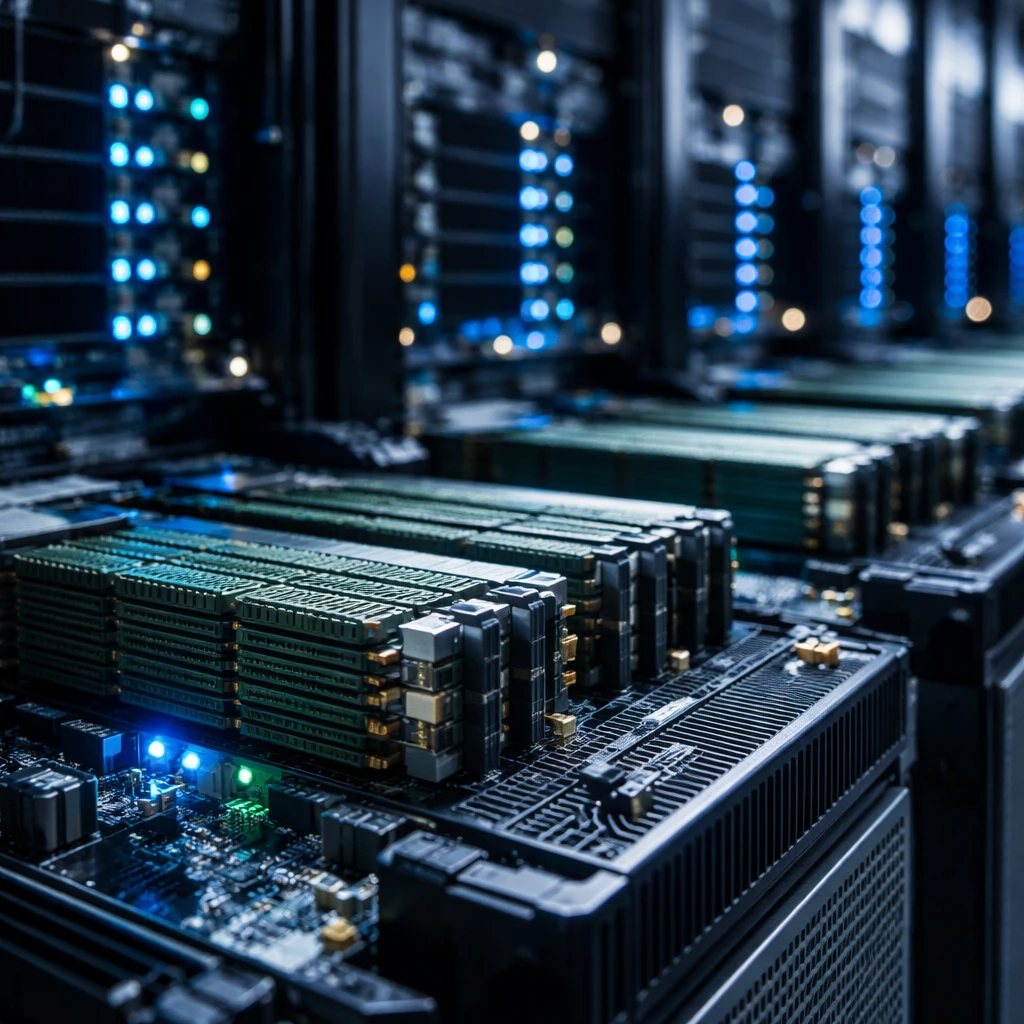
Memory chip suppliers are enjoying a pronounced improvement in pricing power as surging demand for components used in artificial intelligence infrastructure lifts selling prices and revenue, according to market reports.
Pricing, not volume, driving revenue gains
One major manufacturer reported that DRAM prices climbed by more than 60% in the quarter ended May 28 compared with the preceding quarter, while prices for NAND flash rose by over 80% in the same period. Shipment volumes of those memory products increased only modestly, indicating that the bulk of recent revenue expansion has been price-driven rather than coming from higher unit shipments.
HBM - a bottleneck for AI servers
High-bandwidth memory (HBM) has emerged as an essential element for AI servers and data-center deployments, yet production capacity for these chips remains limited. A concentrated vendor base for HBM has kept supply tight even as demand from cloud providers and AI model developers expands.
The global HBM market is currently dominated by three manufacturers. Expanding production of HBM is capital-intensive and time-consuming - new capacity requires significant investment and can take several years to reach production - which constrains near-term additions to supply.
Wider industry implications
Rising memory costs are cascading through the technology industry. A leading consumer electronics company recently raised prices on several laptop and tablet models, explicitly citing higher memory costs as a factor. For AI companies and cloud operators, elevated prices for memory components are adding to infrastructure expenses.
Many AI-focused firms have absorbed the higher component costs to-date rather than increasing prices for customers, as competition to grow user bases and market share remains intense.
Investor attention has shifted toward memory-chip makers as a result of the strong pricing environment. Shares of the leading memory manufacturers have outperformed a number of major technology companies this year amid accelerating demand for AI infrastructure.
Cloud providers and AI model developers - including several of the largest technology firms - continue to invest heavily in AI infrastructure despite the higher component costs. Additional memory manufacturing capacity is expected to come online over the next several years, but the present supply constraints are likely to remain until new facilities begin production.
Takeaway
The tightening of memory supply and the resulting strong price backdrop have underscored the rising significance of semiconductor suppliers within the AI supply chain. Memory manufacturers are benefiting from one of the most favorable pricing environments the sector has seen in years, while the broader technology ecosystem faces higher component bills.