
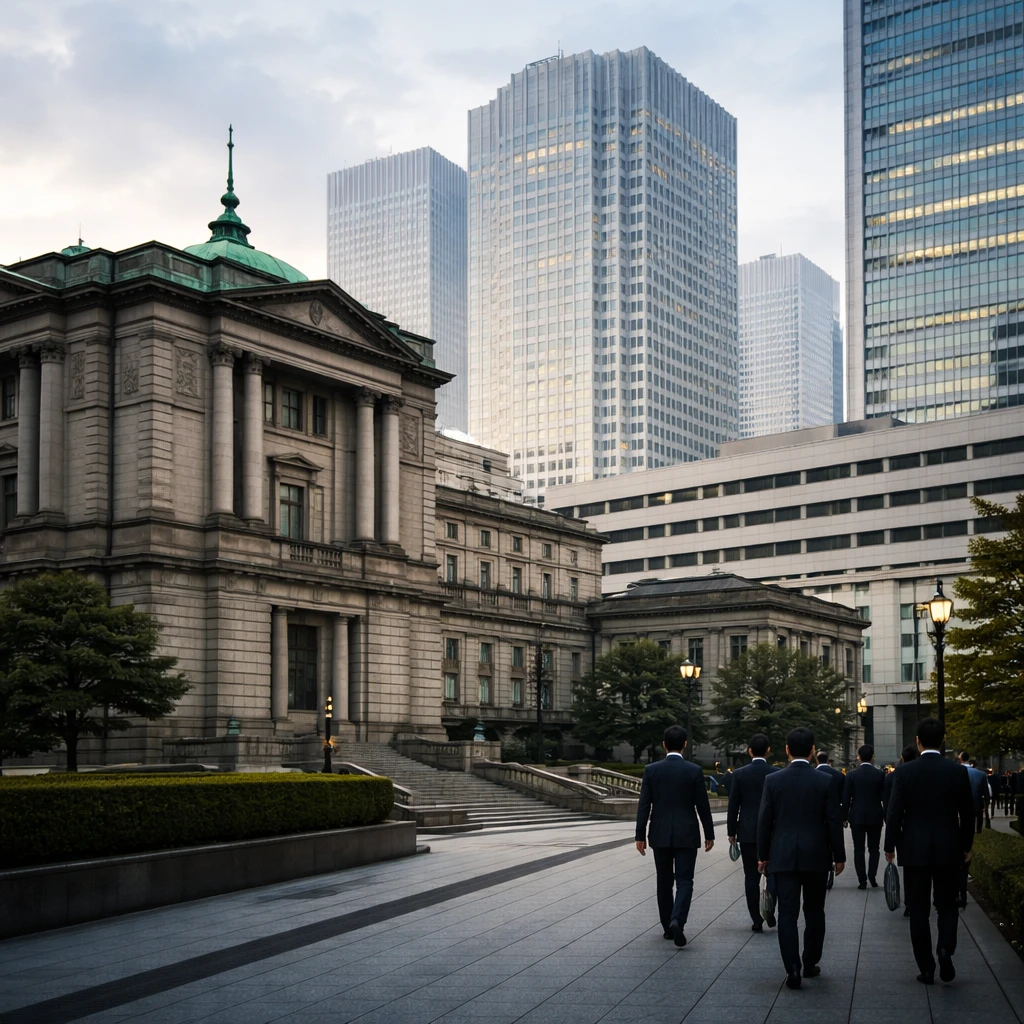
Japan's government is said to be planning language in its forthcoming basic policy guidelines that urges appropriate monetary management, a move interpreted as aimed at tempering further interest rate increases by the Bank of Japan.
According to reports in local media, the Sanae Takaichi administration will include the wording in its Basic Policy on Economic and Fiscal Management and Reform, which is scheduled for publication in July. The reports cite Kyodo News and the Mainichi newspaper as sources for the government's intentions.
A draft of the basic policy, reviewed by Bloomberg News, indicates that the government expects the Bank of Japan to work closely with fiscal authorities to confirm a positive cycle of wages and prices and to sustainably achieve the central bank's 2% price stability objective. The language in the draft frames the BOJ and government as collaborators in securing a durable path to the price target.
The backdrop to the drafting is the BOJ's recent policy action. In mid-June the central bank raised its benchmark interest rate to the highest level since 1995 and signaled that further increases could follow. That guidance has prompted market discussion about the prospect of another rate rise before the end of the year.
Prime Minister Sanae Takaichi has voiced support for accommodative monetary settings. She has also asked BOJ Governor Kazuo Ueda to set policy appropriately with consideration for government economic measures, according to the same accounts of her comments.
Context and implications
The draft basic policy, as reported, presents a formal statement of the government's preference for monetary policy that is attentive to broader economic measures. It emphasizes joint efforts between the BOJ and the government to anchor inflation expectations and to secure a sustained upturn in wages and prices toward the 2% objective.
While the draft's wording signals a preference for restraint on additional rate tightening, it does not, on its own, alter BOJ policy. The central bank has recently tightened policy and left open the possibility of further increases, creating a policy dialogue between monetary and fiscal authorities that market participants will be watching closely.
Sources
Reporting on the government's intended wording in the basic policy comes from local Japanese outlets and a Bloomberg News review of a draft document. Those reports form the basis of the details presented here.