
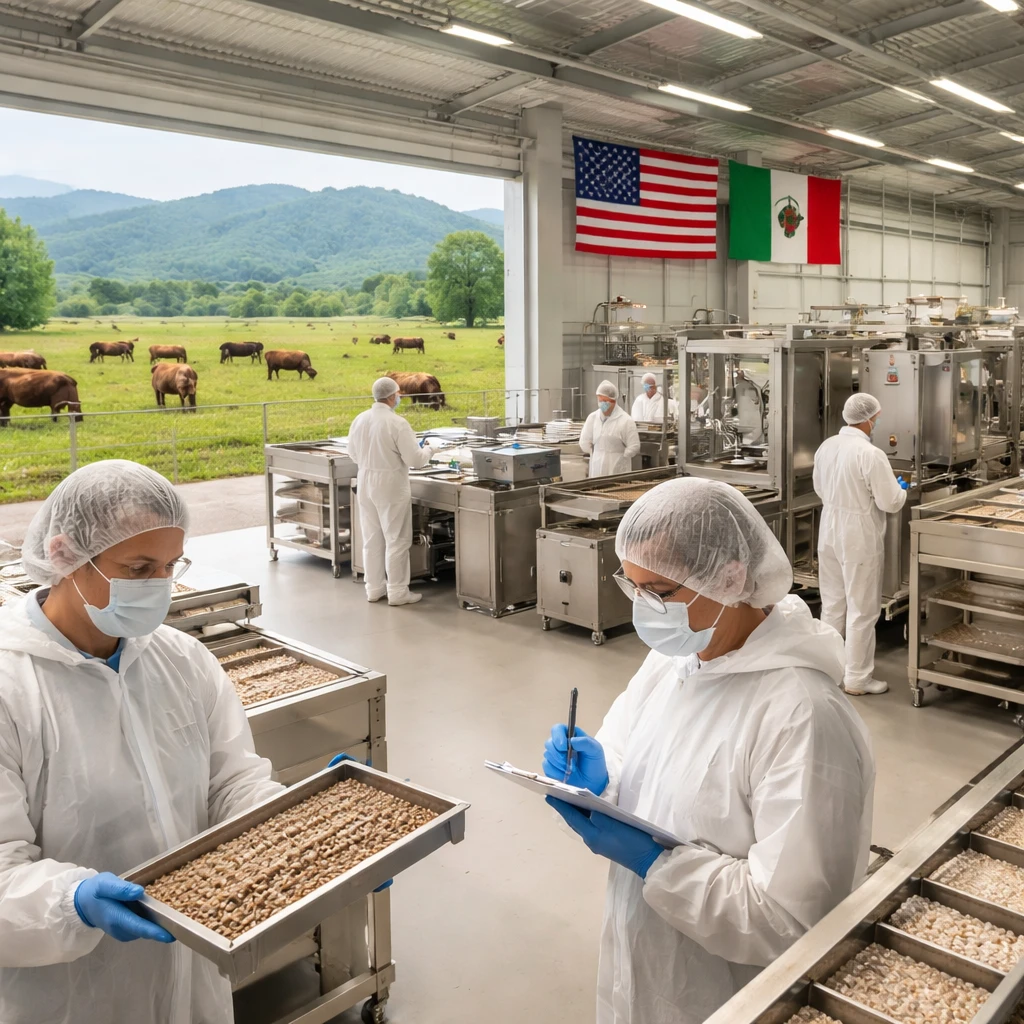
In a coordinated effort to neutralize a growing threat to North American agriculture, the United States and Mexico have opened a specialized facility in Metapa, a location situated near Mexico's southern border. The primary objective of this new center is to mass-produce sterile flies as a biological control measure against the New World screwworm, a livestock pest that has recently resurfaced as a critical risk to cattle herds across the continent, according to reports from Saturday.
The Metapa facility is scheduled to achieve a production capacity of up to 100 million sterile flies per week once it reaches full operational status. This output will be combined with the weekly production from an existing facility located in Panama, bringing the total combined regional supply to approximately 200 million sterile insects per week. Planners have indicated that additional facilities are under consideration to further expand this production ceiling in the near future.
The biological control method employed here is the sterile insect technique, a proven strategy that successfully eradicated the screwworm from North America decades prior. The process involves releasing large quantities of sterilized male flies into affected zones. When these males mate with wild female populations, it prevents the emergence of subsequent generations, effectively breaking the reproductive cycle of the parasite.
The timing of this facility's opening addresses an urgent escalation in the infestation. The New World screwworm larvae attach to wounds on warm-blooded animals, causing severe damage to livestock. Since 2024, authorities in Mexico have documented thousands of infections. More recently, U.S. officials confirmed the first instances of the parasite affecting domestic livestock within the country in approximately 50 years, marking a significant reversal of previous eradication successes.
U.S. Agriculture Secretary Brooke Rollins highlighted the historical precedent of successful pest elimination achieved by both nations in the past. She expressed strong confidence that the current collaborative effort would similarly succeed in driving the infestation out of the region. To support these containment operations, U.S. Ambassador Ronald Johnson announced an additional allocation of $84 million in funding. This financial support is critical given the potential economic fallout, as officials warn that an unchecked, widespread infestation could impose costs exceeding $700 million annually on the U.S. agriculture sector.
The rollout of sterile flies from the Metapa center will follow a phased production schedule. The facility is expected to begin releasing 30 million sterile pupae per week starting in July. Production is then slated to increase to 60 million per week in August before achieving the full target capacity of 100 million by November. These insects will be transported by air to distribute them across the agricultural regions in both the United States and Mexico that are currently impacted.
Parallel to the Mexican operations, the United States is also constructing a separate sterile fly production facility within Texas. However, this domestic installation is not projected to begin its operational phase until late 2027. The joint initiative reflects a broader framework of cooperation between Washington and Mexico City on cross-border agricultural issues, focusing heavily on protecting livestock production networks and maintaining the flow of agricultural trade between the two nations.