
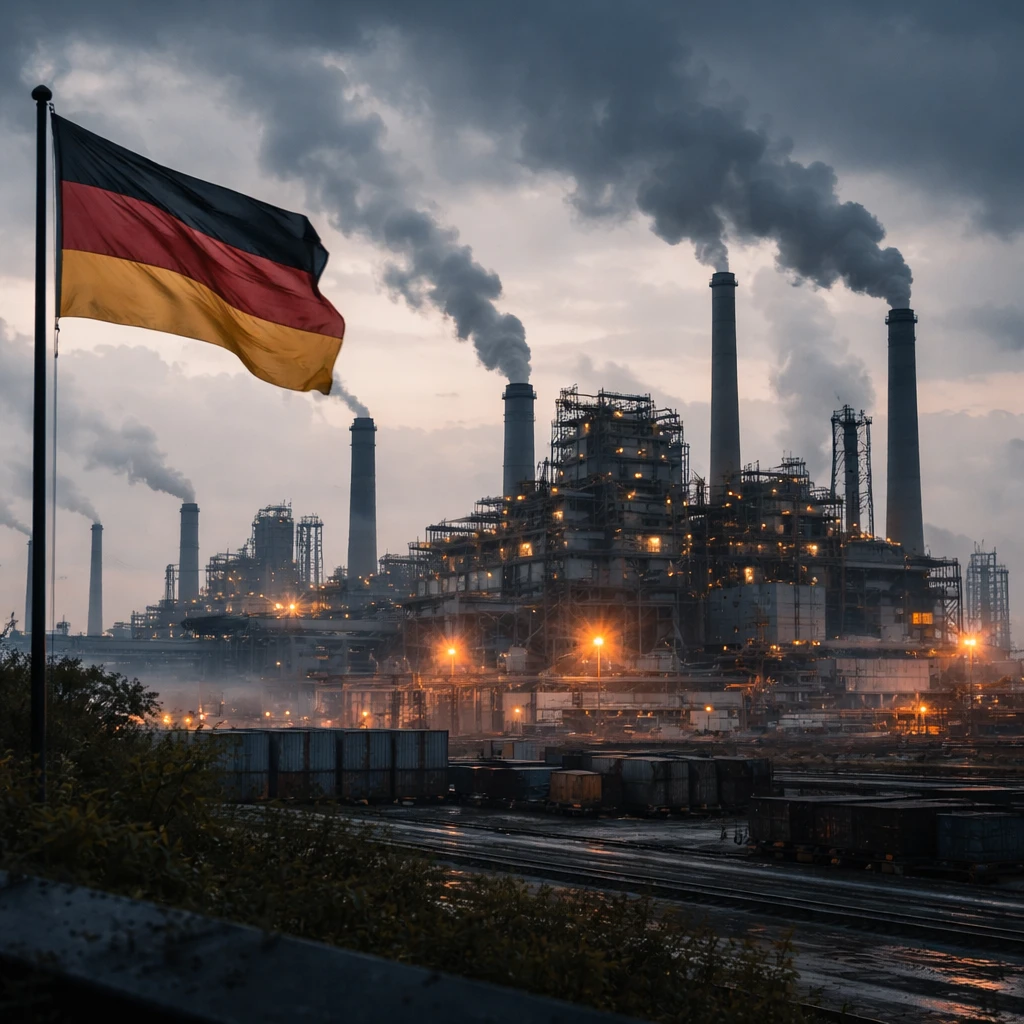
Germany's export-oriented economic framework is currently navigating a period of intensified pressure driven by deteriorating global trade conditions, escalating protectionist policies, and surging competitive forces from China. According to recent assessments, economists are projecting that the nation's gross domestic product will experience growth of 1% or less over the current year.
This trajectory of sluggish expansion follows a prolonged period of muted growth, during which the German economy has consistently underperformed the wider eurozone. This divergence in performance has been evident since the pre-pandemic era. Within the industrial landscape, manufacturing employment has retreated to its lowest point in a decade. Concurrently, business investment levels have remained depressed, showing a consistent decline since 2020.
Competitive pressures from China have emerged as a formidable challenge for domestic manufacturers. Chinese industrial output has expanded significantly in sectors such as electric vehicles, heavy machinery, and industrial equipment. These products are now directly competing with German exports in both European and international markets. Additionally, German industry has contended with disruptions stemming from Beijing's export restrictions on rare earth materials. These limitations have affected supply chains across automotive manufacturing, defense, and industrial equipment sectors.
External macroeconomic factors are further compounding these difficulties. Elevated energy costs, associated with geopolitical tensions in the Middle East, alongside the imposition of U.S. tariffs, have placed additional strain on the export-focused economy. Concerns regarding access to advanced artificial intelligence technology have also grown. Earlier in the month, U.S. restrictions on the export of Anthropic's latest AI models limited access for certain European business users, underscoring the region's reliance on American AI infrastructure.
In response to these challenges, Chancellor Friedrich Merz's administration has implemented a series of measures aimed at stimulating economic activity. These initiatives include tax relief for businesses, reductions in energy prices, and increased government spending on defense and infrastructure. Berlin has also announced plans to gradually increase the retirement age from 67 to 70.
Economists continue to advocate for comprehensive structural reforms. Key recommendations include reducing bureaucratic hurdles, enhancing access to critical raw materials, and boosting investment in technology and startup ecosystems. Officials are simultaneously evaluating strategies to fortify domestic supply chains. The objective is to minimize dependence on imported components and materials, particularly those originating from China.
These structural adjustments are critical as Germany seeks to restore competitiveness in foundational industries. Sectors such as automotive manufacturing, industrial machinery, and chemicals remain the backbone of Europe's largest economy. Restoring robust performance in these areas is essential for long-term economic stability.