
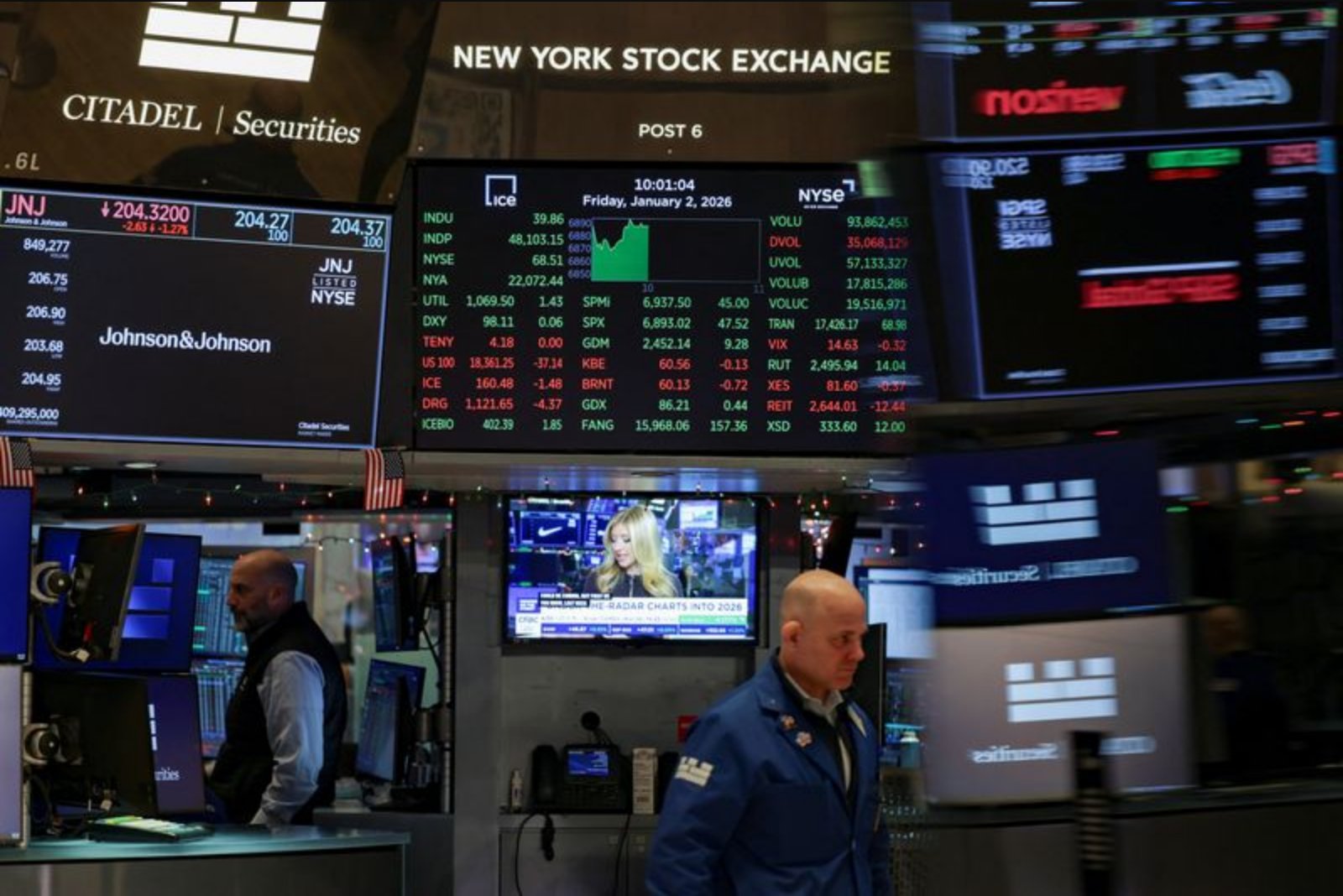
U.S. equities have rallied to record territory even as the conflict involving Iran continues to inject uncertainty into energy markets and corporate outlooks. The S&P 500 is currently valued at roughly 20.8 times its constituents' projected earnings for the coming 12 months - a forward price/earnings (P/E) reading that sits near its lowest point in a year and contrasts with levels above 22 times earnings seen at the start of 2026.
Investors are weighing the apparent valuation opportunity against repeated warnings from company executives about the potential economic strain of a prolonged period of elevated oil prices. Many corporate calls and filings over the past month have flagged the risk that higher energy costs could dent demand for goods and services, increase operating expenses and slow broader economic activity.
"Investors and market participants are expecting the war with Iran to end relatively quickly, and so they are discounting the long-term risk of the impact of the war. At the same time the U.S. consumer and economy continue to perform strongly," said Oliver Pursche, senior vice president at Wealthspire Advisors in Westport, Connecticut.
Operationally, the Strait of Hormuz remains largely closed to oil tankers as a two-week ceasefire is about to expire, while diplomatic talks between Washington and Tehran have not produced an agreement to resolve the conflict. In this environment, a Reuters review of company transcripts shows roughly two-thirds of S&P 500 firms that reported quarterly results since the start of April have mentioned some degree of concern about energy prices during investor or analyst calls. By contrast, only about 17% of S&P 500 companies reporting results in the January-to-March quarter voiced similar concerns.
Executives have detailed how energy costs could affect forecasts. GE Aerospace CEO Larry Culp said the company would have raised its outlook if not for the current uncertainty, even after a strong first quarter and reasonable visibility into the second. GE's stated outlook now assumes a more cautious second half, explicitly noting the risk that airlines could scale back maintenance work, delay engine shipments and reduce spending if activity weakens. Following those remarks, GE shares fell 6%.
Despite such setbacks at individual companies, many analysts and portfolio managers point to the market’s relatively modest valuation as a source of comfort. The forward P/E ratio reflects not a collapse in stock prices but a quick lift in earnings expectations. Analysts have substantially increased profit forecasts for 2026, a rise driven largely by optimism around artificial intelligence and by stronger projections in technology, energy and materials sectors.
That optimism, however, creates its own vulnerability. If a broad group of companies fails to meet the elevated forecasts underpinning current valuations, U.S. stocks could rapidly appear overvalued and the recent rally could reverse. The PHLX semiconductor index, for example, has surged more than 25% in April on the expectation of continuing demand tied to the buildout of AI data centers. Any sign that that demand or company-specific execution falls short of expectations could trigger sharp re-pricing.
Market momentum has so far been steady: the S&P 500 has advanced roughly 4% year to date. At the same time, consensus estimates for 2026 year-over-year earnings growth have climbed from about 16% in early January to nearly 20% last week, according to LSEG I/B/E/S data cited in market commentary. Technology companies account for the bulk of that increase, with contributions from energy and materials firms as well.
Companies reporting results recently have been explicit about how energy costs could feed through to margins and demand. Delta Air Lines, earlier this month, pointed to soaring jet fuel prices when it scrapped planned capacity growth for the current quarter and projected profits below Wall Street expectations. Other firms that have reported noted elevated energy costs but described them as manageable for now; PepsiCo, during its earnings call, said it typically hedges energy-related costs on a 6- to 12-month basis.
Several high-profile companies were scheduled to report this week, including Tesla, Intel, Procter & Gamble and American Express, offering fresh data points that will help investors test whether the surge in earnings forecasts can be sustained against the backdrop of higher energy prices and any broader economic slowdown.
Valuation measures have shifted modestly in recent weeks. The benchmark’s forward P/E has edged up from as low as 19.4 in early April but remains close to its 10-year average of about 19. The last time the S&P 500 traded at comparable levels was roughly a year ago, when global markets experienced sharp declines following U.S. President Donald Trump’s Liberation Day tariff announcements.
In sum, the current market dynamic rests on two competing forces: a forward-looking assessment that stocks are relatively inexpensive based on elevated earnings forecasts - many tied to AI-driven growth - and a string of corporate signals that sustained high oil prices tied to geopolitical tensions could erode demand and push up costs. How those forces resolve in the coming weeks will likely influence whether the market’s current valuation proves resilient or vulnerable.
Summary
The S&P 500 trades near a 12-month low in forward P/E at about 20.8x expected earnings, bolstered by rising profit forecasts largely driven by AI optimism. However, sustained high oil prices related to the conflict involving Iran and renewed energy cost pressures cited by corporate management teams pose a tangible threat to consumer spending and earnings momentum.