
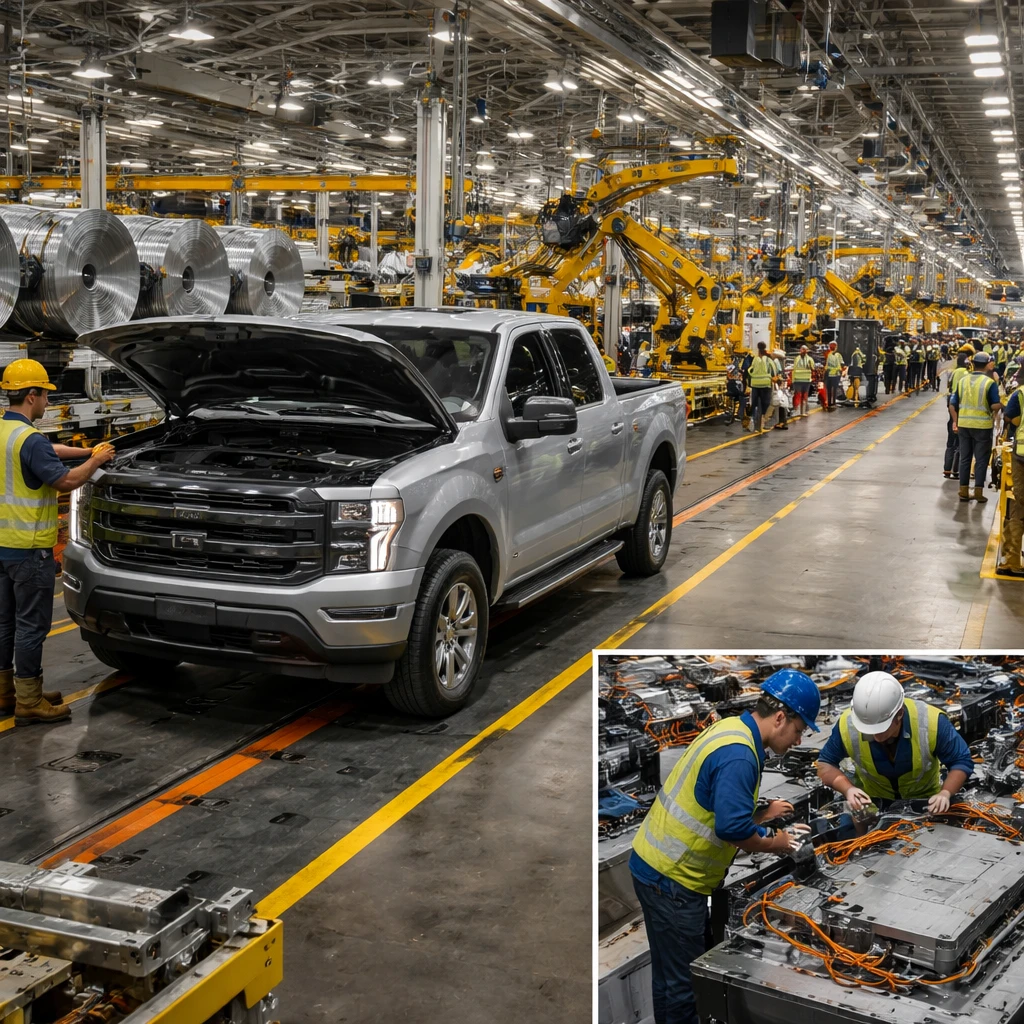
Ford Motor said on July 28 that it was increasing its full-year EBIT guidance for the second time this year to a range of $10 billion to $11 billion, citing stronger pricing and gains within its core operations.
The automaker had updated its outlook in April to $8.5 billion to $10.5 billion, a raise from an earlier range of $8 billion to $10 billion at the start of the year. Company executives framed the latest upgrade as evidence of improved cost efficiency and better performance across its main profit-making businesses.
Ford's finance chief said second-quarter results showed progress toward the company’s cost-efficiency goals. "Our industrial system is getting fitter," the executive said, and noted that the quarter benefited from what she described as "quite resilient" customers.
Operationally, Ford reported a near 20% increase in second-quarter core profit, which rose to $2.5 billion. The company said robust U.S. demand helped to offset tariff-related costs and broader economic uncertainty that affected results.
Tariff costs and supplier disruption
Ford had previously disclosed a net tariff cost of about $1 billion for the year. On Tuesday the company indicated that tariff-related costs were expected to be slightly improved from that earlier estimate, without providing a revised dollar figure.
The company faced elevated levies as it worked to source alternative aluminum supplies after major supplier Novelis experienced several fires last year. Novelis restarted production at its New York factory in June, a facility that supplies aluminum for Ford’s best-selling F-150 pickup.
Still, Ford acknowledged that its sales for 2026 were affected by the disrupted production and the discontinuation of certain models. U.S. vehicle sales for the company were down 9.6% in the first half of the year.
Financials and one-time charges
Adjusted earnings per share were reported at $0.42, beating LSEG analyst estimates of $0.35 per share. Revenue for the quarter was $48.3 billion.
Despite positive core metrics, Ford reported a second-quarter net loss of $1.3 billion. That loss reflected charges tied to a previously announced dissolution of a joint venture with SK On.
Electric vehicle strategy and losses
The automaker said U.S. EV sales fell 57.4% for Ford in the first half of the year, even as it proceeds with plans to begin production of a $30,000 electric pickup at a Kentucky plant in 2027.
Ford recorded losses of $919 million in its EV and software unit in the second quarter and is projecting annual losses of about $4 billion for that segment.
To accelerate global EV production, Ford said it is relying more on partners, including Renault and China’s Geely. The company and Geely announced a joint venture earlier this month to manufacture vehicles at Ford's Valencia, Spain, factory. Under the arrangement, Ford expects to continue production of the Kuga plug-in hybrid and a new Bronco SUV, while Geely plans to build two electric SUVs at the plant beginning in 2028. The two automakers will also jointly develop a multi-energy crossover model.
Industry context
Ford’s competitors reported mixed second-quarter results. General Motors reported earnings and revenue that topped analyst expectations and raised its full-year 2026 guidance for the second time this year. Tesla, by contrast, missed second-quarter profit forecasts and reported negative free cash flow despite record vehicle deliveries.
The company’s updated guidance, improved quarterly core profit and ongoing investments in EVs and partnerships signal how Ford is balancing near-term profit recovery in its traditional business with multi-year investment in electrification and software, while navigating tariff exposure and supplier disruptions.