
Stock Markets August 3, 2026 07:37 PM

Australian Vanadium, Alcoa to Study Large-Scale Vanadium Flow Battery Deployment in Western Australia

Non-binding MoU initiates scoping study for 50-80 MW, 6-8+ hour vanadium flow battery systems at Alcoa alumina operations

By Avery Klein
Share
Twitter Reddit Facebook LinkedIn
AVL AA

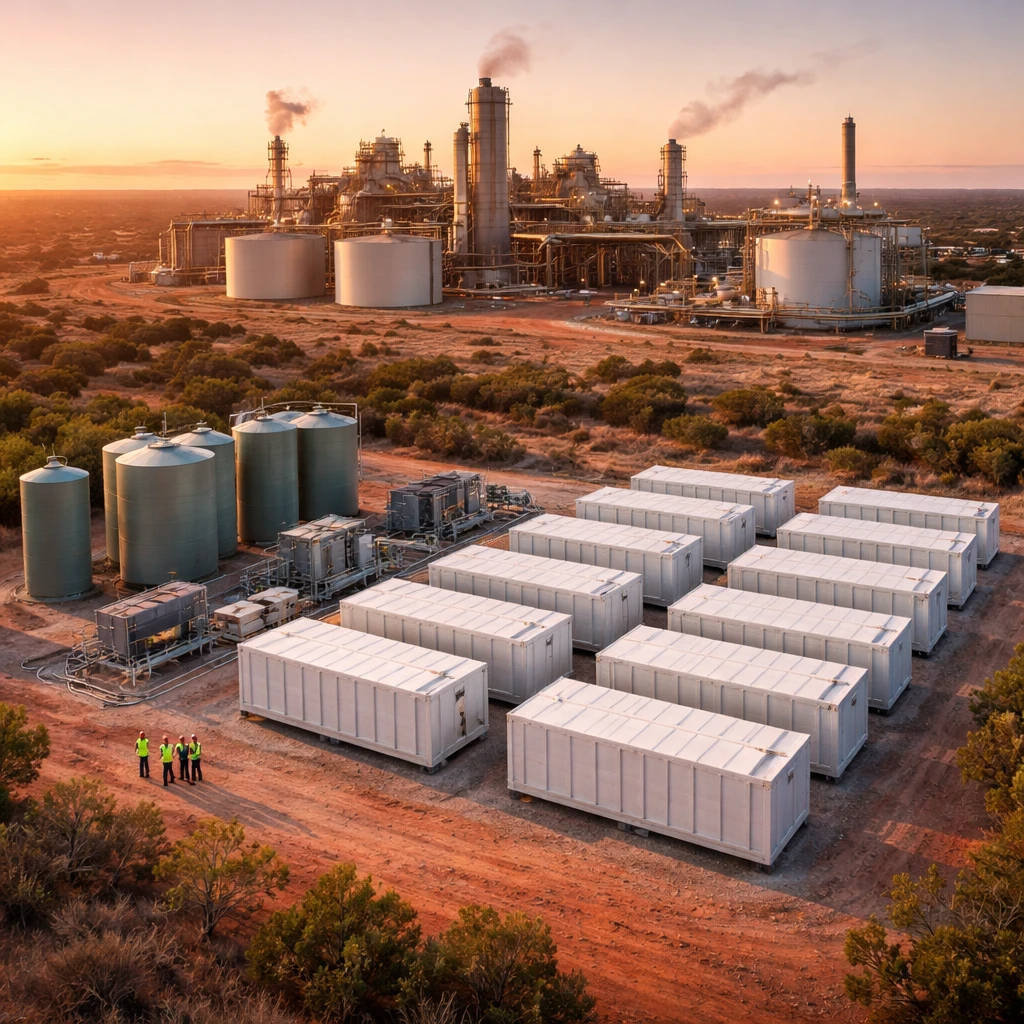
Australian Vanadium Limited has entered a non-binding memorandum of understanding with Alcoa of Australia Limited to carry out a scoping-level study evaluating the installation of vanadium flow battery energy storage systems at Alcoa's alumina refinery sites and associated landholdings in Western Australia. The study will consider systems sized between 50 and 80 megawatts with storage durations of 6 to 8 hours, and the potential to extend beyond 8 hours.

Australian Vanadium, Alcoa to Study Large-Scale Vanadium Flow Battery Deployment in Western Australia
AVL AA
Summarize with
ChatGPT Perplexity Claude Grok Gemini

Key Points

  • Australian Vanadium and Alcoa have signed a non-binding memorandum of understanding to run a scoping-level study on vanadium flow battery installations at Alcoa's alumina refinery sites in Western Australia - sectors impacted include mining, industrial processing, and energy storage.
  • The study will assess battery systems sized between 50 and 80 megawatts with storage durations of 6 to 8 hours, and will consider options to extend capacity beyond 8 hours - implications for grid-scale storage and industrial load management are central.
  • Australian Vanadium and its subsidiary VSUN Energy will lead technical workstreams including system design, technical specifications, cost estimates, electrolyte supply considerations, and project financing options, while Alcoa will provide support - this spans capital project planning and potential government funding channels.

Australian Vanadium Limited and Alcoa of Australia Limited have agreed to pursue a scoping-level assessment into using vanadium flow battery technology to provide energy storage for Alcoa's alumina refining operations in Western Australia. The agreement is framed as a non-binding memorandum of understanding between the two companies.

The scope of the proposed study covers technical and financial evaluation of a vanadium flow battery energy storage system with a planned capacity range of 50 to 80 megawatts and a nominal storage duration of 6 to 8 hours, with the study to also assess the feasibility of extending storage duration beyond 8 hours.

Deployment options under review will include Alcoa's refinery sites and the associated landholdings it controls in Western Australia. The study is intended to be scoping-level, focused on establishing the basic technical parameters and financial implications rather than delivering detailed engineering designs.

Australian Vanadium, together with its wholly owned subsidiary VSUN Energy Pty Ltd, will take the lead on the scoping study. Their responsibilities are set out to include vanadium flow battery system design, preparation of technical specifications, development of cost estimates, and consideration of electrolyte supply arrangements. The scope also includes exploring project financing options and the evaluation of potential government funding opportunities.

Alcoa's role under the memorandum is to provide support for the study. Both parties will collaborate to explore how vanadium flow battery technology might be deployed to supply battery energy storage capacity in support of Alcoa's operations.

The memorandum of understanding is non-binding and the study is scoped to identify technical and financial parameters; it does not itself commit either company to subsequent project development. Outcomes from the scoping study will determine whether further, more detailed work or project execution steps are warranted.


Contextual note: The study will examine both technical feasibility and the financial case for deployment, including system sizing, supply of electrolyte, and potential sources of project funding. Specific sites under consideration are limited to Alcoa's sites and landholdings in Western Australia as identified for the study.

Risks

  • The memorandum of understanding is non-binding, so the study does not guarantee project development - this creates uncertainty for capital markets and project stakeholders in mining and energy sectors.
  • The engagement is framed as a scoping-level study, meaning technical and financial feasibility are yet to be demonstrated; outcomes could limit or alter deployment plans and the scale of investment required, affecting energy and industrial operations.
  • Project financing and potential government funding are to be evaluated but are not secured; uncertainty over funding sources could impact the viability and timeline of any subsequent development, with implications for project developers and equipment suppliers.

More from Stock Markets

MOEX Russia finishes flat as individual stocks diverge at Saturday close Sep 5, 2026 Citi: European TTF May Be Pricing in Too Much Winter and Hormuz Risk Sep 5, 2026 Geneva Delegates Agree Non-Binding Text on Autonomous Weapons After Lengthy Talks Sep 5, 2026 Goldman Raises MSCI Asia Pacific Target, Citing Tech Earnings Strength Sep 5, 2026 ADARx Pharmaceuticals Seeks Nasdaq Listing, Files for IPO Under ADRX Sep 4, 2026