
President George W. Bush was on a predawn jog around a Florida golf course when the events of September 11, 2001, began to unfold for those traveling with him. I was one of two correspondents assigned to travel with the president that morning, covering what was expected to be a routine event with schoolchildren to promote his education agenda. He had been president for fewer than eight months.
The visit took place at the Emma E. Booker Elementary School in Sarasota, Florida. While the president met staff and students, I was in a nearby press center that had been set up for reporters. There, a television feed showed smoke billowing from one of the World Trade Center towers in New York after it had apparently been hit by a plane. At first, the impact was assumed to be an accident. Minutes later, a second aircraft struck the other tower - a development that rapidly changed the interpretation of events.
Back inside the classroom, cameras captured the moment the president's expression shifted. A White House aide entered and quietly informed him about the second strike, telling him that "America is under attack." Those words signaled the beginning of a crisis that, within hours, would claim nearly 3,000 lives in New York and draw the president into confronting one of the gravest security challenges in modern American history.
In the aftermath of the hijackings, senior administration officials and the president moved quickly to respond. The first day included a scramble to ensure the president's safety. As the scope of the attacks became clearer - the World Trade Center towers collapsed, a third plane hit the Pentagon and a fourth crashed in a field in Shanksville, Pennsylvania, after passengers fought back - the president was transported by Air Force One away from Florida. He spent the day flying to Barksdale Air Force Base in Louisiana and then to Offutt Air Force Base in Nebraska.
While in the air, the president encountered difficulties maintaining reliable communications with the White House, an issue that later prompted him to press for improved communications equipment on Air Force One. In Nebraska he entered an underground bunker to take part in a teleconference with senior national security advisers and the vice president. He returned to the White House late that afternoon and addressed the nation from the Oval Office that evening, speaking to a public now confronted with images of planes striking buildings and structures collapsing.
Meanwhile, in Washington, panic rippled through the capital. The Pentagon emitted plumes of smoke and raised fears of additional attacks, prompting evacuations and a sudden, chaotic exodus from federal buildings. The White House was cleared, and the Secret Service instructed some staff to remove their high-heeled shoes and run for safety. As air travel across the country remained suspended, many of us covering the president were stranded in Florida. As president of the White House Correspondents' Association at the time, I helped press for transport back to Washington; we eventually boarded a chartered bus and made a 14-hour journey north. Our first sight of the capital on that return was the smoking gash at the Pentagon.
Three days after the attacks, on September 14, I accompanied the president to Ground Zero in New York. The site was still smoldering and the odor of burning and rubble carried for miles. The towers' destruction had left nearby structures in questionable condition, and rescue crews worked amid unstable debris. A thick coating of ash settled across sidewalks, streets and the shoulders of exhausted firefighters. Standing atop a damaged firetruck, the president used a bullhorn to address emergency personnel, declaring that the United States was at war with Islamic militants and vowing retribution for those responsible.
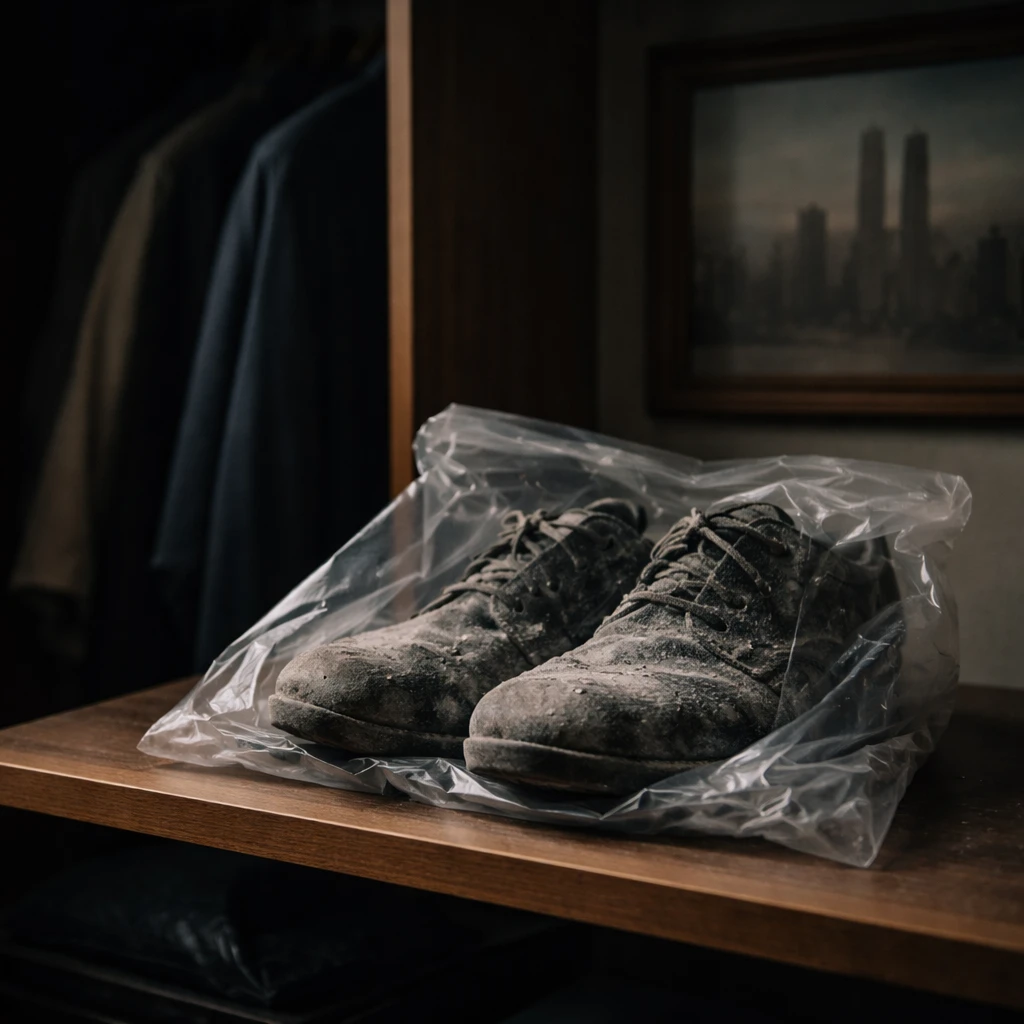
At Ground Zero, I walked through the ash-covered streets. The shoes I wore that day collected soot and gray residue. When I returned home, I placed them in a plastic bag and stored them in a closet - an object too stained to wear and too poignant to discard. Twenty-five years later, those shoes remain in that closet.
In the months and years that followed, the administration took steps aimed at preventing another attack of similar scale. The hijackings laid bare security weaknesses, prompting enhanced safety measures at airports and public buildings. The administration also adopted aggressive interrogation techniques for some detainees, a policy that drew considerable criticism. Additionally, the 2003 invasion of Iraq, launched during that presidency, was viewed by many as a costly strategic error. The former president, now 80 years old, has said the world changed in the wake of that day and plans to attend a ceremony at Ground Zero to mark the 25th anniversary. He will also speak at his presidential library in Dallas and display 16 paintings he has produced that reflect the courage and sacrifice of first responders and others affected by the attacks.
The arc of that week in September 2001 captured a range of responses from the president - from shock at the unfolding devastation, to visible grief for the victims, to resolute anger and pledges of consequence for those responsible. The experience tested the administration's crisis management and left tangible legacies in domestic security policy, air travel procedures and the conduct of military operations abroad.
Key points
- On September 11, 2001, a presidential visit to an elementary school in Sarasota, Florida, became a focal point for the unfolding national crisis when two planes hit the World Trade Center towers and the president was informed while reading to children.
- The attacks resulted in nearly 3,000 deaths in New York, 64 people killed on the plane and 125 in the Pentagon, and 44 fatalities aboard the flight that crashed in Pennsylvania after passengers fought the hijackers.
- Immediate policy and operational consequences included higher security at airports and public buildings and a push to upgrade presidential communications; broader strategic decisions during the presidency, such as detention and interrogation policies and the 2003 Iraq invasion, drew intense debate and criticism.
Risks and uncertainties
- Ongoing debate over the long-term consequences of counterterrorism policies - including detention and interrogation practices - presents reputational and legal risks for government institutions and those sectors involved in security and defense.
- Security vulnerabilities exposed by the hijackings highlighted the need for improved protective measures at airports and public venues, affecting the aviation and transportation sectors through regulatory and operational changes.
- Strategic military decisions made in the aftermath, including the 2003 invasion of Iraq, generated controversy and raised questions about the costs and effectiveness of prolonged foreign engagements, with implications for defense spending and geopolitical risk assessments.
This account recounts the immediate experience of covering the president during the first day of the attacks and the subsequent visits and decisions that followed. It reflects on both the personal and institutional reverberations that remain visible a quarter century later.