
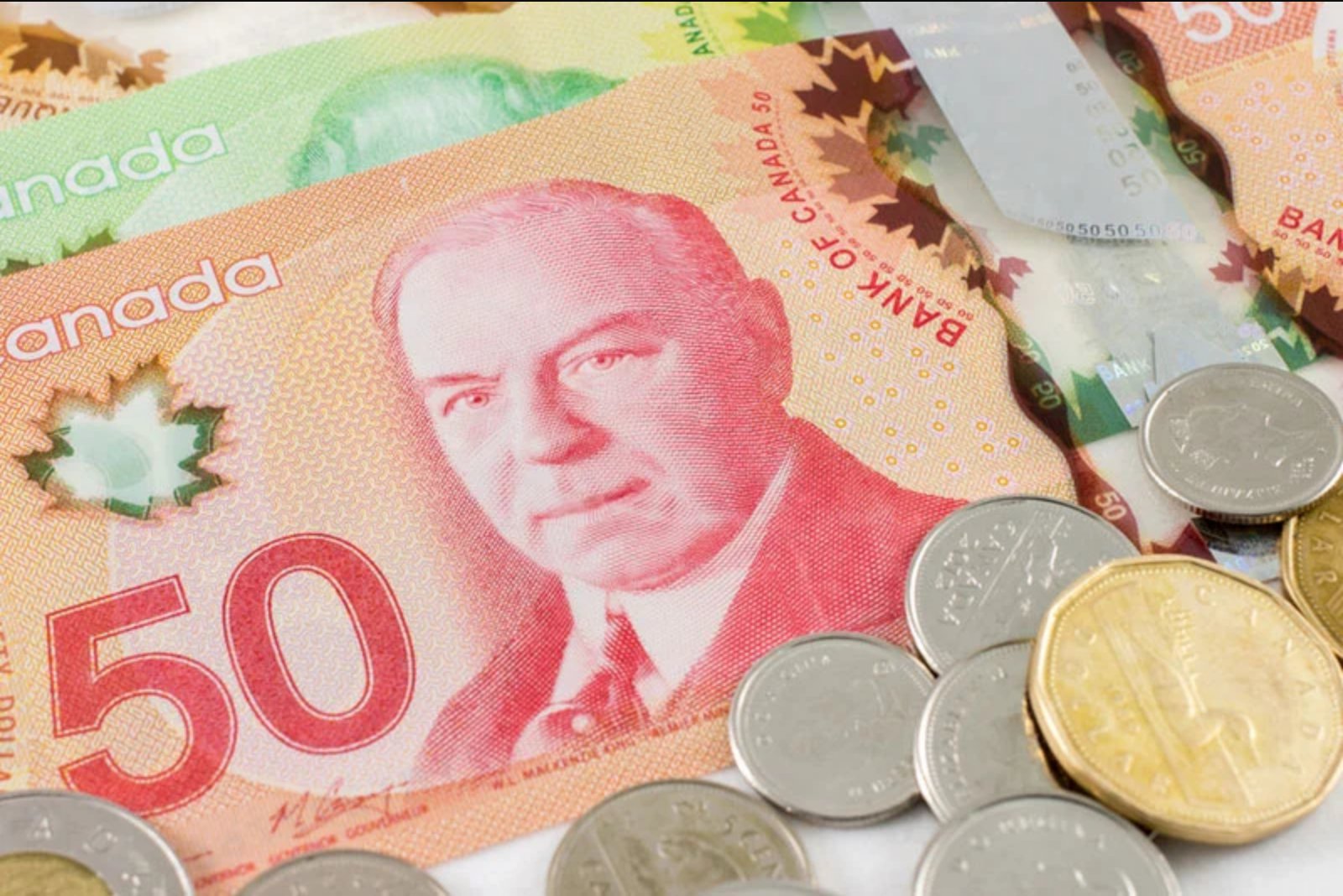
The Canadian dollar moved slightly lower versus the U.S. dollar on Thursday as traders balanced a renewed jump in oil prices with persistent trade doubts and an eye toward upcoming U.S. inflation data that may help determine the Federal Reserve’s next steps.
The U.S. dollar was trading at about C$1.3808, which equates to the Canadian dollar trading at roughly 72.42 U.S. cents. USD/CAD was up around 0.02% from Wednesday’s close near C$1.3805, a change that represents a modest weakening of the loonie.
Brent crude remained above the $100-a-barrel threshold, recently trading around $102 a barrel, while U.S. crude was near $97. The strength in oil has been supported by escalating U.S.-Iran hostilities and concerns that such tensions could disrupt energy flows through the Middle East.
Higher oil typically lends support to the commodity-linked Canadian dollar because energy exports are a significant component of Canada’s trade receipts. In this instance, however, that support was partly offset by broader risk aversion in markets and continued uncertainty over Canada-U.S. trade relations.
The loonie had weakened about 0.2% on Wednesday to C$1.3805 per U.S. dollar after earlier trading as strong as C$1.3767 in the session. Earlier in the week the currency had seen some benefit from rising oil prices and a softer U.S. dollar, developments that had provided temporary tailwinds.
Investors are also focused on forthcoming U.S. producer-price data and other inflation indicators for guidance on the Fed’s policy outlook. The renewed rise in energy prices complicates that inflation picture, increasing the risk that higher fuel costs could keep price pressures elevated and influence central bank decision-making.
Market context
- USD/CAD movement: around C$1.3808, up approximately 0.02% from the prior close near C$1.3805.
- Brent crude: recently around $102 a barrel; U.S. crude: near $97.
- Recent volatility: loonie weakened about 0.2% on Wednesday after earlier intraday strength.
Traders will remain attentive to inflation releases in the United States and any developments in the Middle East or Canada-U.S. trade dialogue that could shift oil prices and risk sentiment, both of which are likely to influence the Canadian dollar in the near term.