
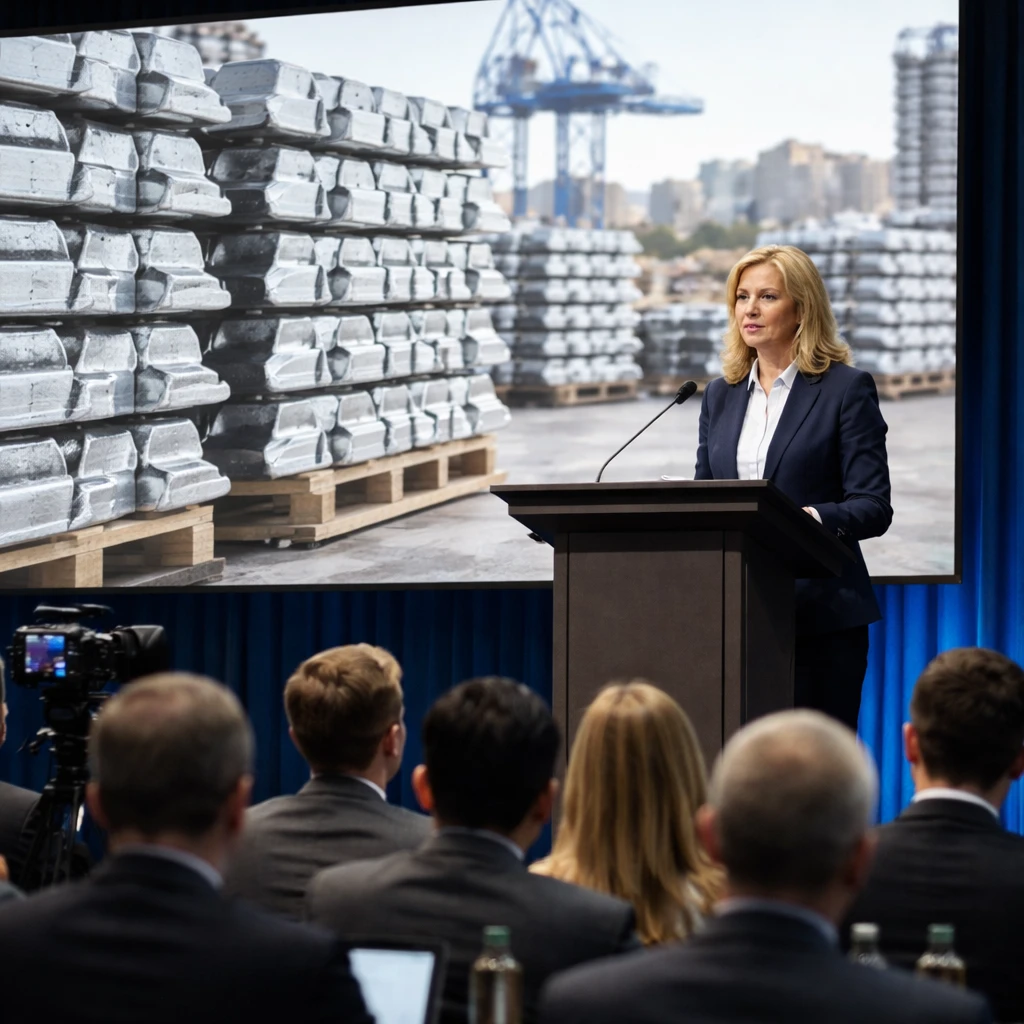
At the Jefferies Global Industrials Conference in New York, Alcoa Corp's Chief Financial Officer Molly Beerman said a unilateral cut in U.S. tariffs on Canadian aluminum would not meaningfully reduce the steep premium that North American buyers pay over the London Metal Exchange benchmark.
Known as the Midwest premium, that charge currently stands at $1.09 per pound, or $2,403 per metric ton, and although it has eased from a record $1.19 per pound in June amid hopes Washington would halve the 50% import tariff on Canadian material, Beerman argued the premium is unlikely to return to earlier levels.
Beerman said the United States requires roughly 4 million tons of aluminum imports each year, while Canada can provide about 3 million tons of that total. "With the U.S. still needing to incent the import of a million tons, even if we were to have a favorable rate with Canada, we don't see Midwest dropping significantly," she said. "It might come off a little bit, but we wouldn't see it returning to pre-tariff levels."
Her remarks emphasized that Canadian supply alone cannot fill the full U.S. import requirement. She noted that only if tariff relief or waivers were extended to other trade partners - she mentioned Japan, South Korea and Europe - and the remaining approximately 1 million tons were also covered, could the Midwest premium decline enough to effectively negate the tariff benefit.
Alcoa, which operates in Pittsburgh and produces about 900,000 tons per year of aluminum in Canada, is paying in excess of $1 billion in import tariffs to move the bulk of that output into the United States. Beerman said the current Midwest premium is compensating those tariff costs and contributing to margin because physical supply remains tight.
She also pointed to constrained supplies from the war-affected Middle East, saying customers in North America and Europe are "actively looking for our supply." That tightness is reflected in Alcoa's forward demand: the company’s order book is "almost completely sold out for the rest of 2026," according to Beerman.
The comments outline a narrow channel through which tariff changes might affect the physical U.S. market. A preference or lower tariff on Canadian imports would partially relieve cost pressure, but without sufficient additional tonnage from other countries the Midwest premium is likely to remain elevated. Only coordinated tariff relief covering the shortfall in import volumes, Beerman said, would materially change that outlook.