
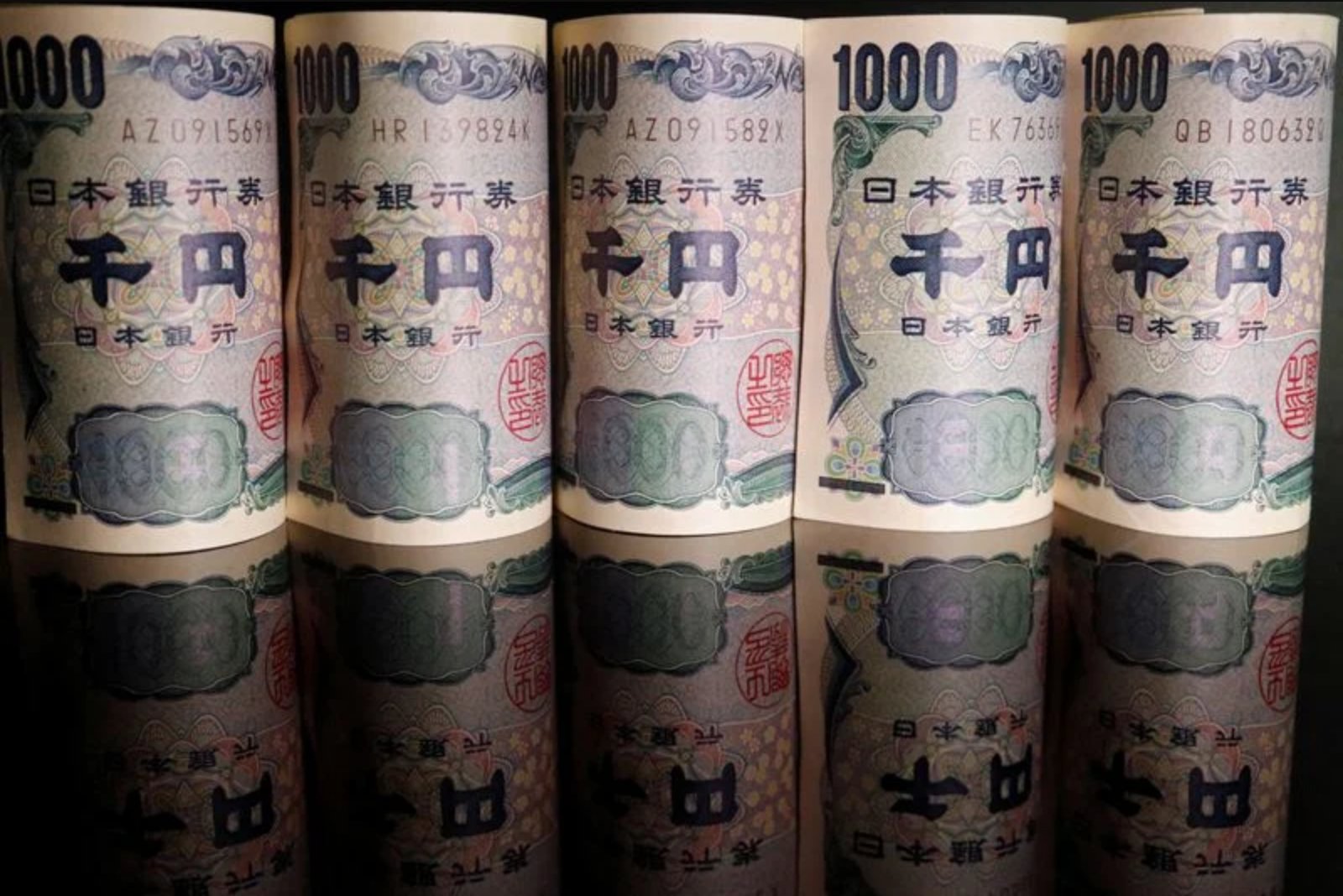
Equities and sovereign bonds jumped on Monday following reports of a planned Iran-U.S. halt to hostilities that had driven up global inflation expectations, particularly for energy importers. The response in foreign exchange markets was far less pronounced: the yen barely moved, lingering just above the psychologically important 160 per dollar level that spurred official intervention only weeks earlier.
The muted reaction underlines that a Middle East truce, while easing a key inflation impulse, does not by itself remove the pressures weighing on the yen. The currency enters a high-stakes week with a Bank of Japan meeting that is widely expected to lift the policy rate by 25 basis points to 1% - the highest in 31 years - but where any shortfall in hawkishness could embolden speculators who have already built large short positions.
UCHIDA TAKES CENTRE STAGE
With Governor Kazuo Ueda receiving treatment for an infected liver cyst and unable to brief the media, Deputy Governor Shinichi Uchida will present the BOJ’s post-meeting comments. Uchida’s role is significant both because recent speeches by Ueda focused on the potential for energy price pass-through into the broader economy and because Uchida has been largely out of public view while recovering. Uchida was only discharged from hospital last month, a fact that adds to uncertainty over how he will frame the outlook after a long pause in his public commentary.
"Market players tried to read the difference in Ueda’s comments at each press conference to gauge his stance, but this time, they can’t do that," said Kumiko Ishihara, a senior analyst at Sony Financial Group, noting that investors will now focus closely on Uchida’s language.
As a career central banker turned deputy, Uchida has previously signalled near-term policy shifts, including during the BOJ’s 2024 exit from a substantial, decade-long stimulus regime. Observers describe him as pragmatic and flexible in his communications, though some market participants characterise him as relatively dovish.
MARKET EXPECTATIONS AND POSITIONING
Markets are nearly unanimous in pricing a 25 basis point rise on Tuesday to take the BOJ’s key rate to 1%. Despite this, the yen remains under strain. Futures data published on Friday showed speculative net short positions in the currency at the highest levels since July 2024, underscoring persistent bearish sentiment.
Nomura Securities’ chief strategist Naka Matsuzawa reflected that the yen’s weakness is rooted in the perception that the BOJ is still behind the curve on policy. "I don’t really think the BOJ can satisfy the market expectations on hawkishness. The BOJ doesn’t want to go too much ahead of the government policy stance, only to become a scapegoat," Matsuzawa said.
HOW THE MIDDLE EAST TRUCE CHANGES THE CALCULUS
A prolonged Middle East conflict would have kept energy-driven inflation elevated for longer, potentially sustaining inflation near 3% for two years and strengthening the case for more aggressive BOJ tightening. News of a truce alters that baseline: lower oil prices reduce the risk that energy costs will accelerate inflation further, which in turn weakens the case for faster policy tightening.
"Given the drop in oil prices, the risk for accelerating inflation may weaken," said Masahito Sugawara, a senior strategist at Daiwa Securities. He and other market participants caution that post-meeting comments from Deputy Governor Uchida may therefore be less hawkish than investors have been hoping.
Former BOJ top economist Seisaku Kameda said on Monday that recent developments in the Middle East should not change the central bank’s expected plan for two rate increases this year, reinforcing the view that the BOJ’s path for policy tightening remains intact even as the inflation backdrop shifts.
GLOBAL RATE DYNAMICS AND VOLATILITY RISKS
The wider central bank landscape has evolved alongside the Gulf-driven inflation shock. The BOJ was for a time the lone major central bank in a tightening cycle, but the risk profile shifted as higher inflation expectations made other central banks, including the Federal Reserve, more likely to resume hikes. Market pricing now incorporates further Fed tightening, which could sustain dollar strength and limit yen gains even if the BOJ continues to lift rates.
"Overall, gradual yen appreciation is expected, but it will be important to watch for a rise in volatility around central bank events," said Hirofumi Suzuki, chief FX strategist at SMBC. "If expectations for further rate hikes (by the Fed) continue against the backdrop of U.S. inflation, there is a meaningful possibility that the dollar will remain strong."
INTERVENTION REMAINS A CONSTRAINT
When the BOJ left rates unchanged in April, the yen slid past the 160 per dollar mark, prompting the Ministry of Finance to deploy a record amount of market support. In April, the ministry spent 11.7 trillion yen to bolster the currency, the largest monthly intervention on record, as authorities sought to arrest the slide.
As market expectations for an aggressively hawkish BOJ have softened, intervention appears to be one of the few remaining barriers to further yen depreciation. "There is a risk that pressure will arise on the yen and dollar-yen rate could move toward 161," said Masafumi Yamamoto, chief foreign exchange strategist at Mizuho Securities. "Concerns over intervention will likely increase."
The coming days will test how much reduction in energy-related inflation risks can temper currency pressure versus the structural forces and market positioning that have pushed the yen to its weakest levels in decades. With futures positioning elevated, the tone from Deputy Governor Uchida and subsequent market reactions will be critical in determining whether the yen stabilises or resumes its slide. ($1 = 160.0100 yen)