
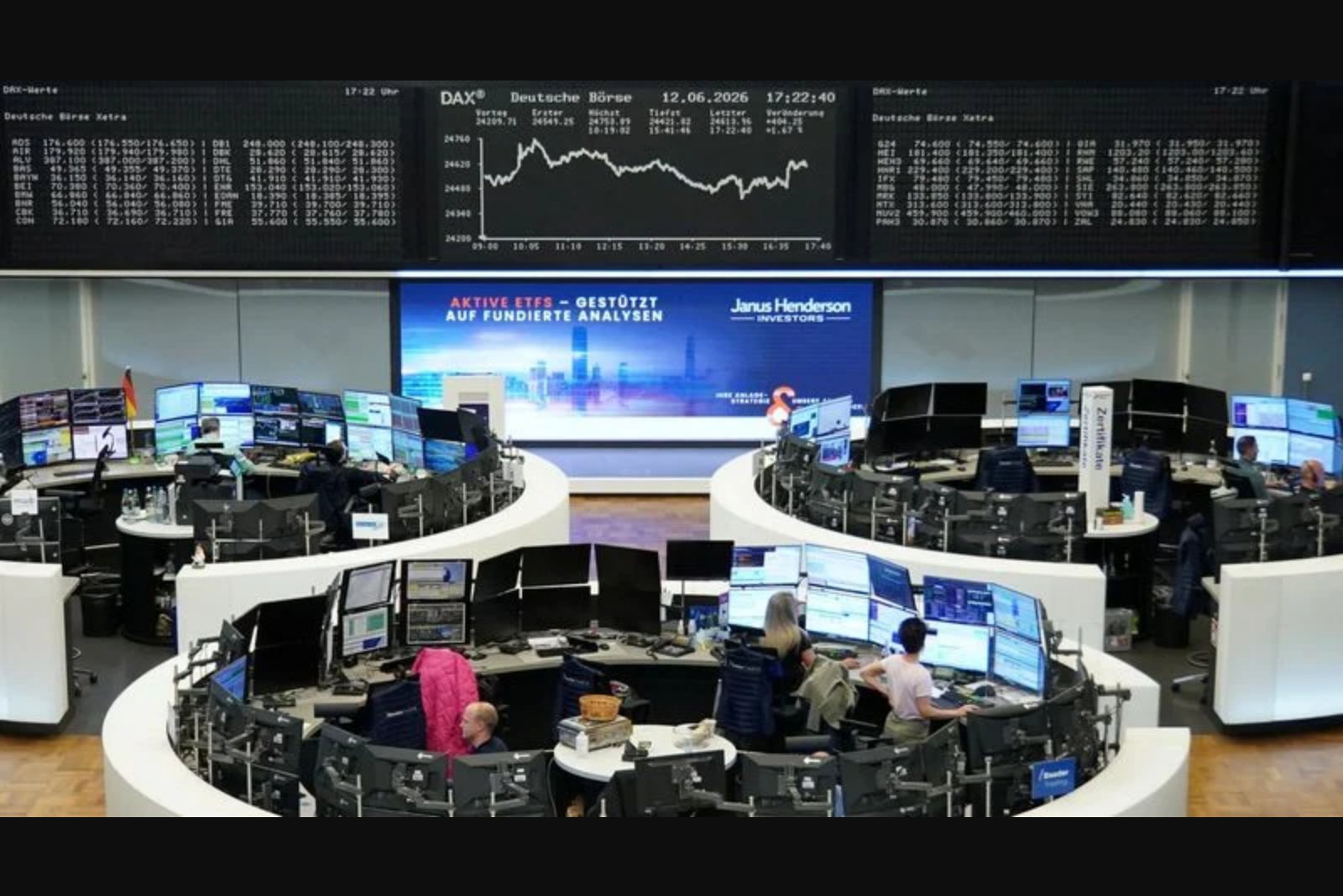
Markets react to peace framework
European share futures were set to open notably higher on Monday as oil prices slumped following an announcement that U.S. and Iranian officials had agreed on a framework for a preliminary peace accord. The reported deal - which is scheduled to be signed on Friday - would reopen the Strait of Hormuz and bring an end to a three-month-long conflict in the Middle East, easing a key source of energy supply risk.
Price moves and futures
Brent crude fell roughly 4% on the news, a decline that supported broader risk sentiment. Futures tied to the pan-European STOXX 600 index were up 1.6% as of 0635 GMT. Contracts tracking Germany's DAX gained 1.7% while those for France's CAC 40 advanced 1.4% in early trading.
Recent context and ECB policy
The STOXX 600 had already rallied on Friday and moved close to a record high amid growing hopes for a diplomatic breakthrough in the region. European equities had generally lagged behind peers in the United States and China since March, a performance drag attributed in the article to the continent's dependence on the Strait of Hormuz for crucial oil supplies.
Concerns that energy-driven inflation could accelerate were a factor in the European Central Bank's decision to raise interest rates by 25 basis points last week. Market participants continue to expect another 25 basis point ECB rate hike before year-end, according to LSEG-compiled data.
Sector and corporate developments
Energy price-sensitive sectors such as travel and leisure were positioned to gain at the open as crude prices eased, while energy companies were likely to face downward pressure in line with lower oil. In corporate news, Renault Group said it will develop a military vehicle in partnership with defence technology company Thales. Schneider Electric announced a strategic collaboration with Taiwan's Foxconn to develop and scale infrastructure for next-generation AI data centres.
Outlook
Investors entered the session responding to a reduced near-term energy risk premium, with trading dynamics reflecting the interplay between easing commodity prices and ongoing expectations for central bank policy moves later in the year.