
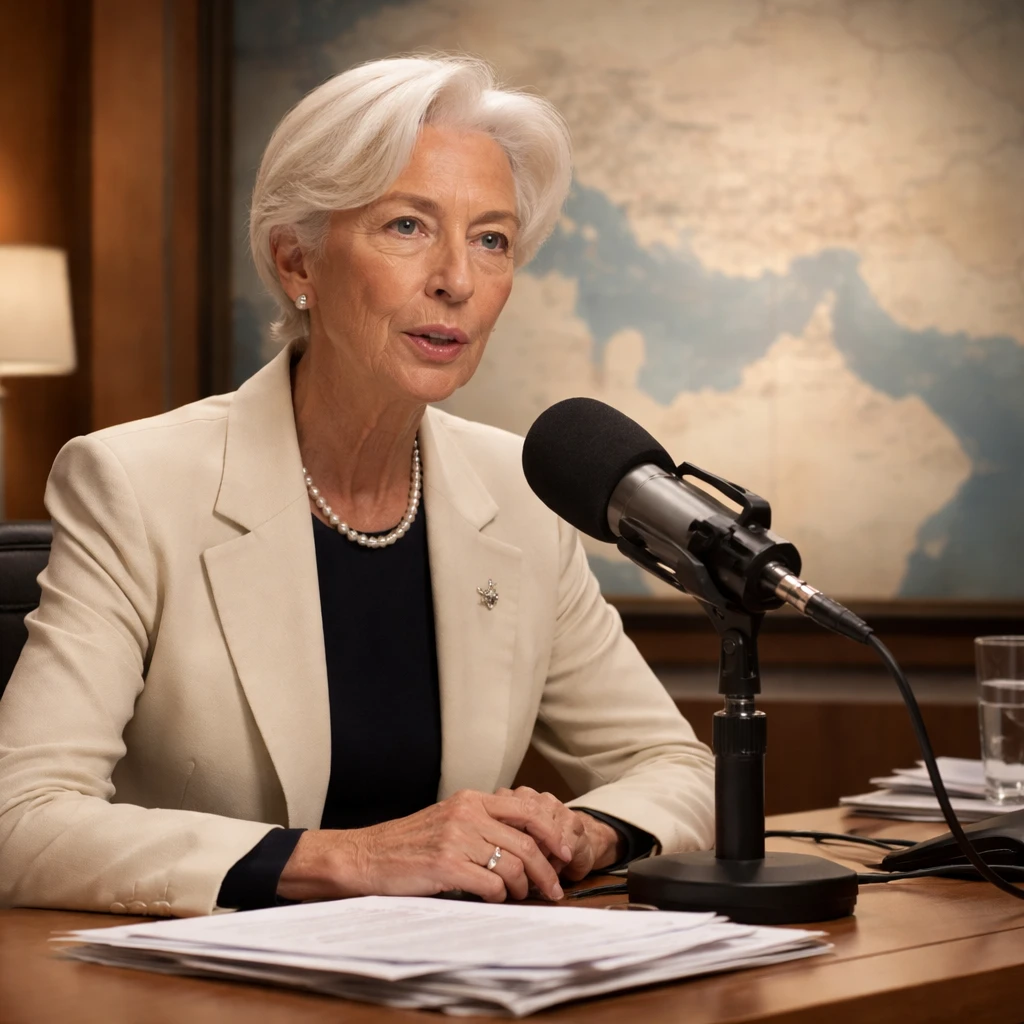
European Central Bank President Christine Lagarde said she viewed the reported ceasefire with Iran as welcome news, while urging caution that the broader diplomatic process is still incomplete. Speaking on France Culture radio, Lagarde highlighted the potential positive consequences if the agreement is confirmed and a memorandum of understanding is signed.
"If this news is confirmed by developments in the coming days and the signing of a memorandum of understanding ... it is good news. We can only welcome it," Lagarde told the station, emphasizing that any formal confirmation and documented understanding would be a favourable development.
At the same time, Lagarde made clear the issue is not yet resolved. "We have not yet finished the story," she said, adding that "the whole question of uranium enrichment remains to be debated, agreed and concluded in the form of an agreement." Her comments underline that while a ceasefire would be significant, outstanding matters related to nuclear activity still require negotiation and formal agreement.
The potential reopening of the Strait of Hormuz was singled out by Lagarde as a positive outcome. The waterway is a critical corridor for global oil shipments, and its restoration to normal traffic would carry implications for energy flows and markets.
Key points
- ECB President Christine Lagarde publicly welcomed the reported ceasefire with Iran but urged confirmation and a memorandum of understanding before drawing final conclusions.
- Lagarde stressed the situation remains incomplete, noting that uranium enrichment issues still need to be debated and formally resolved.
- The potential reopening of the Strait of Hormuz was highlighted as significant because the channel is a major route for global oil shipments, affecting the energy sector and related markets.
Risks and uncertainties
- Confirmation pending - The ceasefire and any memorandum of understanding need to be confirmed by developments in the coming days; outcomes remain uncertain. This uncertainty could influence energy and shipping sectors.
- Unresolved nuclear questions - The question of uranium enrichment remains to be debated and concluded, representing a diplomatic and security uncertainty with potential market implications.
Lagarde's remarks combined cautious optimism about a de-escalation and pragmatic attention to unresolved diplomatic matters. While welcoming the possibility of safer passage through the Strait of Hormuz, she underlined that negotiations and formal agreements remain essential to secure a durable resolution.