
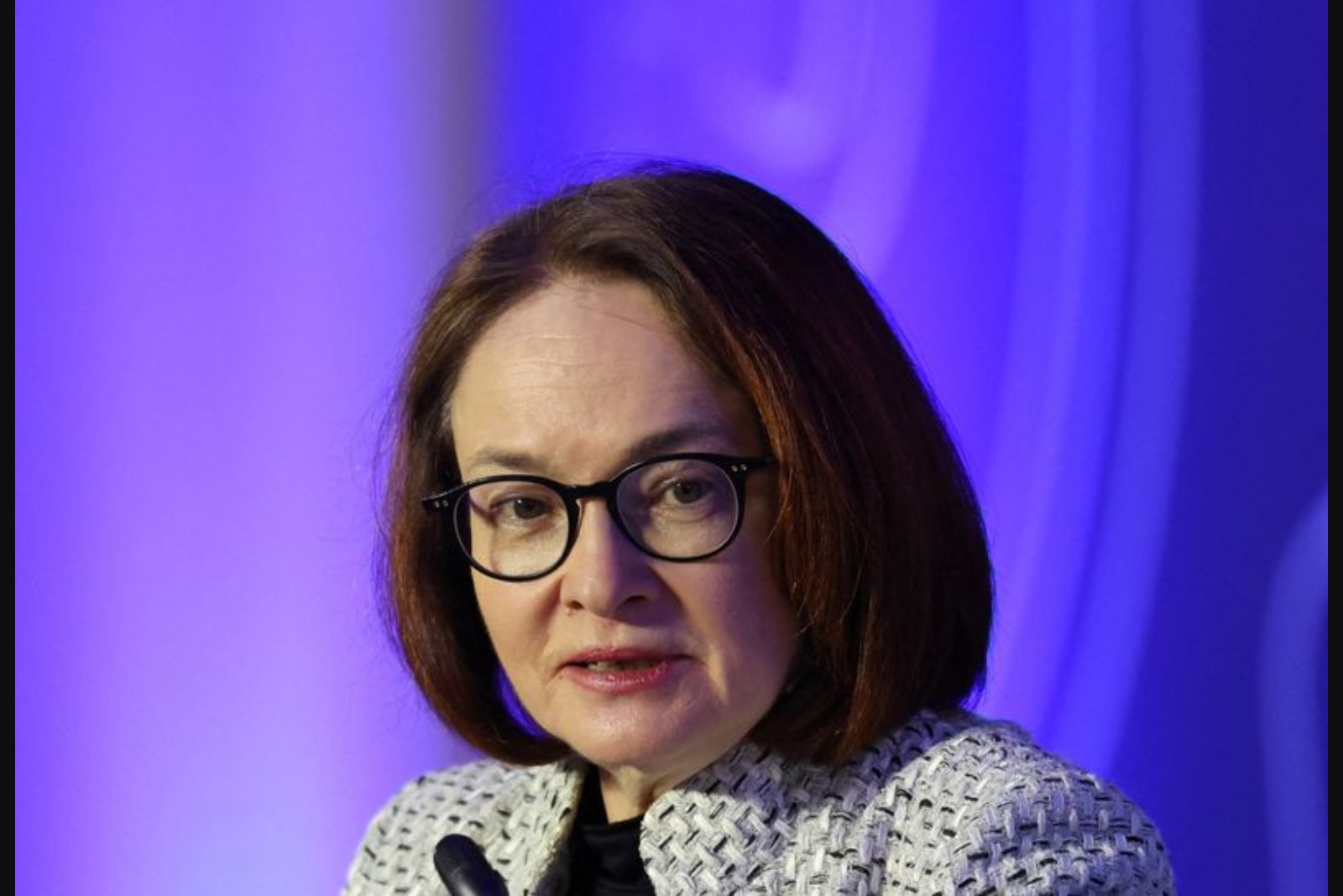
MOSCOW, April 24 - The central bank reduced its key policy rate by 50 basis points to 14.5% at its latest meeting. Speaking at a press conference following the decision, Governor Elvira Nabiullina said the board debated two courses of action before agreeing on the cut.
Decision dynamics
According to Nabiullina, the board considered either maintaining the rate at its prior level or cutting it by half a percentage point. She said members who argued for leaving the rate unchanged highlighted that core inflation has not declined since mid-last year and remains in a 4-5% range. Those participants, she added, emphasised the need for clearer evidence that core inflation is trending down and pointed to heightened inflationary risks.
"Two options were discussed: keeping the rate unchanged and cutting it by half a percentage point. Those in favour of keeping the rate unchanged pointed out that the core inflation rate in our country has not fallen since the middle of last year and has remained at 4-5%, and that more convincing evidence of a decline in core inflation is needed. They also drew attention, of course, to the increased inflationary risks."
Implications for future easing
Nabiullina said that because inflation sits at the upper bound of the central bank's forecast range, the margin for additional rate reductions is reduced. She framed this as a straightforward relationship: with inflation holding high relative to expectations, the central bank's flexibility to loosen policy is correspondingly narrower.
"As for the narrowing of the key rate range, as I have already said, inflation is, in our assessment, at the upper end of the forecast range. And yes, all other things being equal, this probably means less room for a rate cut."
Budget rule and foreign currency purchases
The governor addressed the interaction between current oil prices and fiscal mechanics. She said that at prevailing oil prices it is feasible to replenish the National Wealth Fund, a development she described as positive for fiscal stability. She noted that the Finance Ministry had indicated it would not change the oil cut-off price for the year and planned to return to operations under the budget rule.
Nabiullina added that the ministry will account for foreign exchange transactions postponed from earlier months. Taken on an annual basis, she said, those deferred operations are neutral in their effect; however, they may alter intra-year cash flow dynamics.
"At current oil prices, it is possible to replenish the National Wealth Fund, which is positive for fiscal stability. We took into account that the Ministry of Finance had previously announced that it would not revise the (oil) cut-off price this year and would return to the budget rule. At the same time, it will take into account transactions deferred from previous months. Therefore, from the perspective of annual figures, this is neutral. It may only affect intra-year dynamics."
Conditions for a materially softer policy
Nabiullina said that for the bank to pursue a much sharper rate reduction or adopt a broadly softer monetary stance, two conditions would need to be met: inflation would have to fall below target and there would need to be signs of a significant uptick in unemployment. She stressed that neither condition is present now, and that this assessment aligns with expectations across the bank's forecasts as well as those of analysts and the business sector.
"In order to either cut the key rate more sharply or pursue a soft monetary policy, inflation would need to fall below target and there would need to be signs of a significant rise in unemployment; however, neither of these conditions currently exists. This is true not only in our forecasts, but also in those of analysts and the business sector."
Budgetary risks and monetary policy constraints
On fiscal policy, Nabiullina acknowledged ongoing debate over potential changes to budget parameters. She warned that higher budget spending and a larger structural primary budget deficit relative to plans would necessitate tighter monetary policy. Her rationale is that greater fiscal injections into the economy reduce the space available for private lending, which in turn constrains monetary accommodation.
She said the central bank will take these fiscal risks into account but noted that formal parameters have not yet been announced and discussions are continuing. As a result, she assessed the risk as present and growing. Nabiullina also said the bank is probably less confident than before about the budget's projected contribution to disinflation as set out in the Budget Act.
"There is currently debate regarding possible changes to the budget parameters...The higher the budget expenditure and the larger the structural primary budget deficit, the tighter monetary policy will need to be. What does a higher structural primary budget deficit mean compared to what was planned? It means that more money will flow into the economy via the budgetary channel. This means that the scope for private lending is narrowing."
The governor's remarks underline a cautious shift in policy - a modest rate cut accompanied by clear warnings that persistent inflation and evolving fiscal choices may limit the central bank's ability to ease further.