
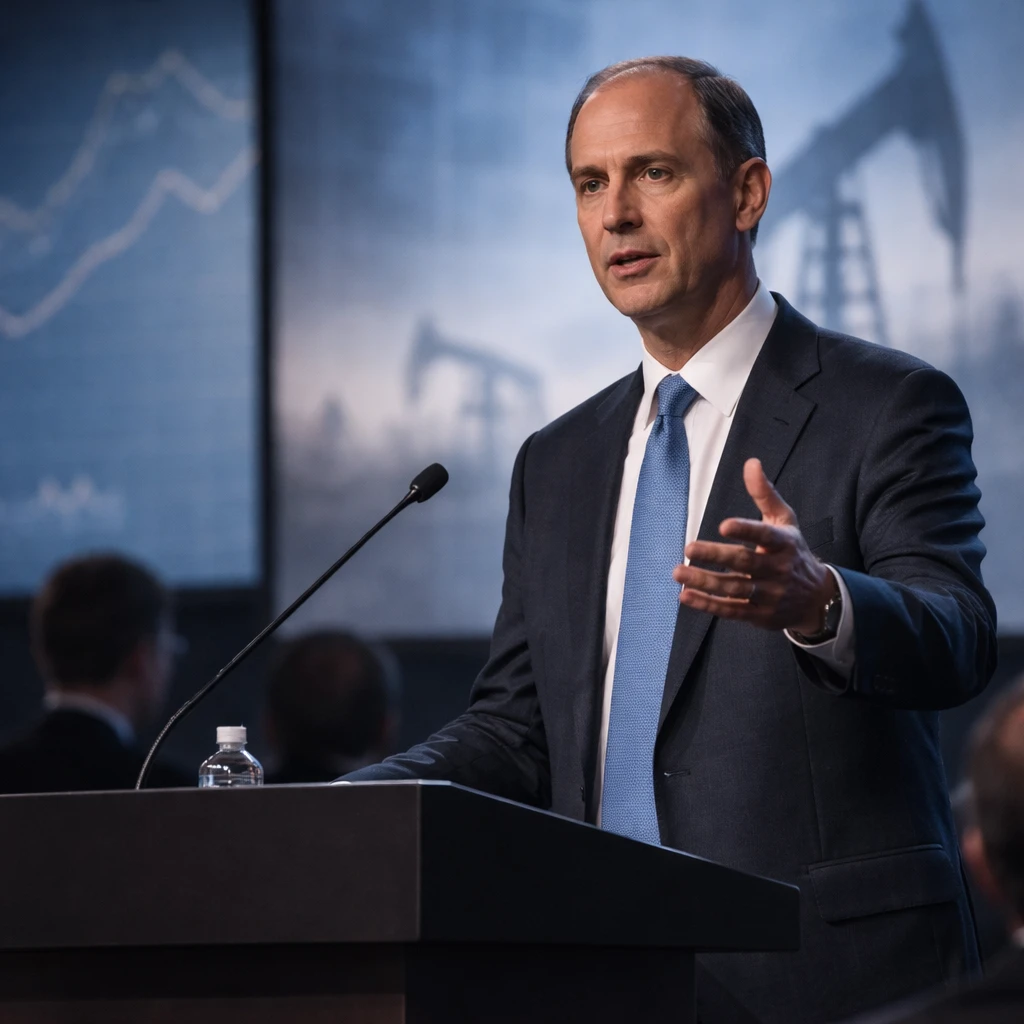
Chicago Federal Reserve President Austan Goolsbee said on Tuesday that cuts to interest rates could be deferred until 2027, a timeline that would depend on how long oil prices stay elevated.
Speaking at the Semafor World Economy conference, Goolsbee framed the Fed's objective plainly: "It's our job to get inflation back to 2%." He said that the persistence of inflationary pressures would determine whether the central bank could move to ease policy in the near term.
Goolsbee noted that before the Iran war he had expected tariff-driven inflation to fade this year, which in turn would have opened the door for rate reductions. Under that earlier view, he had anticipated there could be multiple rate cuts in 2026. But he warned that the longer inflation remains elevated without signs of retreat, the likelier it becomes that those cuts will be pushed beyond 2026.
He outlined the range of possible policy paths, saying there are circumstances that could lead to rate increases, scenarios that would support a pause, and situations that would justify decreases. "The longer this goes, if inflation stays up, that pushes cuts out of 2026," he said, adding that if inflation fails to show improvement "time for optimism gets postponed."
Goolsbee singled out energy markets as a key variable the Fed must monitor. He said the central bank will need to see how oil markets evolve before being able to commit to a timeline for easing. At the same time, he indicated a distinction between headline and core inflation: he would take greater comfort from progress on core inflation even if headline measures remained elevated due to oil.
On acceptable inflation outcomes, Goolsbee stated plainly that if inflation is running at 4%, discussions about bringing the policy rate back to 2% are inappropriate. He also noted that the Fed has received some favorable data on housing inflation.
When asked about President Donald Trump's nominee for next Fed Chair, Kevin Warsh, Goolsbee said he has "a lot of respect for Warsh" and that he was not worried so long as nominees approach the role with the mindset that the law assigns the central bank a job focused on the economy rather than electoral politics. He added he thinks Warsh will adopt that perspective.
Key points
- Goolsbee said rate cuts may be delayed until 2027 if oil prices remain high - impacts energy and interest-rate-sensitive markets.
- He emphasized the Fed's goal of returning inflation to 2% and noted the importance of core inflation progress even if headline inflation stays elevated.
- Goolsbee expressed respect for Kevin Warsh and said he expects nominees to adhere to the Fed's statutory economic mandate - relevant to central-bank governance and market confidence.
Risks and uncertainties
- Persistence of elevated oil prices - continues to pose upside risk to headline inflation and could delay policy easing; affects energy and broader inflation readings.
- Ongoing high inflation without measurable improvement - raises the prospect that rate cuts planned for 2026 will be postponed, influencing fixed-income and rate-sensitive sectors.
- Uncertainty around leadership transitions - while Goolsbee signaled confidence in Warsh's likely approach, nominations and shifts in Fed leadership could introduce market uncertainty.