
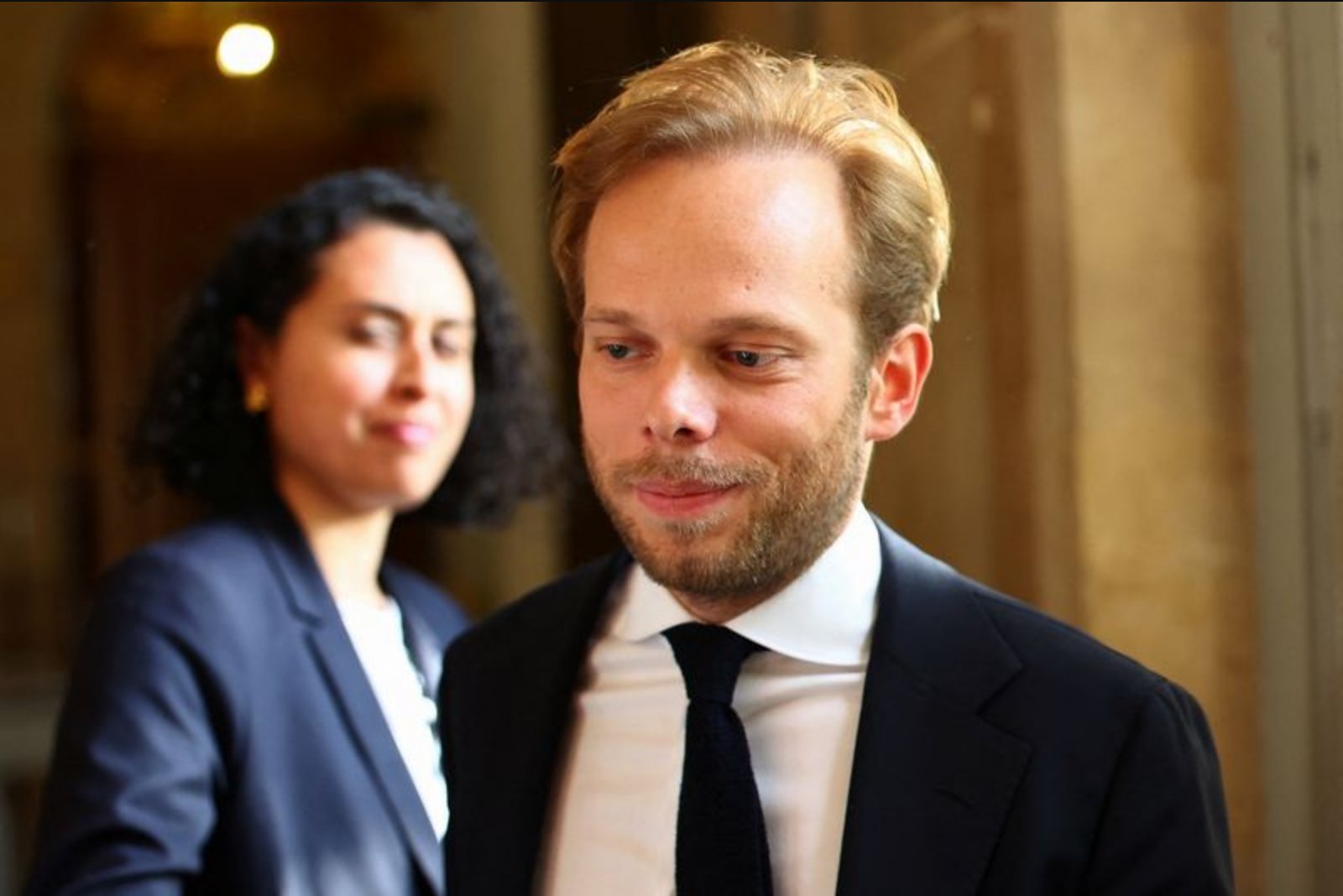
A parliamentary fact-finding inquiry into France's public broadcasting system has evolved into a polarising political spectacle that has placed state-funded media at the centre of a broader culture-war narrative. The Committee - convened to examine France's public broadcasters, which operate on roughly 4 billion euros per year - has been steered by 32-year-old Charles Alloncle, a close ally of National Rally (RN) leader Jordan Bardella.
What would normally be a procedural review has instead become public theatre. Alloncle has conducted forceful exchanges with prominent journalists, headline presenters and senior executives, and clips of his confrontations have circulated widely on social media. That visibility has elevated Alloncle within far-right ranks and presented the RN with a fresh opportunity to put state media under sustained political pressure.
From editorial fairness to fiscal critique
Initially, committee questioning targeted alleged editorial bias at public broadcasters. But over time the inquiry's rhetoric shifted toward cost and value for money, with members selecting specific spending examples to argue that state media are financially imprudent. Critics on the committee and independent analysts say the tactic moves beyond normal oversight and aims to undermine public trust by framing public broadcasting as an unaffordable luxury at a time of economic strain.
Erwan Balanant, a centrist member of the committee, characterised the approach as a strategic pivot away from sustained debate over editorial choices toward a message that public broadcasting "costs too much." He warned that this framing is a potent means of weakening the legitimacy of state-funded media.
One focal point of criticism has been a 60,000 euro fee paid to actress Virginie Efira for hosting the Cannes Film Festival opening ceremony in 2022 - an amount Alloncle described as evidence of profligate spending. Committee disclosures also included the total paid by the public broadcaster for Cannes broadcast rights, a figure that some lawmakers said could be commercially sensitive and potentially exploited by private competitors in future bidding situations.
Public reaction and political payoff
When the inquiry opened in December, polls indicated roughly 70% of the French public held a favourable view of public broadcasting. However, the inquiry's budget-focused messaging has appeared to resonate with parts of the public amid continuing cost-of-living concerns. The heightened public profile of the hearings - and Alloncle's combative style - have drawn support from the RN's base and beyond. On the streets near parliament, Alloncle has received public commendations from passers-by who praised his work.
RN figures view the inquiry as aligned with party objectives. According to RN lawmaker Renault Matthias, Alloncle "really did the job," adding that the proceedings are part of a larger culture war and that privatising public broadcasting is included in the RN platform ahead of the 2027 elections.
Sources connected with the RN suggest the visibility and political capital Alloncle has accrued could translate into an elevated role should a far-right government take office, with a cabinet position among the potential rewards for his performance.
Media ownership, amplification and allegations of interference
The inquiry's reach has been extended by coverage from outlets linked to the media holdings of conservative Catholic billionaire Vincent Bolloré. Properties associated with Bolloré - including CNews, Journal du Dimanche and Europe 1 - have provided extensive attention to the committee's proceedings and to Alloncle's appearances.
Some committee members have alleged a more active role by Bolloré's media arm, Lagardère News, claiming it circulated suggested lines of questioning that reflected a hostile stance toward public broadcasters. Jeremie Patrier-Leitus, the committee's chair and a centrist lawmaker, said he considered such circulation a case of interference and ordered it to stop, a claim he associated with an earlier report by Le Monde.
When Bolloré himself testified before the committee, he denied any coordinated effort with Alloncle, saying he had never met the deputy before that day but described him as "very likeable - and very effective."
Alloncle's stated aims and background
Alloncle has said he transitioned into politics from the finance sector after meeting Jordan Bardella at a technology event and subsequently secured a candidacy under an electoral pact between the RN and a smaller coalition partner. He currently sits with a group of breakaway conservatives aligned with the RN.
Defending his confrontational approach, Alloncle has dismissed it as a product of business-hardened toughness rather than partisan theatrics. He frames his efforts as an attempt to enforce media plurality under French law - arguing that public broadcasters should not chronically under-represent the RN or other parties such as the hard-left France Unbowed.
Longer-term implications
Media analysts and lawmakers observing the inquiry warn its consequences may extend well beyond the committee's six-month lifespan. They say the hearings have already contributed to eroding confidence in public broadcasting and may pave the way for the RN's stated policy to privatise the sector should it secure power in 2027. For media historians, the episode highlights a convergence of political ambition and media ownership that could influence both market structure and public discourse.
While the inquiry formally focuses on facts and figures, its mix of pointed questioning, selective fiscal examples and amplified media coverage has produced a politically charged narrative that will likely be debated long after the final report is issued.