
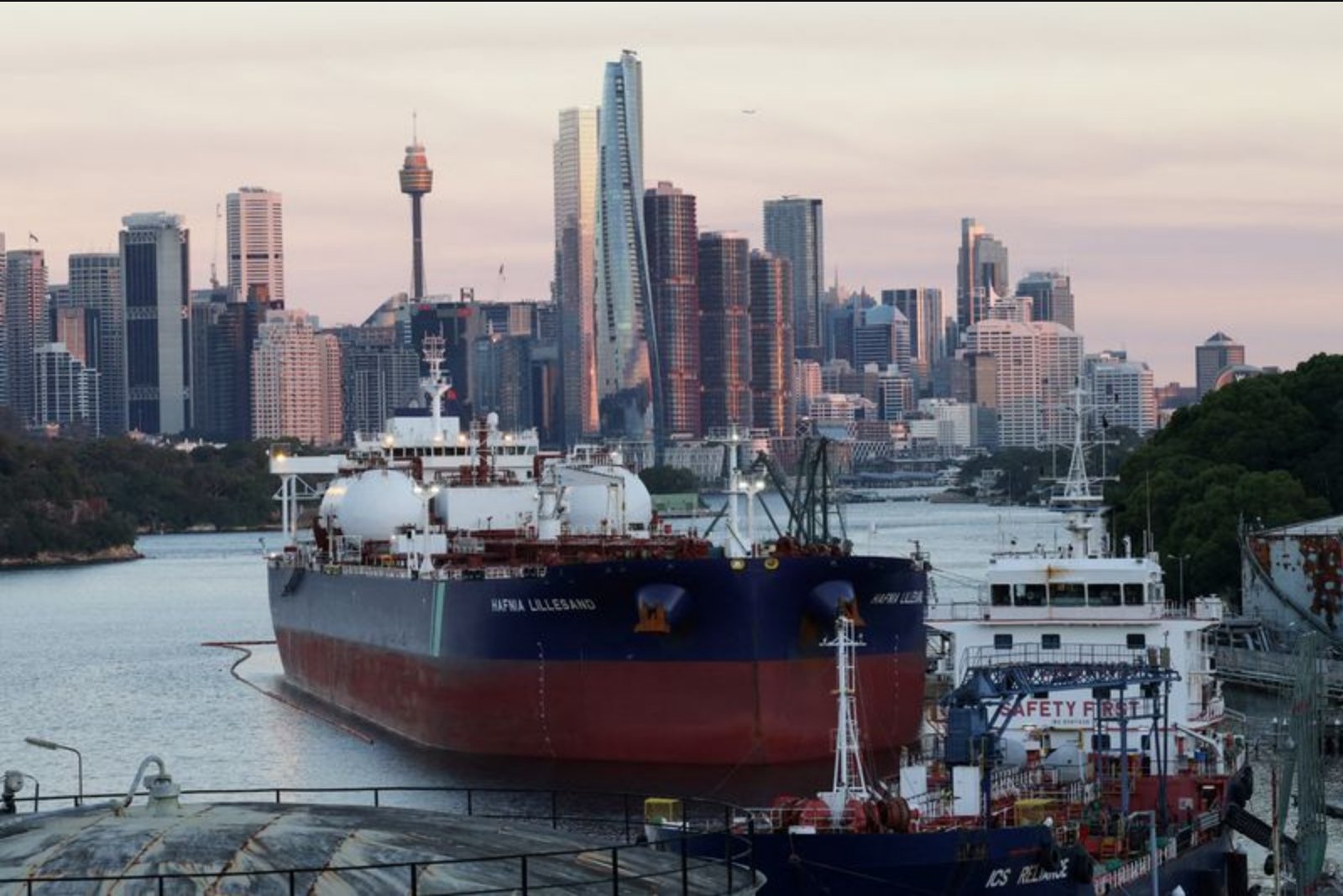
The current conflict in the Middle East has once again underscored the geopolitical weight of commodities and shifted investor attention toward currencies closely tied to natural resources. Currencies commonly labelled "commodity currencies" - including those of Norway, Canada, Australia and New Zealand - have emerged as likely beneficiaries of this dynamic, with Norway's crown and the Australian dollar standing out among developed-market peers.
Both the Norwegian crown and the Australian dollar have risen by more than 7% against the U.S. dollar so far this year, a move investors link to what has been described as the worst global energy disruption in history and its ripple effects across economies worldwide.
Some asset managers anticipate the gains could extend further as geopolitical fragmentation, a United States foreign-policy stance perceived as more unilateral, and the growing influence of China prompt nations to prioritise energy security and access to commodities deemed critical for technologies such as artificial intelligence and the green transition.
Manish Kabra, multi-asset strategist at Societe Generale, said there was a "big disconnect" between the weak performance of commodity-linked currencies in recent years and a booming commodities index, suggesting scope for a rally in these currencies. Kabra added that since the onset of the Middle East conflict he had reduced exposure to the euro and increased exposure to the four commodity currencies on an equal-weighted basis.
"The strategic and geopolitical focus on commodities has yet to be priced into these four commodity currencies," Kabra said.
Portfolio managers have acted on that view. Lauren van Biljon, a senior portfolio manager at Allspring Global Investments, said she had recently taken a long position in Norway's crown against sterling. She cited Norway's role as a major oil and gas producer and a key element of Europe's energy security - particularly as Europe reduces dependence on Russian supplies amid the Ukraine war - as a factor in the trade. Van Biljon also flagged an expectation of a hawkish stance from Norway's central bank as energy costs rise.
In line with those views, Rabobank stated in a note that it expects the euro to weaken against the crown and said it favours selling sterling against the Norwegian currency as well.
At roughly 9.37 per dollar, the crown is trading near levels last seen in 2022.
Australia, Canada and Norway share a number of attributes that appeal to international investors: AAA-rated sovereign debt and net energy-exporter status. That combination, together with renewed emphasis on commodities, gives investors seeking alternatives to the U.S. dollar fresh candidates beyond the euro and the Chinese yuan, analysts said.
Commodity gains and market drivers
Recent research and market notes sketch a broader shift in the global commodity landscape. Investment firm Ninety One described a new commodity order characterised by geopolitical fragmentation, electrification, supply constraints, regionalisation of energy and materials markets, and a re-ordering of global supply chains.
That backdrop helps explain a sharp start to the year for the broad commodity complex. Bank of America research shows the asset class is the best performer year-to-date, up about 42% versus a 6% gain last year.
Oil has experienced dramatic moves connected to the Iran war and is trading below but close to $100 a barrel, while copper sits at six-week highs. Gold, despite recent pullbacks, remains roughly 50% higher than a year ago.
Societe Generale's Kabra highlighted the broader geopolitical relevance of materials when he noted the U.S. government's decision last November to include copper on a list of minerals deemed essential for the economy and national security.
Risks and sensitivities
Commodity-linked currencies are not immune to the same concerns that have weighed on other currencies during the conflict - chiefly, the risk that the war will dent global growth. In recent weeks, a revived U.S. dollar acting as a safe-haven asset has also reduced some of the commodity currencies' appeal.
Although the Canadian, New Zealand and Australian dollars were outperformed by the U.S. dollar at the start of the conflict, those currencies have been recovering amid hopes of a ceasefire. Australia, a major miner and net exporter of coal and liquefied natural gas, nonetheless depends on imports of refined oil products, leaving it exposed on energy independence - a point underscored by Malin Rosengren, a portfolio manager at RBC BlueBay Asset Management.
"Most important in the here and now is energy independence and energy security," Rosengren said, adding that Australia is vulnerable on that front. She noted that the medium-term growth impact of commodities on foreign exchange remains the other key factor investors are weighing.
Why investors remain constructive
Even if the current Middle East conflict is brought to an end, several market participants expect elevated energy costs to persist for some time. Disruptions to energy flows are unlikely to normalise immediately, and issues such as infrastructure damage will need attention, creating a multi-period opportunity for exporters of energy and other commodities.
Van Luu, global head of solutions strategy at Russell Investments, said that if oil prices settle in a range around $85 to $100 instead of near $65, energy exporters in politically stable countries - which he identified as including Norway and Canada - should see improved economic performance. Van Luu added that he has kept exposure to those currencies.
Andreas Koenig, head of global FX at Amundi, argued that commodity currencies, while pushed into the spotlight by global turmoil, are also well placed to gain from a return to relative stability. "They are still high beta currencies, and they profit from risk on," he said.
The present market picture - rising commodity prices, central bank policy considerations in energy-rich economies, and geopolitics that raise the strategic value of raw materials - has prompted some investors to rebalance currency allocations toward resource-linked units. How durable that re-rating proves will depend on developments in the conflict, the path of commodity prices, and shifts in investor risk appetite.