
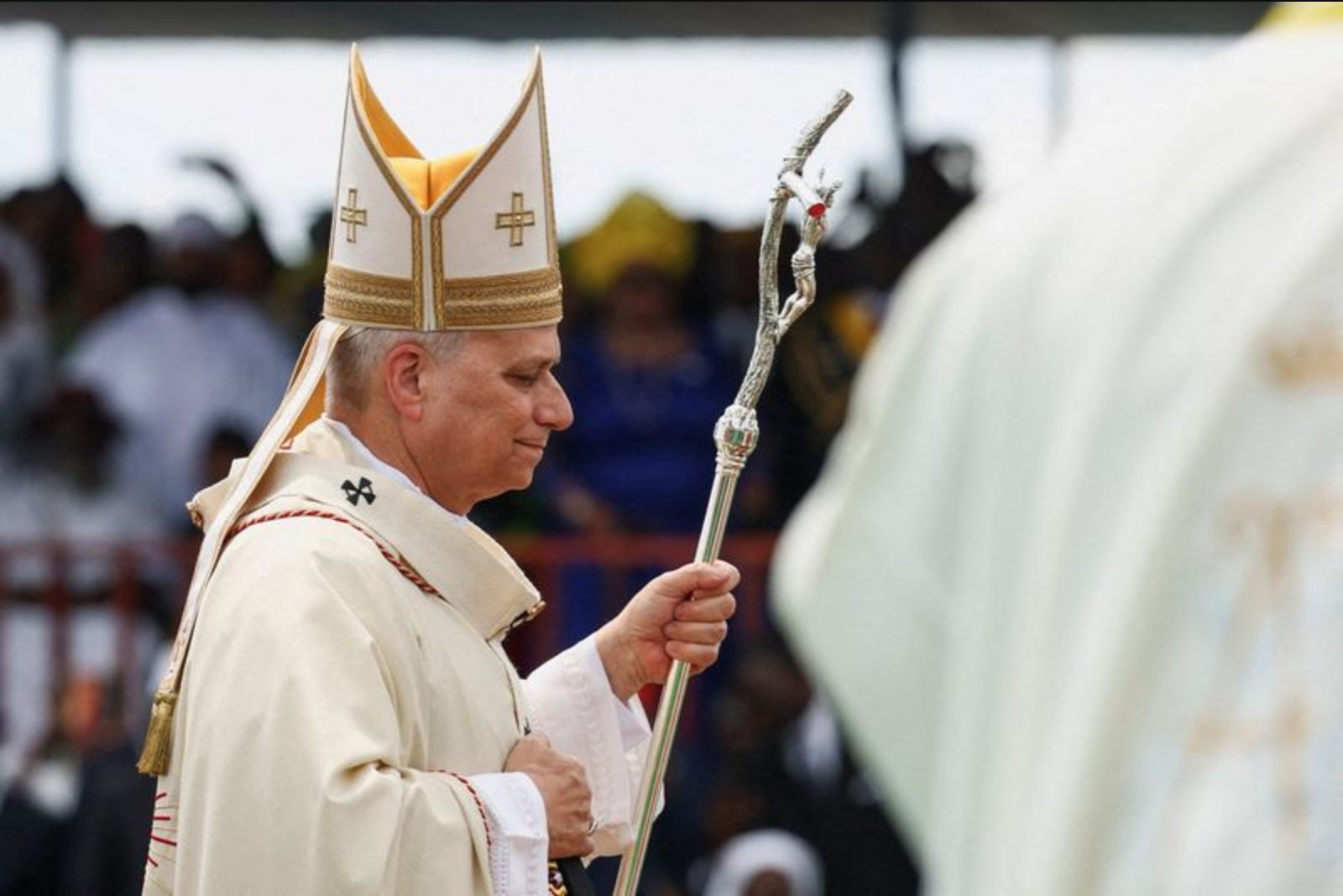
Pope Leo has introduced a noticeably more forceful rhetorical approach while on a four-nation Africa tour, delivering pointed condemnations of war, inequality and what he described as violations of international law. Those comments have prompted repeated public criticism from U.S. President Donald Trump, underscoring an intensifying public exchange between the Vatican and the White House.
Observers see the rhetorical shift as a deliberate change in emphasis by the pope, who until recently had maintained a comparatively low public profile during the first ten months of his papacy. In recent weeks, however, Leo has used public appearances to speak bluntly about the direction of global leadership and the human costs of conflict and economic exclusion.
President Trump first attacked Pope Leo as "terrible" on Sunday, in an apparent reaction to the pope's earlier criticisms of the U.S.-Israeli war on Iran. The president renewed his criticism on Thursday, suggesting that the pope lacked understanding of foreign policy matters.
Speaking in Cameroon earlier the same day, the pope described the world as "being ravaged by a handful of tyrants," a formulation that did not name specific leaders but drew attention for its directness.
John Thavis, a retired Vatican correspondent who covered three papacies, said the tone marks a departure from the Vatican's typical caution in publicizing political criticism. "Normally popes and the Vatican are cautious when it comes to international politics, preferring diplomacy to public censure," Thavis said. He added that Pope Leo appears convinced "that the world needs to hear explicit condemnation of injustice and aggression, and he seems aware that he is one of very few people who have a global pulpit."
Those assessments highlight a tension at the heart of papal public engagement. Traditionally, popes have sought to be moral voices on global issues while preserving the Vatican's capacity to act as a diplomatic intermediary when requested. That balance between moral clarity and diplomatic neutrality can be difficult to sustain.
Until March, Pope Leo had largely avoided public criticism of the United States. He emerged as an outspoken critic of the Iran war that month, and in early April he publicly suggested that President Trump seek an "off-ramp" to end the conflict. In Africa this week, Leo's rhetoric has been firmer still. In speeches given during the visit to Algeria and Cameroon, he warned that the impulses of the world's wealthiest threaten peace and criticized breaches of international law by what he termed "neocolonial" global powers.
Bishop John Stowe of Lexington, Kentucky, president of a U.S. Catholic peace organization, told Reuters that the pope is "establishing himself as a moral leader for the global scale." Stowe said the impact of Leo's message was amplified by the fact that it was delivered during a trip to Africa, "delivered face-to-face with the people who have lived with war, violence, famine and chronic poverty."
Analysts point to institutional memory and past papal controversies as part of the context for Leo's change in tone. Massimo Faggioli, a professor at Trinity College Dublin and an expert on the papacy, referenced the legacy of Pope Pius XII, who directed a clandestine effort to shelter Jews during the Holocaust but has been criticized by some for not speaking more forcefully about the genocide as it unfolded. "There’s always the ghost of Pius XII hanging there," Faggioli said, suggesting that this history may inform Leo's decision to speak with more urgency now. He added, "I don’t think he wants the Vatican to be accused of being soft on Trumpism because he’s an American."
Faggioli's comments underscore how questions of national origin and historical precedent can shape perceptions of papal statements and their motives.
Pope Leo, previously Cardinal Robert Prevost, spent decades serving as a missionary and bishop in Peru prior to becoming pope. His time in Peru coincided with a period of intense internal conflict involving the Peruvian government and the Maoist guerrilla group Shining Path, a period during which tens of thousands of people were killed. According to Natalia Imperatori-Lee, an academic at Fordham University, Prevost's experience in rural Peru exposed him to the effects of poverty, corruption, globalization of indifference, climate catastrophe and governmental violence. "He’s uniquely qualified to speak about the dangers of... political corruption and violence," Imperatori-Lee said.
The new pope's style has been compared with that of his immediate predecessor, Pope Francis, who was also known for outspoken condemnations of conflict and who at times clashed with President Trump. Observers say Leo's comments during the Africa tour may be among the most direct public criticisms from a pope in recent memory.
"Other popes, including John Paul II and Francis, have spoken about the dangers of ideological tyrannies and neocolonialism," Thavis said. "But when Leo says the world is 'ravaged by a handful of tyrants,' that strikes me as a much more direct challenge to the leaders of powerful nations."
Pope Leo's decision to use confrontational language in public speeches, particularly while visiting regions that have experienced prolonged violence and poverty, signals a calculated choice to prioritize moral clarity in the global arena. How governments, religious institutions and international actors respond to that posture remains to be seen.
The pope's new rhetorical approach has already produced immediate political backlash from the United States' president and has raised questions within the wider Catholic and diplomatic communities about the balance between moral leadership and the Vatican's traditional role as a neutral mediator.
Summary
Pope Leo has shifted to a more forthright public voice on matters of war, inequality and international law during a four-nation Africa tour. His remarks have drawn public criticism from U.S. President Donald Trump, and analysts say the pope's background and recent decisions point to a deliberate effort to use his global platform for explicit moral condemnation.