
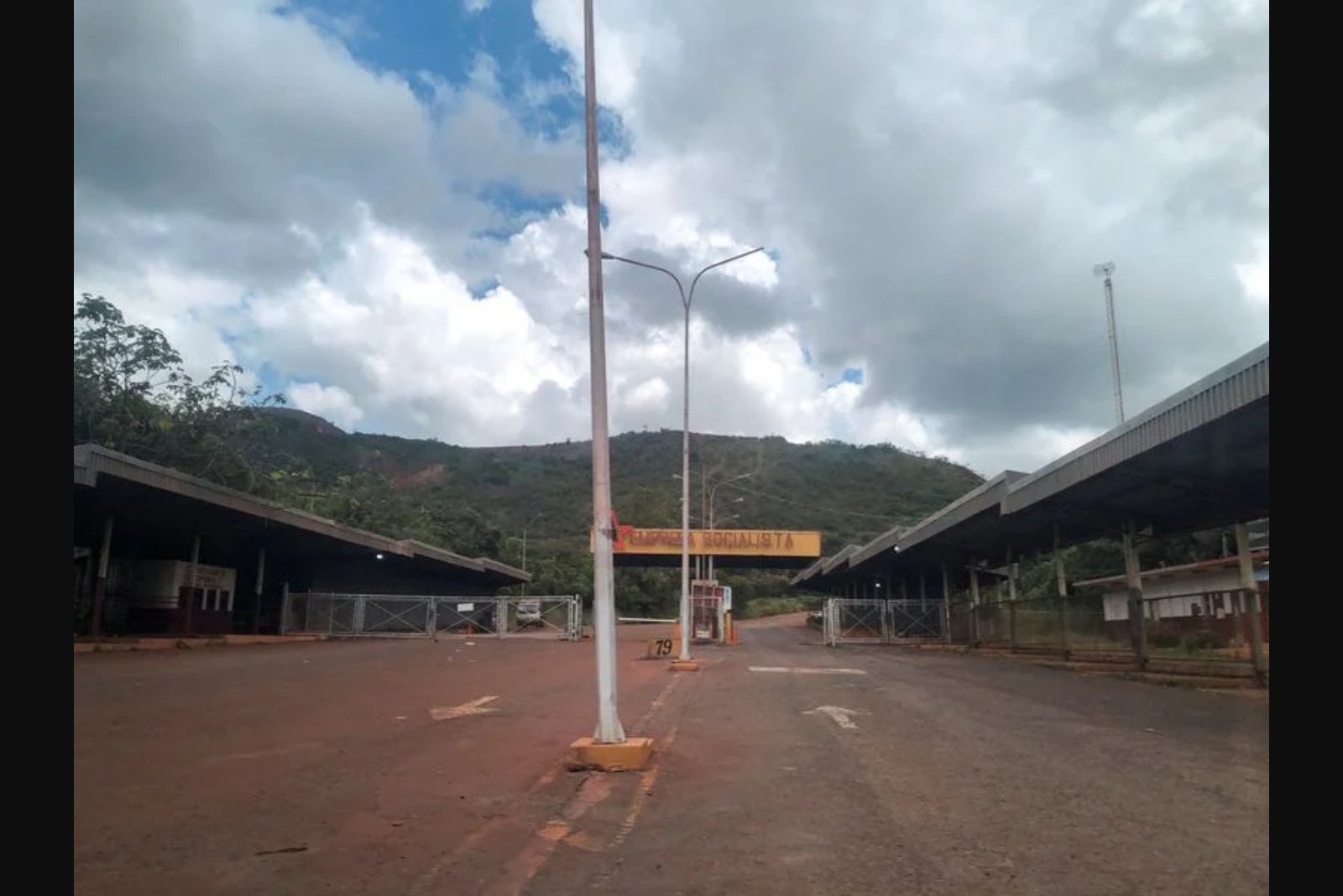
Following are consolidated facts about Venezuela's mining sector and the uncertainties that persist around the nation's mineral endowment and recent production. The sector has been highlighted by external actors, including interest from the U.S. administration under President Donald Trump, but publicly available data inside Venezuela present problems of clarity and currency.
Confusion over reserves and resources
In 2019, the Venezuelan government under then-President Nicolas Maduro and acting president Delcy Rodriguez announced a five-year plan designed to expand mineral extraction as an alternative to reliance on oil. That policy push followed the 2018 release of a document promoted as a "minerals catalog" for potential investors that used industry terminology inconsistently, mixing the concepts of reserves and resources in ways that make a reliable assessment of exploitable volumes difficult.
For clarity, a reserve refers to an estimated volume of a mineral that can be produced economically. A resource is an estimate of the total volume of a mineral within a region, irrespective of current economic feasibility. The 2018 catalog presented several headline numbers that did not always distinguish those categories cleanly. It estimated coal reserves of roughly 3 billion metric tons and nickel reserves of 407,885 metric tons. The same report listed a gold resource of 644 metric tons, an iron ore resource of 14.68 billion metric tons while noting much of that iron figure was speculative, and a bauxite resource of 321.5 million metric tons.
In 2021, a separate government map of mineral reserves was published based on compilations made in 2009. That map identified the presence of antimony, copper, nickel, coltan, molybdenum, magnesium, silver, zinc, titanium, tungsten and uranium, but did not attach volumes to the listed reserves. The available materials do not indicate sizeable endowments of rare earth elements, the group of 17 minor metals used in magnets that convert power into motion, which are a subset of critical minerals.
Operational status and production reporting
The operational status of mining projects cited under the five-year plan is not clearly documented in public sources. Venezuela's National Council for Productive Economy stated late last year that national production of gold, coal and iron ore rose in the first three quarters of 2025, but the council did not provide production figures to substantiate that claim.
Venezuela nationalized its gold sector in 2011. The state also controls iron and steel maker CVG. Reporting last year indicated that the government had restarted coal production and set an export objective of more than 10 million metric tons of coal in 2025, but there is no public confirmation that the target was achieved.
Historical estimates offer some perspective on output versus reported reserves. In 2019 the U.S. Geological Survey estimated Venezuela produced 100,000 metric tons of coal from 731 million metric tons of reserves.
Recent U.S. Geological Survey production data
The latest U.S. Geological Survey data available for Venezuela, for 2021, indicate several declines and modest production levels for key commodities. Bauxite production in 2021 was reported at 250,000 metric tons, down from 550,000 metric tons in 2017. Iron ore output was recorded at 1.41 million metric tons on an iron content basis. Gold production for 2021 was 480 kilograms.
Production of alumina, the refined output of bauxite used to make aluminum, was estimated at 80,000 metric tons in 2021, compared with 240,000 metric tons four years earlier. Aluminum metal production was estimated at 20,000 metric tons in 2021, down from 144,000 metric tons in 2017.
Data limitations and implications
Published Venezuelan materials contain a mix of dated compilations, broad resource estimates and statements of production increases without supporting figures. Where numerical guidance exists it ranges from speculative resource totals to limited production figures for specific years. The absence of clearly delineated, up-to-date reserve volumes and audited production statistics constrains any definitive evaluation of Venezuela's mining capacity and the potential economic contribution of non-oil minerals.
For stakeholders evaluating Venezuelan mining, the record available in public documents emphasizes the need to treat headline resource estimates and government assertions of rising output with caution until more granular, current data are provided.