
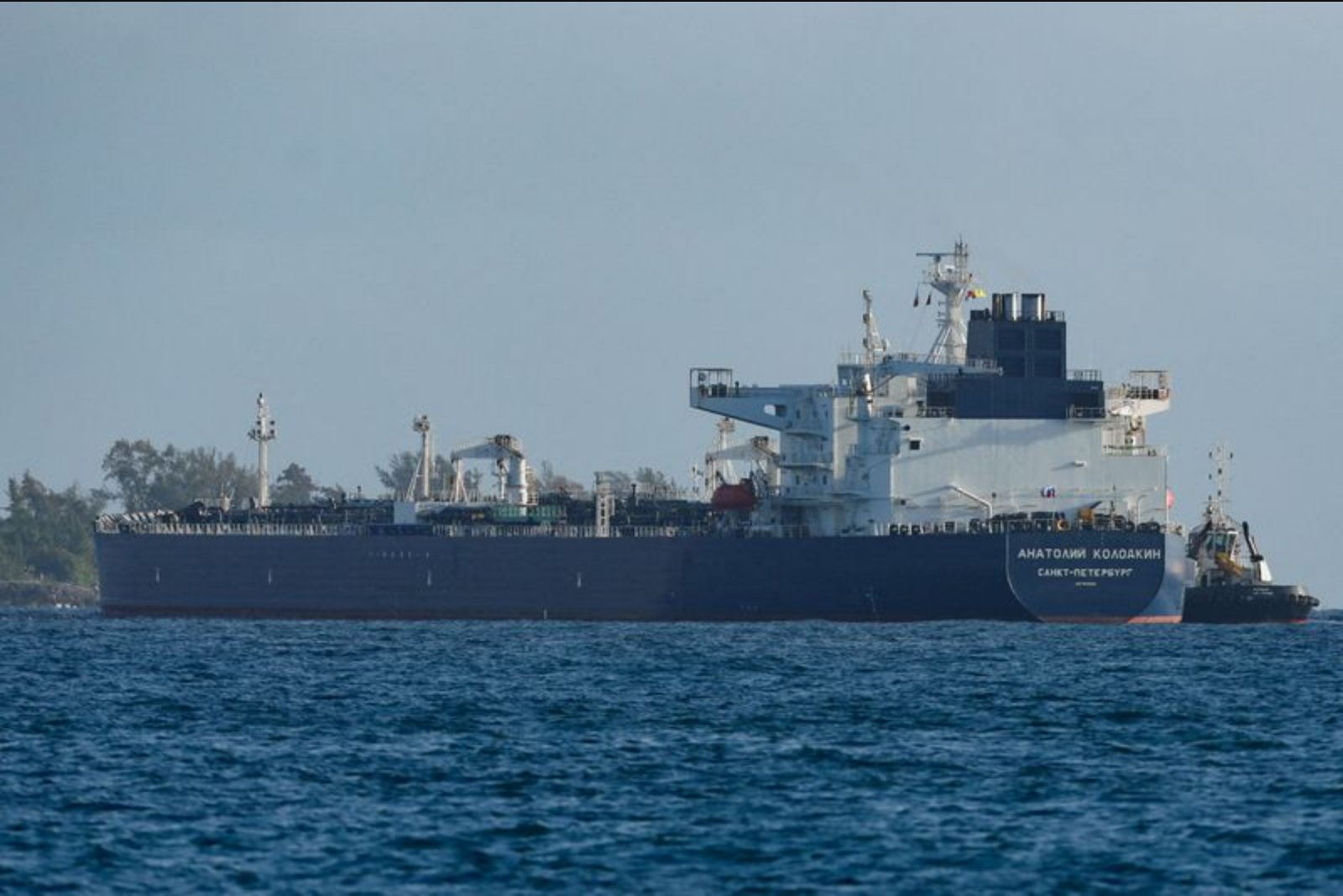
MOSCOW - The Kremlin on Monday responded to questions about a short-term U.S. sanctions waiver covering certain Russian oil exports by underlining that Russia is an important and responsible participant in global energy markets, and that its export volumes are necessarily taken into account.
The waiver was renewed on Friday by the Donald Trump administration and permits countries to buy sanctioned Russian oil at sea for roughly a month. The decision has drawn criticism from some lawmakers, who say the government is being lenient toward Moscow even as the war in Ukraine continues to unfold.
“Russia remains a responsible and very important player in the global energy markets. The markets are going through difficult times at the moment,” Kremlin spokesman Dmitry Peskov said on a daily conference call with reporters. “And, of course, it is very hard not to take Russian volumes into account or ignore them,” he added.
Russia is identified as the world’s third-largest oil producer and the second-biggest crude exporter, a status Moscow’s officials said reinforces the difficulty of excluding its supplies from market calculations.
Officials in Washington framed the waiver as part of an effort to limit upward pressure on global energy prices, which have risen sharply amid the U.S.-Israeli conflict with Iran. The administration said the temporary measure was intended to provide alternative supplies to markets facing disruption.
The waiver renewal followed pressure from several Asian countries that, confronted with the global energy shock, urged Washington to allow alternative supplies to reach their markets. Moscow said the extension will affect a substantial volume of crude moving through global markets.
Russian President Vladimir Putin’s special envoy Kirill Dmitriev said an extension of the U.S. waiver will affect another 100 million barrels of Russian oil, bringing the total volume affected by both waivers to 200 million barrels.
The Kremlin’s statements and the U.S. decision underline the intersection of geopolitics and energy market management, with market participants and policymakers navigating supply considerations amid ongoing regional tensions.
Summary
The Kremlin said Russian oil exports are integral to global energy markets after the U.S. renewed a roughly month-long waiver permitting purchases of sanctioned Russian oil at sea. Moscow noted it is difficult to ignore Russian volumes. Russian envoy Kirill Dmitriev said the latest extension affects 100 million barrels, bringing the total impacted by the waivers to 200 million barrels.