
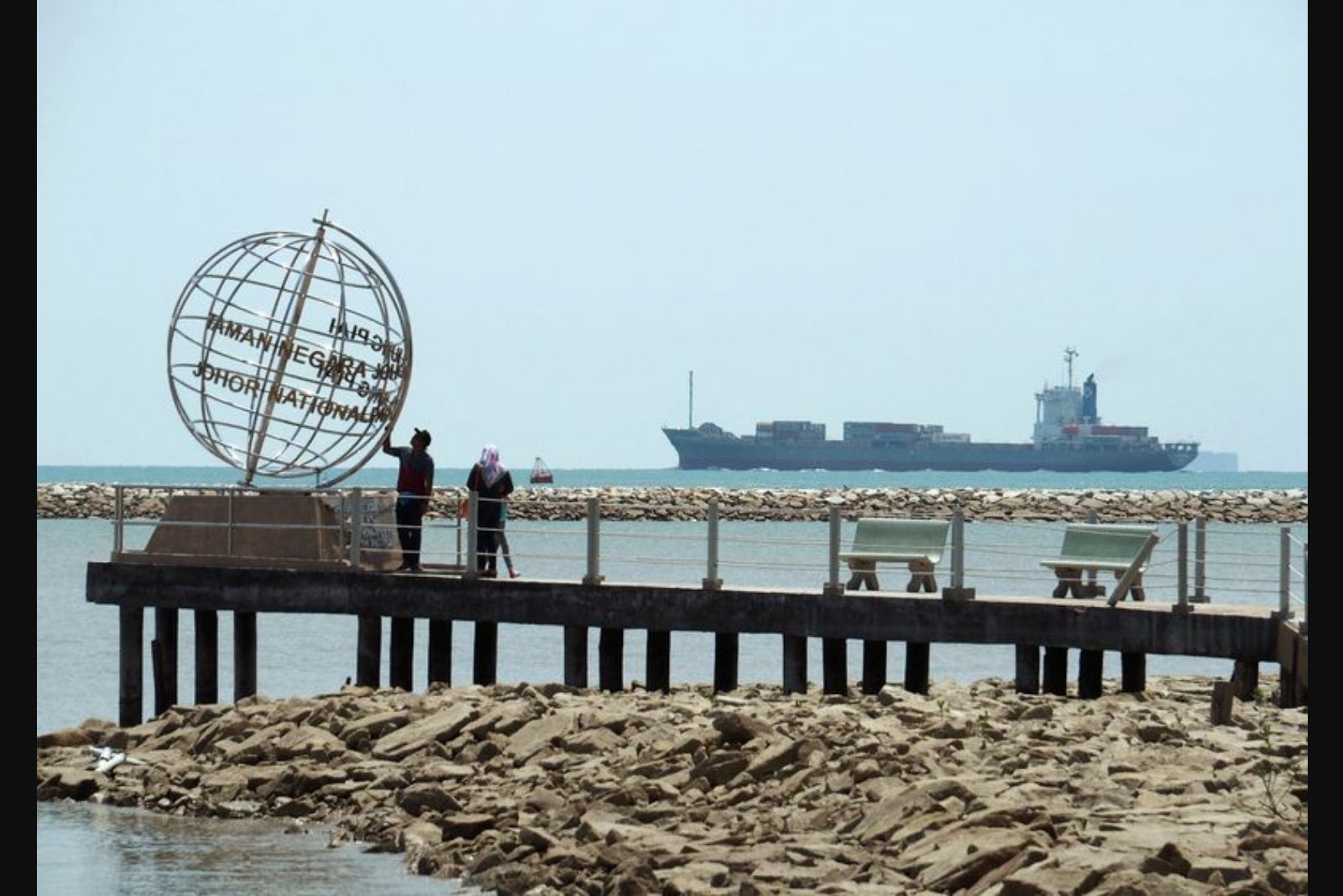
The recent closure of the Strait of Hormuz has focused attention on another vital maritime corridor: the Strait of Malacca. Policymakers in Asia are weighing the security and resilience of this waterway after the Gulf disruption underscored how quickly global sea routes can be affected by geopolitical events.
What the Malacca Strait is
The Malacca Strait runs roughly 900 kilometres (550 miles) between Indonesia, Thailand, Malaysia and Singapore and provides the shortest seaway linking East Asia with the Middle East and Europe. According to the Center for Strategic and International Studies (CSIS), it handles nearly 22% of global maritime trade, including large volumes of oil and gas shipments from the Middle East to energy-intensive economies such as China, Japan and South Korea.
On measures of oil transit, the Malacca Strait is the world’s largest chokepoint. The U.S. Energy Information Administration classifies it as the largest "oil transit chokepoint," and tracking data for the first half of 2025 showed some 23.2 million barrels per day (bpd) of oil moved through the strait, representing 29% of total maritime oil flows. By comparison, the next-largest chokepoint, the Strait of Hormuz, saw about 20.9 million bpd in the same period.
Traffic through the waterway is substantial. Malaysia’s Marine Department recorded more than 102,500 vessels, predominantly commercial ships, transiting the Malacca Strait in 2025, up from approximately 94,300 in 2024. While most tankers use the strait, very large vessels occasionally bypass it by routing south of Indonesia to avoid draft limitations; that alternative adds travel time and could delay shipments and push up costs.
Why the strait is a vulnerability
Several physical and operational characteristics of the Malacca Strait create vulnerability. At its tightest point in the Phillips Channel of the Singapore Strait, the passage narrows to around 1.7 miles (2.7 kilometres), forming an obvious bottleneck where traffic congestion, vessel collisions, groundings or oil spills are more likely. Portions of the strait are relatively shallow, with depths cited around 25-27 metres (82-90 feet), limiting access for the largest ships.
Still, some very large crude carriers (VLCCs), described in the available data as exceeding 350 metres in length, 60 metres in width and drafts beyond 20 metres, do transit the waterway.
The strait has a history of criminal incidents. The ReCAAP Information Sharing Centre, a regional anti-piracy body established by governments in the area, reported a spike to at least 104 criminal attacks last year; however, those incidents declined during the first quarter of the current year, according to the same organisation.
Beyond criminal activity, authorities have expressed concern about illicit ship-to-ship transfers. Malaysian officials say the Malacca Strait is increasingly used for transfers of oil between tankers at sea to obscure cargo origin, a practice that complicates enforcement and oversight.
Strategic implications for major importers
China’s reliance on the strait is particularly marked. Tanker tracking data from Vortexa indicate roughly 75% of China’s seaborne crude oil imports from the Middle East and Africa pass through the Malacca Strait. The Iran-related disruption has crystallised existing concerns about how chokepoints such as Malacca could be affected in the event of conflict in nearby maritime areas - for example, the South China Sea or the Taiwan Strait - where another 21% of global maritime trade transits, according to CSIS.
What regional officials are saying and doing
Responses from governments bordering the strait underscore a consensus on keeping it open. Indonesia’s Finance Minister Purbaya Yudhi Sadewa briefly raised the idea of ways countries might monetize the strait by imposing tolls on transiting ships, but subsequently observed that such an arrangement is not feasible.
Singapore’s foreign minister, Vivian Balakrishnan, told CNBC that the countries along the waterway share a strategic interest in maintaining uninterrupted passage and have agreed not to levy tolls. He said Singapore had given assurances to both the United States and China that the right of passage would be preserved for all and that Singapore would not join any efforts to block the strait or implement tolls.
Malaysia’s foreign minister, Mohamad Hasan, said at a forum that unilateral actions concerning the strait are not acceptable and that Malaysia is aligned with Singapore, Indonesia and Thailand. He noted that joint patrols are conducted to help keep the waterway open.
Conclusion
The closure of the Strait of Hormuz has acted as a reminder of the strategic and commercial importance of maritime chokepoints such as the Malacca Strait. With heavy volumes of energy cargo and general trade dependent on the channel, its narrowness, periodic shallow depths, history of criminal attacks and reported growth in illicit transfers make it a persistent focus for regional security planning. Officials across the littoral states emphasise cooperation and a shared interest in maintaining free passage, while noting constraints on measures such as tolling or unilateral restrictions.