
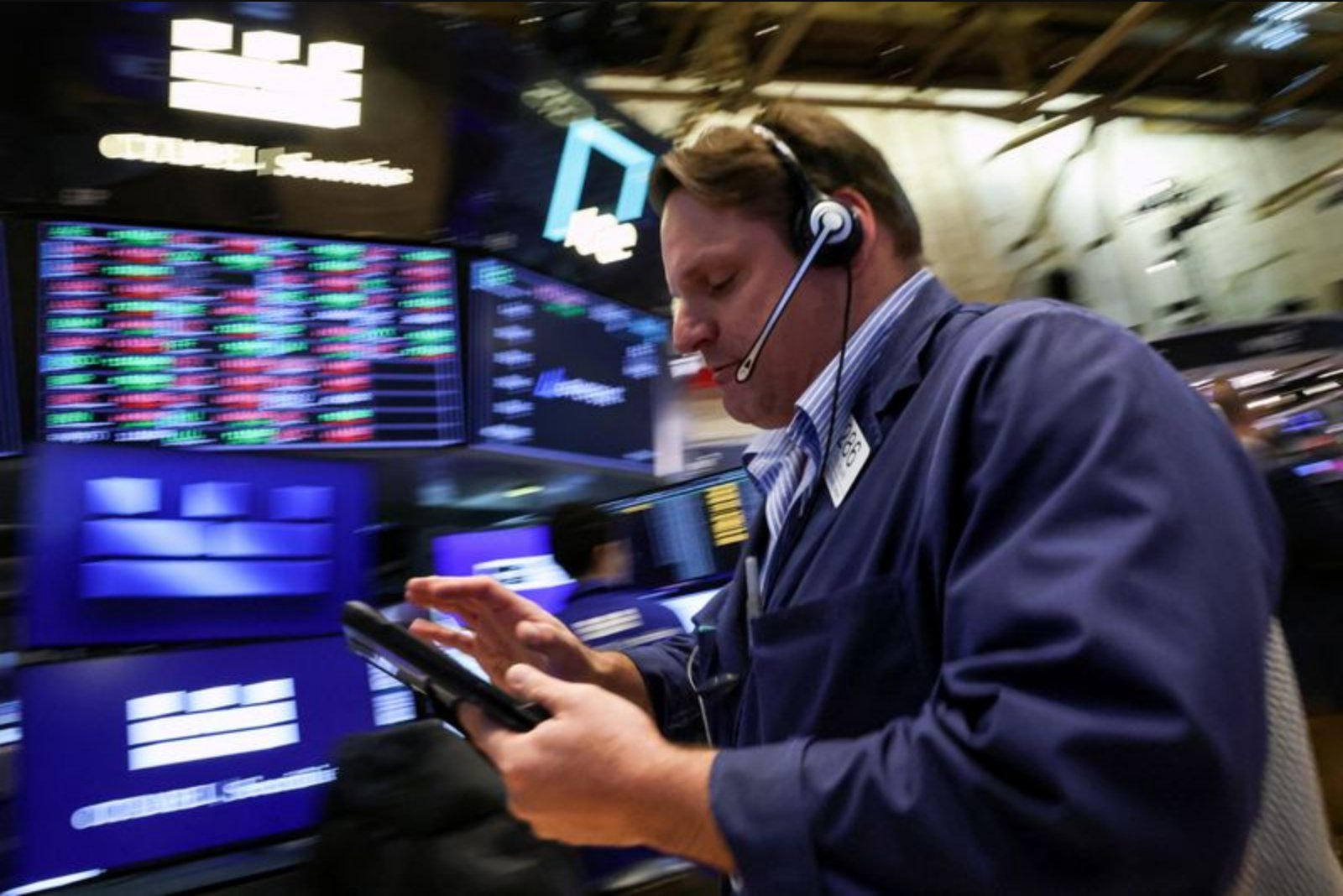
Wall Street futures moved lower on Thursday morning as market participants paused to assess the implications of renewed tensions between the United States and Iran. Iran seized two ships in the Strait of Hormuz and pressed the U.S. to end its naval blockade, which continues even after President Donald Trump extended the ceasefire indefinitely. The incident has injected fresh uncertainty into a market that had been attempting to look beyond the conflict.
At 4:56 a.m. ET, Dow E-minis were down 289 points, or 0.58%, S&P 500 E-minis slipped 37.5 points, or 0.52%, and Nasdaq 100 E-minis fell 153.5 points, or 0.57%. The sensitivity of risk appetite to developments in the Middle East is evident in those early moves.
Oil prices, trading above $100 a barrel, remain a central concern because sustained elevated energy prices could feed through to consumer prices and lift inflation. "Even in the event that the Middle East conflict eases and shipping resumes as usual through the Strait of Hormuz, it would likely take time for the global economy to normalize after one of the largest oil supply disruptions in decades," said PIMCO economist Tiffany Wilding, highlighting the potential for a prolonged economic aftershock from the supply disruption.
Earnings calendar and corporate movers
The corporate reporting season has generally produced solid results so far, but traders caution that many of the published figures reflect only a single month of the Middle East disruptions, making it harder to judge how sustainable those earnings trends are.
In premarket moves, Tesla shares dropped 2.9% after the company raised its spending plan to more than $25 billion for the year as it pursues heavy investment in artificial intelligence, robotics and chips. Kyle Rodda, senior financial market analyst for Capital.com, noted that amid war headlines, the market may be rediscovering concerns about overinvestment in artificial intelligence and the prospect of diminishing future returns.
IBM shares fell 7.3% following a slowdown in first-quarter revenue growth attributed to weakness in its software business. By contrast, Texas Instruments jumped 10.3% after projecting second-quarter revenue and profit that exceeded Wall Street expectations. Honeywell was marginally higher ahead of its results, while chemicals maker Dow declined 2.8%.
Other companies scheduled to report later in the session include American Airlines, American Express and Comcast, contributing to a crowded earnings slate that will be closely watched for signs of how firms are managing higher energy costs and geopolitical uncertainty.
Economic data to watch
Beyond corporate news, U.S. weekly initial jobless claims and manufacturing activity data are due later on Thursday. Market participants will parse these releases for any early indications of inflationary pressure or economic weakening tied to higher energy prices stemming from the conflict.
Key takeaways
- Futures across major U.S. indexes were lower as investors awaited clearer direction on the U.S.-Iran situation and its economic fallout.
- Elevated oil prices above $100 per barrel keep inflation risks in focus and complicate the outlook for companies sensitive to energy costs.
- The earnings season is producing generally solid results, but analysts caution that reported figures may not yet reflect the full impact of the Middle East disruption.
Risks and uncertainties
- The duration and resolution of the U.S.-Iran confrontation remain unclear, creating potential for further market volatility, particularly in energy and transportation sectors.
- Sustained oil prices above $100 a barrel pose a risk of renewed inflationary pressures that could affect consumer spending and corporate margins.
- Near-term corporate earnings may understate future disruption because many reported results cover only one month of the conflict.