
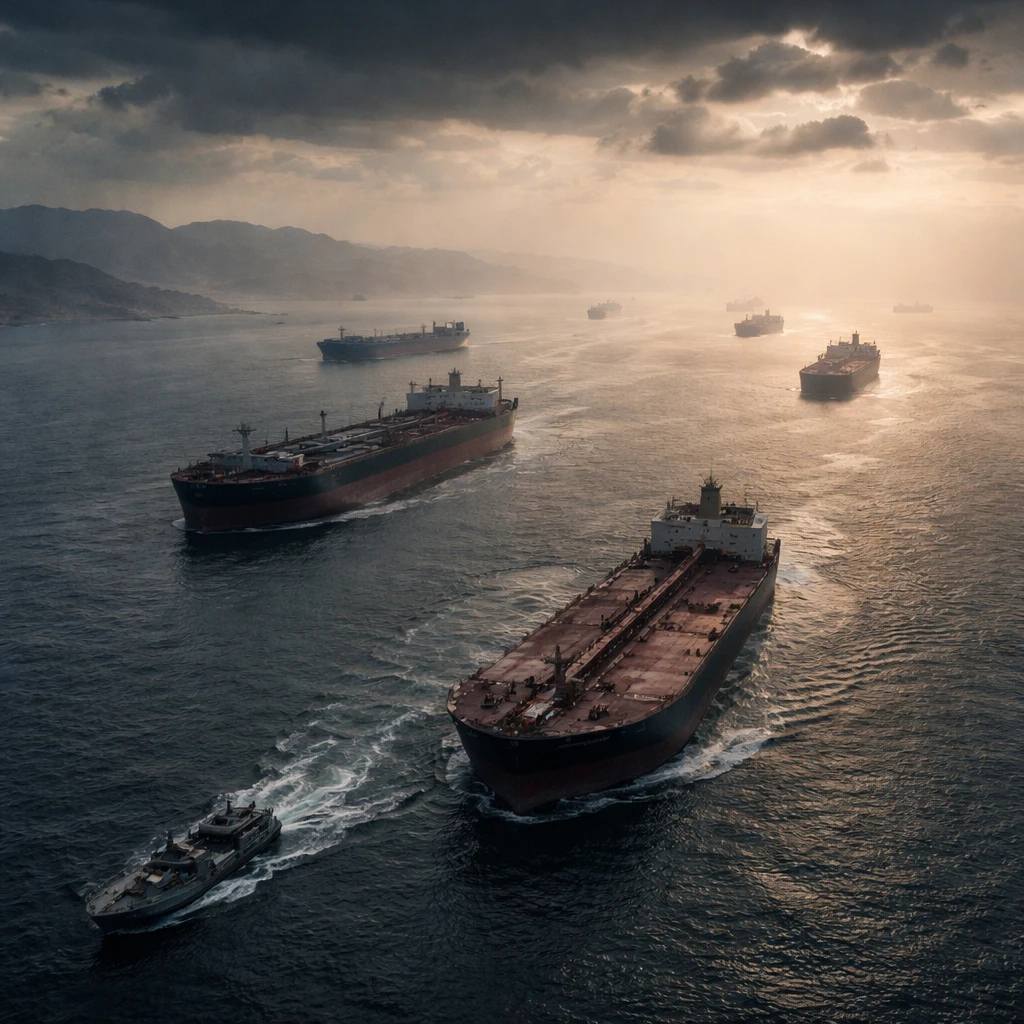
Unresolved tensions around the Strait of Hormuz left the future of a negotiated pause between Washington and Tehran in doubt on Thursday, even after President Donald Trump said the brief truce had been extended earlier in the week. The situation on the water and in diplomatic channels remains fragile, with military, economic and political consequences intersecting.
Iranian forces struck three vessels in the Strait of Hormuz on Wednesday and took control of two of them, according to statements from Tehran. Iranian officials framed the action as a response to what they described as an American blockade of Iranian ports and a recent U.S. seizure of a ship flying Iran's flag.
Days earlier, President Trump posted that a two-week ceasefire with Iran had been prolonged just hours before it was due to end. He said the extension followed a request from Pakistan, which has been acting as an intermediary between the two capitals. Trump added that the truce would remain in place "until such time as" Iranian officials present a "unified proposal" for peace.
Despite the announcement, leaders from both sides have publicly indicated they are prepared to resume military action if talks collapse. That posture underlines how tenuous the current pause is, with both deterrence and the prospect of renewed conflict still shaping behavior.
Mediators representing Pakistan, Turkey and Egypt moved quickly to try to preserve momentum for diplomacy. Officials familiar with the discussions told the Wall Street Journal that those mediators were racing to organize further talks between U.S. and Iranian representatives, including the possibility of a meeting as soon as Friday. The same account said that exchanges between the two governments are being handled through third parties and that substantive progress has been limited.
In separate comments on Wednesday to Fox News, President Trump said there was "no time pressure" to schedule another round of negotiations or to decide on the ceasefire's terms. The White House press secretary, Karoline Leavitt, also stated that the administration does not view Iran's seizure of ships as breaching the pause in fighting.
A planned trip to Pakistan by U.S. Vice President JD Vance - who previously led an American delegation in talks with Tehran - has been postponed. Pakistani Interior Minister Mohsin Naqvi expressed hope for "positive progress" after meeting with U.S. Chargé d'Affaires Natalie Baker, according to the Associated Press.
Tehran, however, has been firm that it will not return to negotiations while the U.S.-imposed blockade remains in force, the Wall Street Journal reported. That stance sets a clear precondition that has yet to be resolved and complicates mediator efforts.
Markets reacted to signs that disruptions to oil flows through the Strait of Hormuz could persist. Brent crude futures, the global benchmark, rose 1.8% to $103.70 a barrel, pushing crude back above the $100 mark. The narrow waterway is a critical conduit for about one-fifth of the world's oil, and attacks there have all but halted tanker traffic through the chokepoint in recent days.
While oil prices eased from the initial spike seen after the outbreak of conflict in late February, they remain substantially higher than levels before the hostilities began. Concern remains that prolonged supply shocks could lift inflationary pressures and slow global growth.
Meanwhile, military planners from more than 30 countries planned to continue meetings in London aimed at finding practical ways to reopen and secure passage through the Strait of Hormuz. The immediate objective for those planners is to restore safe navigation after recent threats prompted a near-stop in tanker movements through the narrow passage.
Summary: Diplomatic efforts are under way but fragile, attacks and seizures in the Strait of Hormuz have escalated risks to oil supply, and mediators are attempting to arrange urgent talks while military planners search for ways to reopen shipping lanes.