
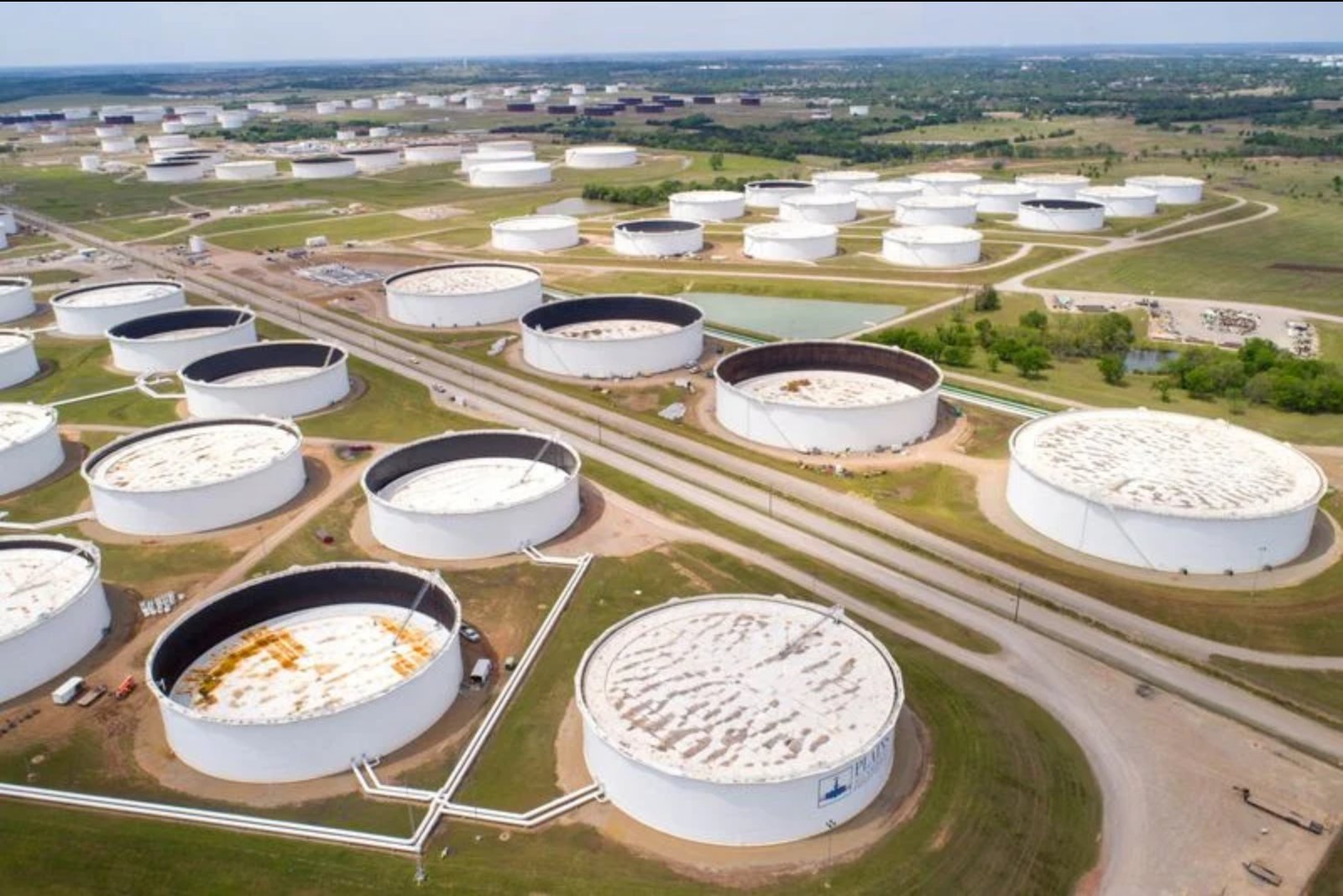
The U.S. Energy Information Administration (EIA) said on Tuesday that oil inventories across members of the Organization for Economic Cooperation and Development (OECD) are being depleted at a record pace and are on track to reach the lowest levels since the agency began maintaining records in 2003.
Inventory outlook
The EIA projects total OECD oil stocks will decline to just under 2.3 billion barrels by December. That projection rests on the agency's current assumption that marine traffic through the Strait of Hormuz - a vital corridor that handles 20% of global oil shipments - is unlikely to return to pre-conflict volumes until early 2027.
The agency linked the unusually rapid drawdown in commercial inventories to the volume of lost Middle Eastern output tied to the Iran war. Specifically, the EIA said inventories are being drawn down to compensate for roughly 11 million barrels per day of curtailed production in the region.
Price implications
According to the EIA, the speed and scale of the inventory decline create a foundation for upward pressure on oil prices in coming months. The agency expects global benchmark Brent crude to average about $105 per barrel in the spot market during June and July. That level is substantially higher than the $91.60 per barrel indicated by futures prices on Tuesday.
"Because of the size of the drawdown in global inventories, we forecast that oil prices will remain elevated until global oil flows return to normal levels and oil inventories are replenished," the EIA said.
In recent weeks, reports that the United States and Iran were close to an agreement to re-open the Strait of Hormuz weighed on prices. But the EIA noted the deal had not been finalized "as of this writing," and that most oil production in the region remained shut-in while global inventories continued to fall to meet demand.
Demand-side effects
The agency expects a contraction in global oil demand this year, marking the first such decrease since the pandemic-related slump of 2020. The EIA revised its outlook from an earlier forecast of a 200,000 barrels per day increase to a new projection of a 1.1 million barrels per day decline for the year.
The EIA attributed the demand reduction to a combination of elevated oil prices, reduced fuel availability, and government measures aimed at conserving oil supplies.
Market context and remaining uncertainty
Key uncertainties highlighted by the agency include the timing and outcome of any agreement to re-open the Strait of Hormuz and the pace at which shut-in regional production might be restored. The EIA's December inventory projection and its price outlook depend on the assumption that marine traffic through the strait will not revert to pre-conflict levels until early 2027.
Until such time as global oil flows normalize and inventories are rebuilt, the agency's analysis indicates continued risk of elevated prices and tighter market conditions.