
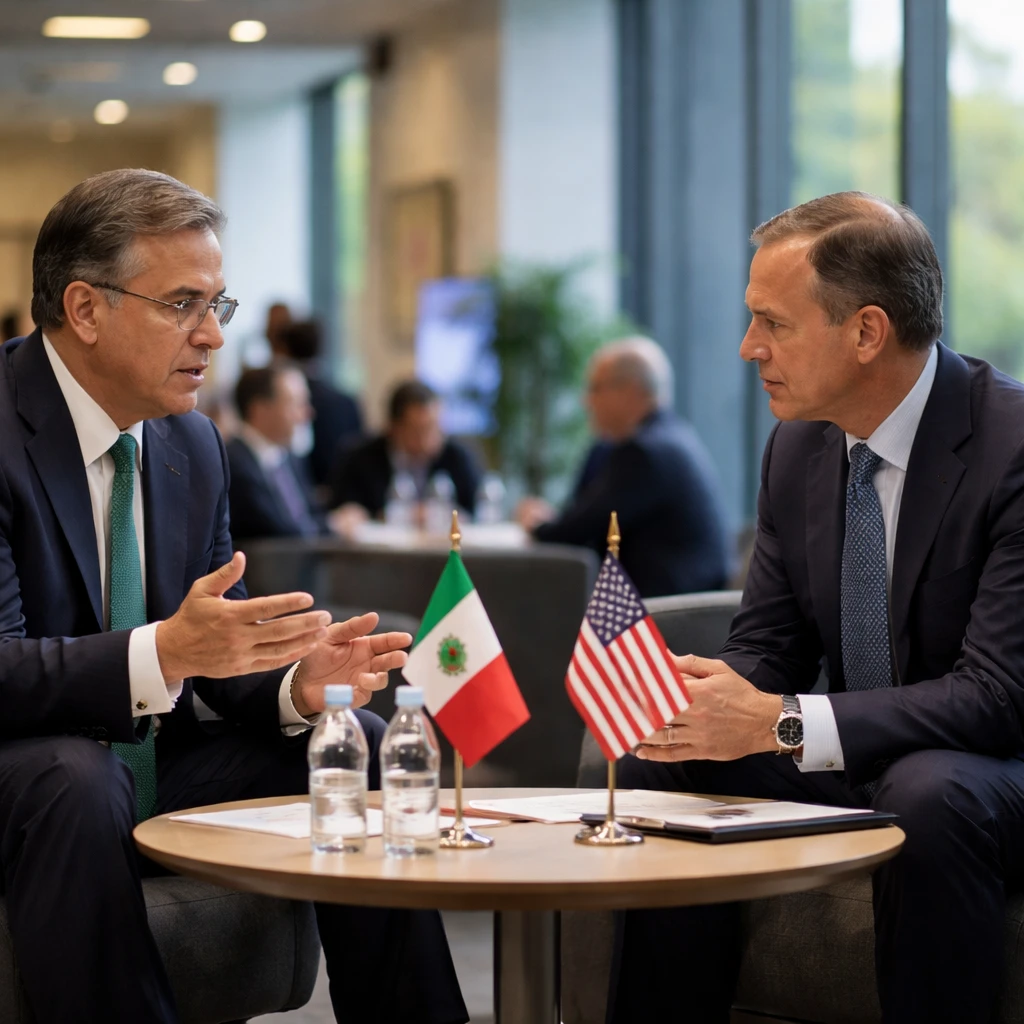
Mexican Economy Minister Marcelo Ebrard held talks on Wednesday with U.S. Commerce Secretary Howard Lutnick aimed at advancing discussions over U.S. tariffs on automobiles and steel, a primary point of contention in the trading relationship between the two neighbors.
President Claudia Sheinbaum said during her regular morning press briefing that Ebrard had travelled to the United States to seek concrete agreements addressing those tariffs. Mexico's economy ministry further said the meeting between Ebrard and Lutnick included conversations on the broader bilateral trade agenda and on regional technological innovation.
The encounter occurred on the margins of a G20 innovation gathering being held in Chapel Hill, North Carolina, which Lutnick was hosting as part of a U.S.-led ministerial. The setting was described by officials as a side engagement within the larger international event.
These talks take place amid ongoing negotiations tied to the review of the U.S.-Mexico-Canada Agreement - the trilateral pact governing trade across the three countries. Mexico has argued that the U.S. levies on steel and aluminum are not justified, and has raised objections to measures that affect automobile production.
Mexican officials contend that actions targeting autos run counter to the spirit of North America's tightly integrated manufacturing supply chains, emphasizing the interconnected nature of production across the region. Beyond tariffs, the discussions with Lutnick touched on the potential for cooperation in technological innovation at a regional level, according to Mexico's economy ministry.
The meeting did not produce detailed public announcements of specific agreements. Instead, it signalled a continuation of high-level engagement between the two governments as they navigate disputes and negotiations tied to the USMCA review and to measures that affect major manufacturing sectors.
Officials framed the session as part of a diplomatic effort to resolve differences over trade measures while keeping channels of communication open on economic and technological collaboration in the region.
Summary
Mexico's economy minister met with the U.S. commerce secretary in Chapel Hill to press for progress on tariffs affecting cars, steel and aluminum, and to discuss bilateral trade and regional technological innovation amid the USMCA review.