
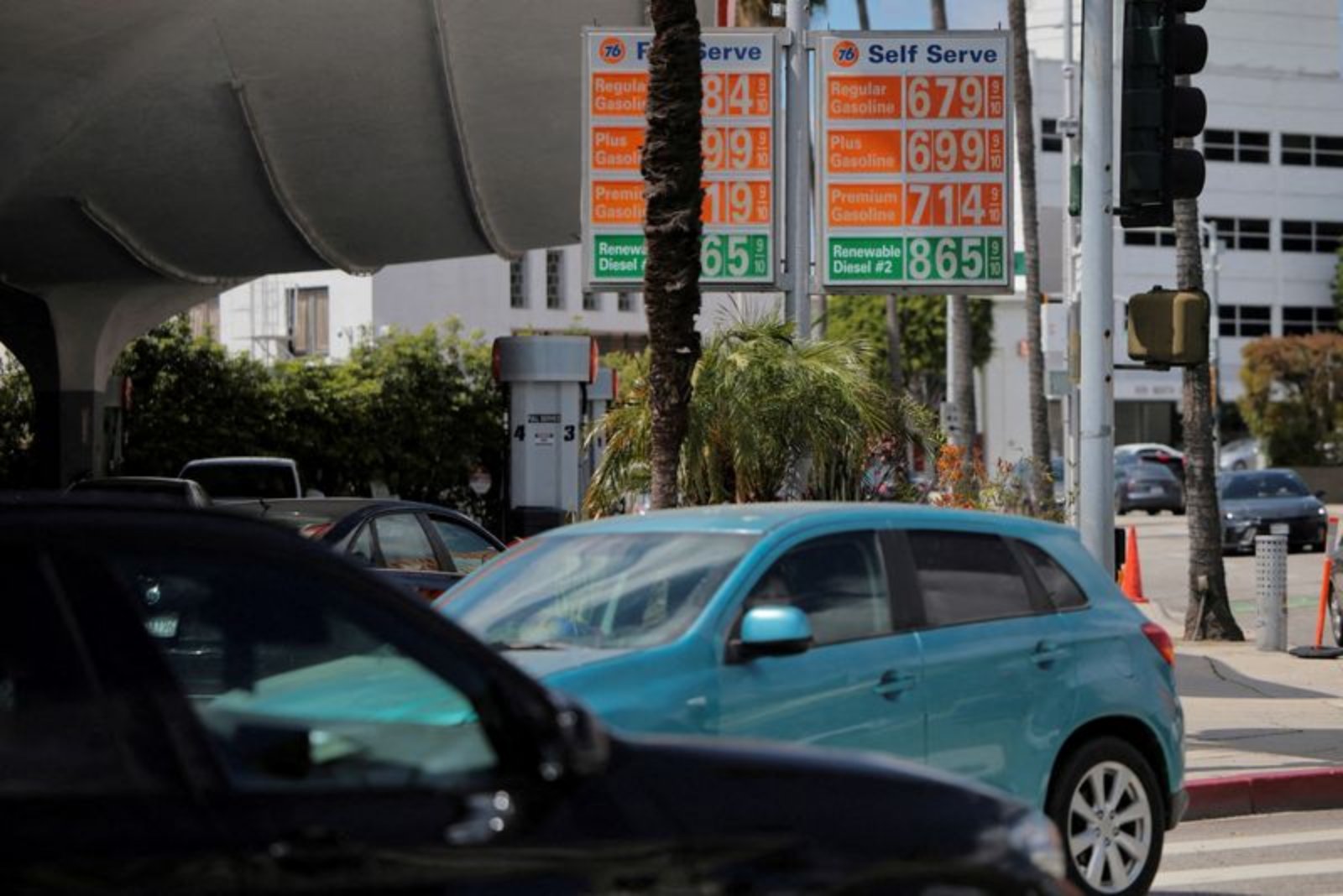
April 16 - California’s gasoline inventories have dropped to the lowest levels in the California Energy Commission’s historic data set as fuel prices spike across the United States following disruptions tied to the closure of the Strait of Hormuz.
As of Thursday, motorists in California were paying an average of $5.86 a gallon for regular gasoline, the highest statewide average in the U.S., compared with a national average of $4.09 per gallon, according to the American Automobile Association. The statewide figure represents a 26% rise in California pump prices since the outset of the Iran war, AAA said.
State inventory figures for the four weeks ended April 10 show gasoline stocks averaged 9.44 million barrels, the lowest level recorded in the California Energy Commission's data, which extends back to 2005. Those stocks include California’s mandated blend of gasoline, blending components and volumes of non-California gasoline.
California’s vulnerability stems in part from its geographic and logistical position. The state does not have the same access to the nation’s major fuel pipelines, increasing its dependence on shipments from Asia. Asian refiners often process Middle Eastern crude and send refined gasoline and other products to the U.S. West Coast. The Strait of Hormuz normally handles about a fifth of the world’s oil-and-gas supply, and its effective closure has reduced cargo flows that typically service states like California.
"The Energy Commission is in close communication with all in-state refiners to ensure adequate transportation fuels supply during this volatile period of supply contraction due to the effective closing of the Strait of Hormuz," said Niki Woodard, a spokesperson for the state Energy Commission.
Refiners in California are sourcing imported crude and gasoline from alternative origins to offset the loss of Middle East cargoes, Woodard added, and the agency currently expects sufficient inventories through mid-May. "We are not predicting a near-term supply challenge," she said.
Analysts caution, however, that the full impact of the drop in gasoline and crude imports has not yet been fully reflected throughout California’s fuel distribution system. Michael Mische, a professor at the University of Southern California, wrote in an analysis that shipping refined products from Asia to the West Coast typically takes several weeks. The analysis projects that over the next one to two weeks, gasoline imports are likely to decline sharply.
"This will mark the point at which the import shock becomes fully visible in terminal supply and, ultimately, at the gas pump," the analysis said.
Susan Bell of Rystad Energy said California’s gasoline inventory reduction may worsen over the coming weeks.
The state's crude oil inventories were reported at 10.09 million barrels, a decrease of more than 23% from a year earlier, according to the California Energy Commission. California was formerly a larger oil producer but has grown increasingly reliant on imports after two refineries that together accounted for about 20% of the state's refining capacity shut down in recent years.
California consumes roughly 36 million gallons of gasoline per day.
Summary
California's gasoline stocks have fallen to record lows amid supply disruptions related to the closure of the Strait of Hormuz. Pump prices are the highest in the nation at $5.86 per gallon, and analysts warn that the full effect of declining imports from Asia may become more apparent in terminals and retail prices over the next one to two weeks. State officials say they are coordinating with refiners and currently expect supplies to be adequate through mid-May.
Key points
- California’s statewide gasoline stocks averaged 9.44 million barrels for the four weeks ended April 10, the lowest on record in the CEC data set (back to 2005).
- The statewide average retail price is $5.86 per gallon, 26% higher than at the outset of the Iran war and well above the $4.09 national average, per AAA.
- Supply chains are strained because California relies on Asian-refined products and is not well connected to the nation’s fuel pipelines; analysts expect the import shock to become visible in terminal inventories and pump prices in the coming one to two weeks.
Risks and uncertainties
- Further reductions in refined product shipments through the Strait of Hormuz could exacerbate inventory declines in California - this poses risk to retail fuel prices and downstream transportation sectors.
- The port-to-terminal shipping lag of several weeks means the current inventory figures may not yet reflect the full impact of reduced imports, creating uncertainty for refiners and fuel distributors.
- Recent refinery closures that removed about 20% of state refining capacity have increased reliance on imports, leaving California more exposed to international supply disruptions and affecting refining and retail fuel markets.
Tags: gasoline, California, oil, inventories, energy