
World June 23, 2026 10:35 AM

WHO: Congo Ebola Outbreak Records Unusually High First-Month Case Count

Officials cite late detection and early urban cases as drivers; response capacity expanded amid declining community resistance

By Caleb Monroe
Share
Twitter Reddit Facebook LinkedIn

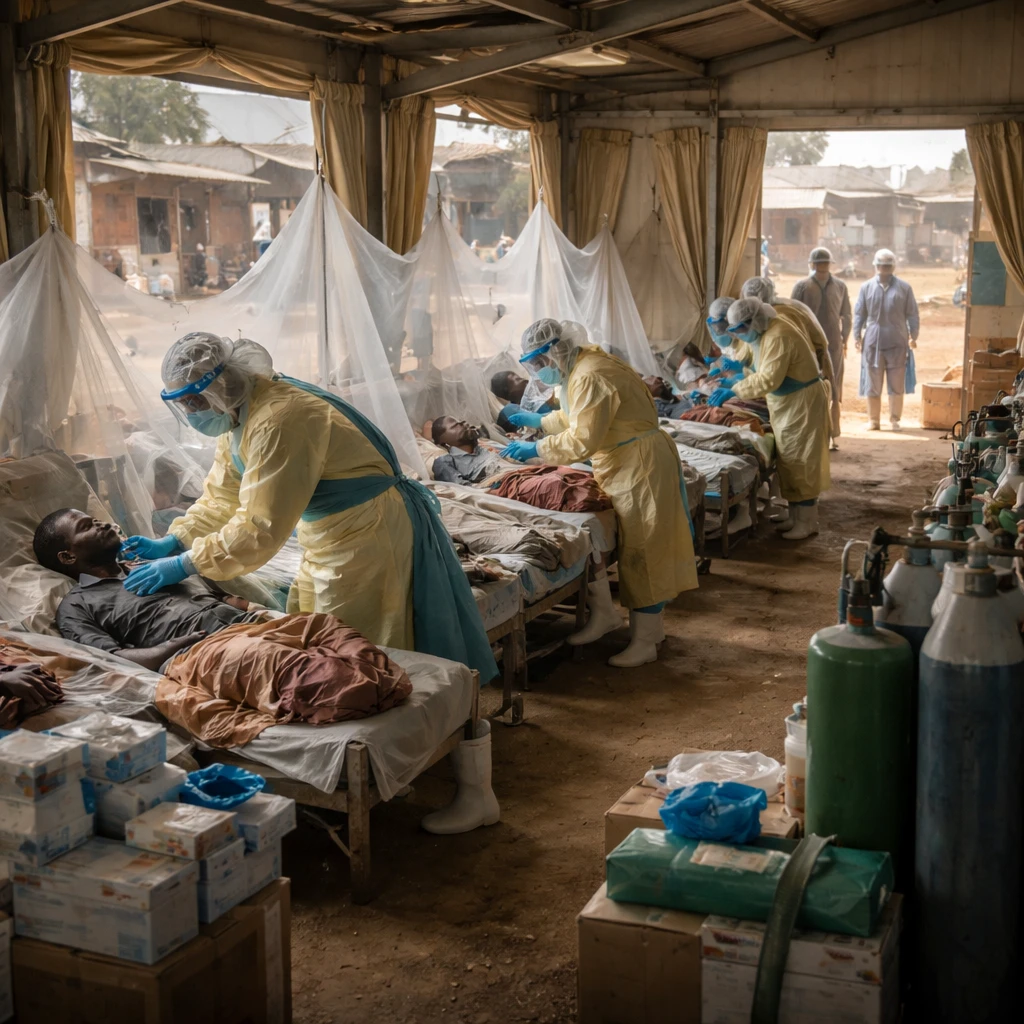
The World Health Organization says the current Ebola outbreak in the Democratic Republic of Congo has recorded the largest number of confirmed cases within the first month of any Ebola episode. Declared on May 15 as a Bundibugyo strain outbreak, it has infected more than 1,000 people and caused 267 deaths. WHO noted the virus circulated for months before detection and that early cases in urban centers contributed to the outbreak's scale. Authorities have expanded treatment capacity to over 500 beds and report a reduction in violent opposition to responders.

WHO: Congo Ebola Outbreak Records Unusually High First-Month Case Count
Summarize with
ChatGPT Perplexity Claude Grok Gemini

Key Points

  • The Bundibugyo outbreak in the Democratic Republic of Congo has registered more confirmed cases in its first month than any prior Ebola episode, according to WHO.
  • Confirmed infections exceed 1,000 with 267 deaths since the outbreak was declared on May 15; early urban cases in Bunia and the mining town of Mongbwalu were highlighted by WHO.
  • Response capacity has been increased rapidly - Ebola treatment beds expanded to more than 500 in the prior two weeks - and community resistance to responders is reported to be declining. Sectors mentioned in the article include healthcare and mining.

The World Health Organization has reported that the Democratic Republic of Congo's ongoing Ebola outbreak has produced the largest number of confirmed cases recorded in the first month of any Ebola episode, a WHO official said at a Geneva briefing on Tuesday.

Officials identified the outbreak as the Bundibugyo strain. Since the outbreak was officially announced on May 15, more than 1,000 people have been infected and 267 have died, according to WHO statements delivered at the briefing.

WHO representative Abdirahman Mahamud characterized the outbreak's early trajectory as a key factor in its scale. He said the virus had been circulating undetected for months prior to the formal declaration, and that early confirmed cases emerged within urban centers, including Bunia and the mining town of Mongbwalu. Those urban detections contrasted with the pattern in many previous outbreaks, which typically began in rural areas and often subsided relatively quickly.

Mahamud also set out developments within the response effort. In the two weeks preceding the briefing, Ebola treatment capacity expanded rapidly to more than 500 beds. He added that community resistance and episodes of violent opposition to Ebola responders, which had complicated earlier containment efforts, were beginning to ease.

The WHO official placed the current outbreak in context by noting the two largest prior Ebola episodes. One struck West Africa between 2014 and 2016, affecting Guinea, Sierra Leone and Liberia and causing about 11,000 deaths. Another significant outbreak occurred in Congo in 2018.

Beyond the immediate case and fatality totals, the briefing highlighted a sequence of factors that officials say help explain why this episode has grown quickly: months of undetected transmission, early spread into urban locations, and initial community resistance to response teams. At the same time, authorities have scaled treatment infrastructure and report a reduction in violent resistance, which officials view as positive for ongoing containment and care efforts.


Note on information: The details in this report are based on statements made by a World Health Organization official at a public briefing and on figures provided during that briefing.

Risks

  • Late detection - WHO said the virus had been circulating for months before the official declaration, creating uncertainty about the scale and timeline of transmission - this affects public health planning and healthcare sector capacity.
  • Spread into urban centers - early confirmed cases in towns such as Bunia and Mongbwalu contributed to the outbreak's size and present containment challenges for urban healthcare systems.
  • Community resistance and violent opposition to responders - although reported to be easing, such resistance had previously hindered response efforts and remains an uncertainty for ongoing containment operations.

More from World

Israeli Fire Kills Two in Southern Lebanon as Fragile Ceasefire Faces Test Jun 23, 2026 Rebuilt Azov Corps Turns Focus on Mariupol, Launches Drone Strikes on Port and Supply Nodes Jun 23, 2026 U.N. Security Council Unanimously Adopts Resolution to Strengthen Accountability for Attacks on Peacekeepers Jun 23, 2026 Supreme Court Blocks Damages Claim After Louisiana Prisoner Was Shaved Against His Faith Jun 23, 2026 Oman and Iran to Form Working Group to Continue Talks on Strait of Hormuz Navigation Jun 23, 2026