
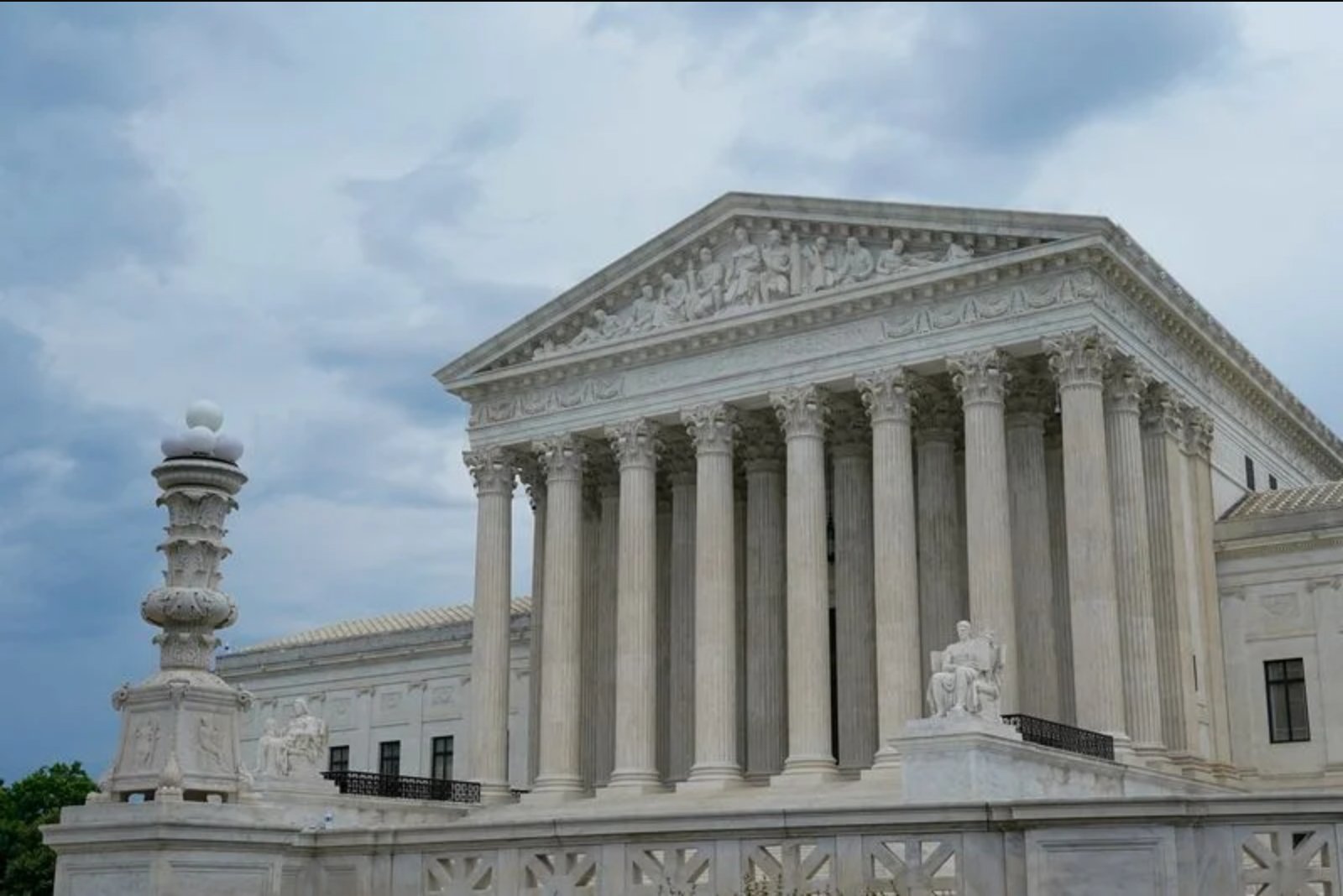
The U.S. Supreme Court on Tuesday turned away a claim by Damon Landor, a Louisiana inmate whose hair was forcibly cut by prison staff in violation of his Rastafarian religious practice, finding that the federal law at issue does not permit him to seek monetary relief from individual officers.
In a 6-3 decision that followed the court's conservative-liberal lines, the justices affirmed the dismissal of Landor's lawsuit on the ground that the Religious Land Use and Institutionalized Persons Act of 2000 - known as RLUIPA - does not provide a damages remedy against individual state or local officials. The three liberal justices dissented from the ruling.
Landor's claim arose from events near the end of a five-month prison sentence for drug possession in 2020. After being transferred to the Raymond Laborde Correctional Center in Cottonport, Louisiana, he reminded staff that his faith as a Rastafarian required him to grow his hair. He had spent roughly two decades growing his hair into long locks that reached his knees.
Court documents say Landor produced a copy of a 2017 decision by the New Orleans-based 5th U.S. Circuit Court of Appeals, which had concluded that Louisiana's policy of cutting the hair of Rastafarians violated the 2000 law. According to those records, a guard discarded the court opinion in a trash can. Landor was then handcuffed to a chair, held down and shaved against his will.
Following the incident, Landor, who resides in Slidell, Louisiana, filed suit against the prison officials. A federal judge dismissed the case, and in 2023 the 5th U.S. Circuit Court of Appeals upheld that dismissal, concluding that RLUIPA does not authorize individual-capacity damages claims for monetary relief.
Landor's attorneys urged the Supreme Court to reverse, arguing that without the ability to recover monetary damages, RLUIPA would lack a meaningful deterrent against abusive conduct by officials. They framed RLUIPA as analogous to the Religious Freedom Restoration Act of 1993 - a statute that curbs religious infringement by the federal government - noting that the Supreme Court in 2020 allowed money-damages claims under that federal law in a case involving three Muslim U.S. citizens who alleged FBI conduct relating to the government's "no-fly" list.
The Trump administration backed Landor's bid for relief and had urged the high court to revive the case. The Supreme Court, which currently has a 6-3 conservative majority and has issued a series of rulings broadening religious liberties in recent years, heard oral arguments in this matter in November.
In its decision issued Tuesday, the court found that the language of RLUIPA does not extend to monetary claims against individual state or local officials. The ruling leaves in place the lower courts' interpretation that plaintiffs seeking money damages under RLUIPA cannot hold individual prison staff personally liable under that statute.
The case highlights a tension in the enforcement of statutory protections for institutionalized persons: plaintiffs who prevail on religious-rights claims may be limited to remedies that do not include personal money damages against the officials responsible for the violations. Landor's lawyers argued before the court that the absence of a damages remedy undermines RLUIPA's capacity to prevent misconduct, a point that the justices who dissented appeared to find persuasive.
The decision does not address other avenues of relief beyond the specific monetary claims under RLUIPA, and leaves intact the legal holdings of the lower courts that shaped the outcome for Landor. The narrower statutory interpretation adopted by the court determines the availability of one form of relief in cases alleging religious discrimination by state and local officials in institutional contexts.