
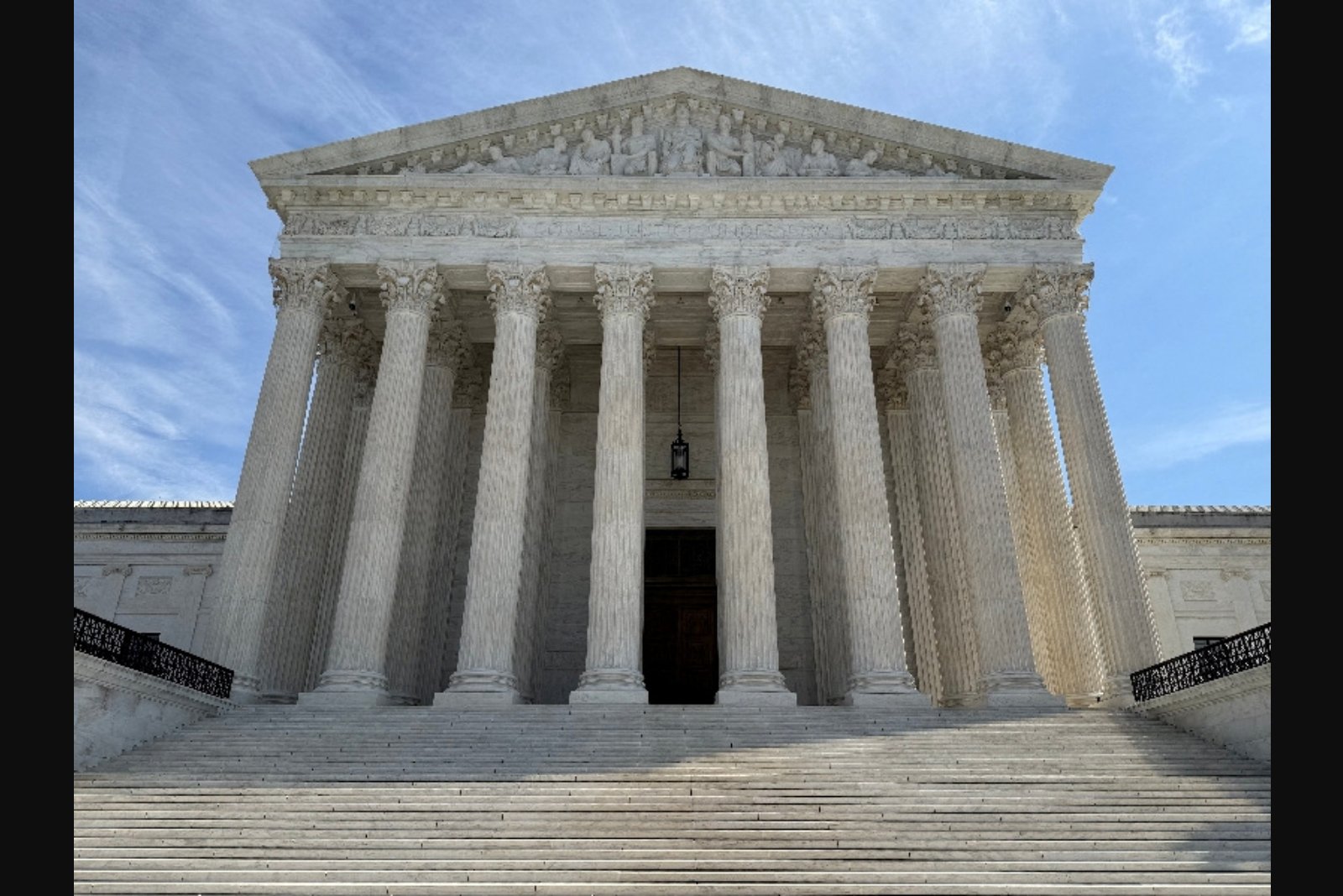
On April 20, the U.S. Supreme Court refused to hear an appeal from parents who sought to challenge a Massachusetts public school district's decision to honor a middle school student's request that staff not disclose the student's changed name and pronouns to the parents without the child's permission.
The case centers on an 11-year-old student who attended Baird Middle School in Ludlow and self-identified as "genderqueer." The parents, identified in court papers as Stephen Foote and Marissa Silvestri, alleged that teachers and school officials treated the child as nonbinary and concealed that information from them, which they said infringed on their fundamental rights as parents under the 14th Amendment's guarantee of due process.
The parents filed suit against the town, the Ludlow School Committee and specific school officials, asserting that the actions at the school undermined their long-recognized constitutional right to direct the upbringing and care of their child. They said in filings that a so-called gender transition is harmful and framed their objection as moral rather than religious. The Alliance Defending Freedom, a conservative Christian legal organization, represented the parents in their appeal to the nation's highest court.
Court records indicate that the child began to question the student's gender identity while in middle school and asked staff to use a new name and pronoun. The student also requested that when school personnel communicated with the parents, they continue to use the original name and female pronouns. The plaintiff-parents contended that the school's accommodation of the student's requests deprived them of their parental rights.
A federal judge dismissed the lawsuit in 2022. That dismissal was affirmed by the Boston-based 1st U.S. Circuit Court of Appeals in 2025, which held that the parents had not adequately shown a deprivation of their parental rights, including rights related to directing their child's medical care. The 1st Circuit observed that the allegation that school staff used gender-affirming names or pronouns did not, by itself, constitute a claim that the school provided medical treatment to the student.
The appeals court also noted that the school's protocol - allowing students to decide whether staff would disclose their gender identity to parents - served to let students express their identity without fear of parental backlash. The 1st Circuit added that the protocol did not force students to conceal information nor did it prevent parents from acting outside school to guide their child according to their own beliefs.
The Supreme Court's decision not to take up the case leaves the lower courts' rulings in place. The matter arrives amid a broader national legal landscape in which disputes over how schools and officials support and protect the privacy of transgender and gender non-conforming students have reached courts across the country.
Earlier in the year, on March 2, the Supreme Court blocked similar measures in California that could have limited the sharing of information with parents about the gender identity of transgender public school students without the child’s permission. The high court also turned away comparable challenges in Wisconsin and Maryland in 2024.
The court, now with a 6-3 conservative majority, has been addressing several high-profile matters involving transgender rights. In June 2025, the Court upheld a Republican-backed Tennessee law banning gender-affirming medical care for transgender minors. In January of the same year, the Court signaled it appeared ready to uphold state laws that bar transgender athletes from competing on female sports teams; a decision in that case remains pending.
By declining to review the Ludlow parents' appeal, the Supreme Court has left intact the 1st Circuit's view that the school’s compliance with a student's request regarding names and pronouns does not amount to medical treatment or an unconstitutional deprivation of parental rights under the 14th Amendment. Parents remain able to seek to influence their child’s upbringing outside the school environment, the appeals court said, and school protocols are designed to protect the privacy and expression of students while operating within those limits.
Summary
The Supreme Court rejected an appeal from parents in Ludlow, Massachusetts, who alleged school officials violated their 14th Amendment parental rights by not informing them about their child's name and pronoun change. Lower courts had dismissed the lawsuit, and the 1st U.S. Circuit Court of Appeals concluded that the parents failed to show the school’s actions amounted to medical treatment or a deprivation of parental rights. The refusal to hear the case leaves the lower courts' rulings in force amid broader national litigation over treatment and privacy of transgender and gender non-conforming students.
Key points
- The Supreme Court declined to review an appeal by parents who alleged school officials concealed a student's change of name and pronouns from them without consent.
- Lower courts found the parents did not demonstrate a deprivation of their 14th Amendment parental rights; use of gender-affirming names or pronouns was not deemed medical treatment by the 1st Circuit.
- Legal disputes over the handling of transgender and gender non-conforming students are ongoing nationwide and have included recent decisions by the Supreme Court on related matters.
Risks and uncertainties
- Continued litigation could shift legal precedent affecting school policies nationwide - this could influence education administration and district liability assessments.
- State and federal legal developments remain unsettled, creating regulatory and compliance uncertainty for school districts handling student privacy and gender-identity matters.
- Given pending and recent high-court decisions, schools and related public-sector entities may face evolving obligations that could affect human-resources, training, and student-support expenditures.
Note: This article reflects the claims and rulings as described in the court filings and opinions referenced. It does not introduce facts beyond those presented in the referenced legal materials.